
What Kind of Adhesive Is Used for Car Floor Mats? The Complete Industrial Bonding Guide
Hot melt adhesive film is the preferred adhesive for automotive floor mats .because it provides clean processing, reliable bonding, and efficient production.
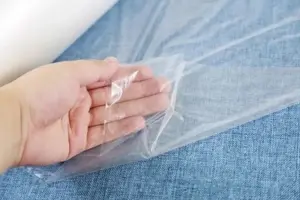
Many automotive manufacturers have replaced liquid adhesives because hot melt adhesive film solves several common production problems at once.
Unlike traditional liquid glue, hot melt adhesive film is supplied as a solid adhesive layer. During production, it is placed between two materials and activated by heat and pressure to create a permanent bond.
Today, hot melt adhesive film is widely used for bonding automotive carpets, EVA foam, XPE foam, PVC, TPE, felt, Velcro fabrics, and many other interior materials.
In this guide, you’ll learn:
- Why manufacturers are switching to hot melt adhesive film
- How hot melt adhesive film is used in production
- Which materials it can bond
- How it reduces manufacturing costs
- Why TPU hot melt adhesive film is recommended for automotive floor mats
Why Use Hot Melt Adhesive Film for Car Floor Mats?
Hot melt adhesive film provides cleaner production, stronger bonding, better consistency, and higher manufacturing efficiency than traditional liquid glue.
Many automotive manufacturers have replaced liquid adhesives because hot melt adhesive film solves several common production problems at once.
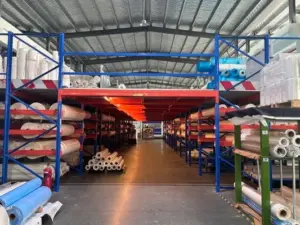
Cleaner Manufacturing Process
Since hot melt adhesive film is solid before heating, it does not drip, splash, or contaminate surrounding materials.
Benefits include:
- No glue leakage
- No fabric staining
- No overspray
- No solvent odor
- Cleaner workshop environment
More Consistent Bonding Quality
Liquid glue depends heavily on operator experience.
Small differences in spraying thickness can cause inconsistent bonding strength.
Hot melt adhesive film is manufactured with a uniform thickness, ensuring every product receives the same amount of adhesive.
This greatly improves production consistency.
Better Heat Resistance
Automotive floor mats are constantly exposed to high temperatures inside parked vehicles.
Industrial hot melt adhesive films maintain strong bonding performance after repeated heat cycles, reducing the risk of edge lifting and delamination.
Easier Automation
Hot melt adhesive film is compatible with:
- Flatbed heat presses
- Continuous laminating machines
- Roll-to-roll production lines
- CNC cutting systems
This makes large-scale production faster and more stable.
Comparison Table
| Feature | Liquid Glue | Hot Melt Adhesive Film |
| Production Cleanliness | Poor | Excellent |
| Bonding Consistency | Medium | Excellent |
| Drying Required | Yes | No |
| Automation | Limited | Excellent |
| Heat Resistance | Medium | Excellent |
How Is Hot Melt Adhesive Film Used in Car Floor Mat Manufacturing?
The process is: place the hot melt adhesive film onto the A substrate, use a flat heat press machine to bond the film to A layer, peel off the release paper, align and place the B substrate onto the exposed adhesive side, perform heat pressing again, and then cool down to form a permanent and strong bond.
No spray glue is required. The entire process uses a solid-state adhesive film that is activated by heat and pressure, making production clean, stable, and fully controllable.
Customer Application Case: Replaceable Logo Car Floor Mat System
To better demonstrate this process, here is a real production case from an automotive floor mat manufacturer working on a modular replaceable logo system for premium vehicles.
Customer Background
The customer produces high-end car floor mats for aftermarket and OEM channels.
Their requirement was:
- A layer: towel fabric (logo base surface on floor mat)
- B layer: Velcro loop fabric (hook-and-loop structure for removable logos)
- Final function: allow end users to change different car brand logos (BMW / Mercedes / Audi / custom logos) on the same mat base
Previously, they used liquid spray glue, but it caused instability in Velcro bonding and reduced reusability.
Step 1 Place Adhesive Film on A Layer and Pre-Laminate
first:
- Placed hot melt adhesive film onto the A layer (Velcro loop fabric)
- Used a flat heat press machine to lightly bond the film onto the fabric surface
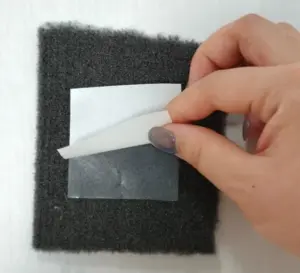
Step 2 Peel Release Paper and Prepare B Layer Alignment
After pre-lamination:
- The release paper was removed
- The second adhesive surface was exposed
- The B layer (towel fabric) was carefully aligned on top
This step is critical for:
- Position accuracy of logo system
- Ensuring full Velcro functional area coverage
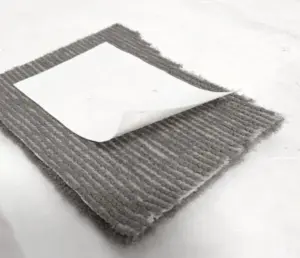
Step 3 Heat Press Lamination for Final Bonding
The assembled structure (A + adhesive film + B) was then placed into a flat heat press machine.
Controlled parameters were applied:
- Temperature: 120–160°C
- Pressure: 2–5 bar
- Time: 8–15 seconds
During this stage, the adhesive film melts and penetrates both fabric structures, forming a strong mechanical and thermal interlock.
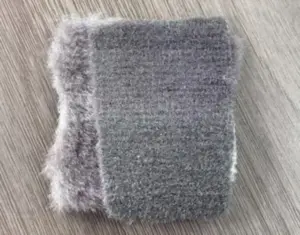
Step 4 Cooling and Functional Testing
After pressing:
- The product was left to cool naturally
- Bond strength was tested
- Velcro repeat attachment was checked
- Logo replacement functionality was verified
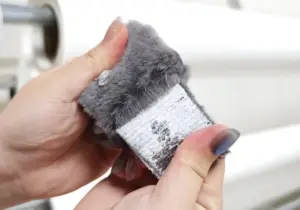
Result After Switching to Hot Melt Adhesive Film
After adopting this process, the customer achieved:
- ✔ Stable and repeatable bonding quality
- ✔ Clean fabric surface with no glue contamination
- ✔ Fully functional Velcro system (reusable logo switching)
- ✔ Improved production consistency
- ✔ Reduced defect and rework rate
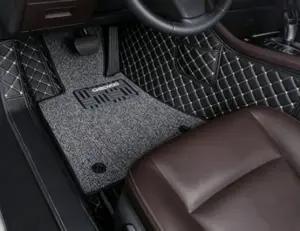
What Materials Can Hot Melt Adhesive Film Bond?
Hot melt adhesive film can bond most materials commonly used in automotive floor mat manufacturing.
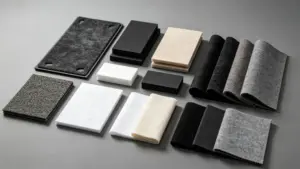
Typical applications include:
- Needle-punch carpet
- Automotive carpet
- EVA foam
- XPE foam
- PVC
- TPE
- Felt
- Velour fabric
- Nonwoven fabric
- Velcro fabric
- Sound insulation materials
- Composite textiles
How Can Hot Melt Adhesive Film Reduce Manufacturing Costs?
hot melt adhesive film may have a higher material cost than liquid glue, it significantly reduces total manufacturing costs.
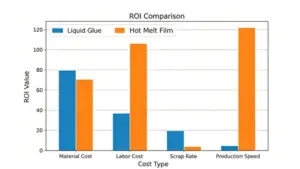
Manufacturers save money by:
- Lower defect rates
- Less rework
- Faster production
- Lower labor costs
- Cleaner workshops
- Improved automation
- Fewer customer complaints
- Reduced warranty costs
ROI Comparison
| Cost Factor | Liquid Glue | Hot Melt Film |
| Material Cost | Lower | Higher |
| Labor Cost | High | Low |
| Scrap Rate | High | Low |
| Production Speed | Slow | Fast |
| Total Manufacturing Cost | Higher | Lower |
Which Hot Melt Adhesive Film Is Recommended for Car Floor Mats?
Several types of hot melt adhesive films are available, but TPU hot melt adhesive film is generally the preferred choice for automotive floor mat applications.
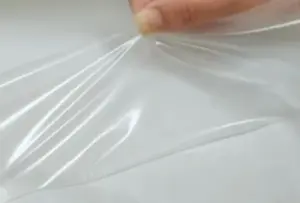
Different adhesive materials offer different performance characteristics.
Common options include:
- TPU Hot Melt Adhesive Film
- PA Hot Melt Adhesive Film
- PES Hot Melt Adhesive Film
- EVA Hot Melt Adhesive Film
Each material is suitable for different bonding requirements.
Material Comparison Table
| Material | Flexibility | Heat Resistance | Automotive Use |
| TPU | Excellent | Excellent | ⭐⭐⭐⭐⭐ |
| PA | Good | Excellent | ⭐⭐⭐ |
| PES | Good | Good | ⭐⭐⭐ |
| EVA | Medium | Medium | ⭐⭐ |
Why Is TPU Hot Melt Adhesive Film Recommended?
TPU hot melt adhesive film offers the best overall balance of flexibility, durability, heat resistance, and long-term bonding performance for automotive floor mats.
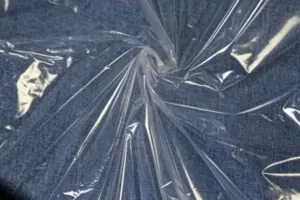
Automotive interiors experience constant heat, vibration, bending, and repeated foot traffic.
Compared with other adhesive materials, TPU performs better under these demanding conditions.
Excellent Flexibility
TPU remains flexible even after long-term use.
This helps prevent cracking and delamination.
Superior Peel Strength
TPU forms a strong bond with carpets, foams, PVC, and TPE materials.
Outstanding Heat Resistance
It maintains stable bonding performance even inside high-temperature vehicle cabins.
Excellent Cold Resistance
TPU remains flexible at low temperatures without becoming brittle.
Long Service Life
Industrial TPU formulations provide excellent resistance to aging, washing, and repeated mechanical stress
📊 TPU vs Other Materials
| Property | TPU | PA | PES | EVA |
| Flexibility | Excellent | Good | Good | Fair |
| Heat Resistance | Excellent | Excellent | Good | Fair |
| Cold Resistance | Excellent | Medium | Medium | Poor |
| Peel Strength | Excellent | Good | Good | Medium |
| Automotive Recommendation | ⭐⭐⭐⭐⭐ | ⭐⭐⭐ | ⭐⭐⭐ | ⭐⭐ |
Frequently Asked Questions
Yes.Low-temperature grades are commonly used for bonding EVA and XPE foams without damaging the material.
It works with flatbed presses, continuous laminating machines, and roll-to-roll production lines.
For most automotive floor mat applications, TPU hot melt adhesive film offers the best balance of flexibility, durability, and heat resistance.
The optimal adhesive depends on the substrate materials, processing temperature, and performance requirements. Material testing is recommended before mass production.
Conclusion
Hot melt adhesive film has become the preferred bonding solution for automotive floor mat manufacturing because it delivers cleaner production, stronger bonding, better manufacturing efficiency, and lower long-term production costs.
Among the available hot melt adhesive materials, TPU hot melt adhesive film is generally the best choice for automotive floor mats thanks to its outstanding flexibility, durability, and heat resistance.
Choosing the right adhesive film not only improves product quality but also helps manufacturers reduce defects, increase productivity, and build a more reliable production process.
Before placing a bulk order, let our engineers help you find the best bonding solution for your materials.
We provide:
- ✅ Free hot melt adhesive film samples
- ✅ Material compatibility evaluation
- ✅ Laboratory bonding tests
- ✅ Customized processing parameters
- ✅ Technical support for OEM production
Contact us today to start your free material evaluation.