
PC Sheet & XPE Foam Lamination Issues | Solutions With Low-Temperature Hot Melt Adhesive Film
PC sheet and XPE foam composite structures are widely used in automotive interiors, cold chain packaging, and building insulation. During mass lamination production, manufacturers often face consistent defects including bubbling, uneven adhesive marks, delamination, and high-temperature debonding. These common issues lead to unstable quality, low yield rates, and costly product returns. Next, we’ll discuss the root causes of bonding difficulties when using XPE and introduce an industry-proven, stable lamination solution that utilizes a low-temperature hot-melt adhesive film.
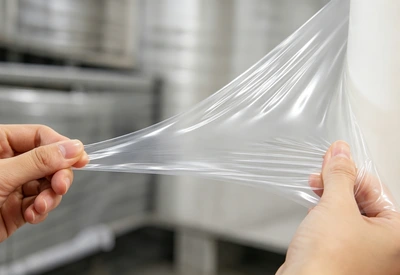
Why XPE Foam Creates Lamination and Bonding Difficulties
Most PC and XPE bonding failures stem from material surface characteristics rather than improper machine settings. XPE (cross-linked polyethylene) foam is lightweight, waterproof, and thermally efficient, making it ideal for trunk liners, insulation cases, and building panel components. However, it features a non-polar, low surface energy structure that creates significant challenges for conventional adhesives.
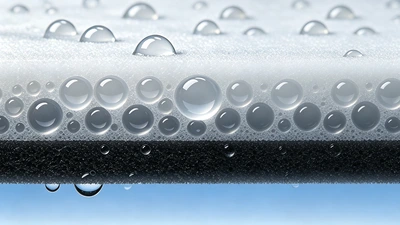
Effective lamination requires adhesives to fully wet out and penetrate substrate surfaces. Standard liquid glue tends to bead on XPE foam instead of spreading evenly, resulting in minimal penetration. This creates a “false bond” that appears solid after production but separates easily under heat, tension, or humidity.
Additionally, solvent-based adhesives cure through evaporation, leaving micro voids and weak layers inside the bonded area. This is the primary cause of batch delamination, bubbling, and long-term product instability.
Liquid Adhesive vs EVA Hot Melt Film: Industrial Lamination Comparison
Traditional liquid adhesive application relies on manual roller, spray, or brush work, which inevitably creates uneven glue thickness, uncovered areas, and over-coated spots. The long curing cycle slows down production, and residual solvent causes odor, bubbling, and high-temperature failure during shipping or end-use application.
EVA hot melt film eliminates these drawbacks through uniform thickness distribution, solvent-free composition, and fast heat-activated curing. Manufactured with precision thickness control within ±0.005 mm, this lamination material delivers consistent coverage across large panel surfaces. The entire bonding process takes only 10–30 seconds, greatly improving production efficiency and uniformity.
Factory data shows that switching from liquid glue to standardized hot melt lamination film reduces return rates significantly and improves production yield by over 30%, making it a reliable upgrade for industrial composite processing.
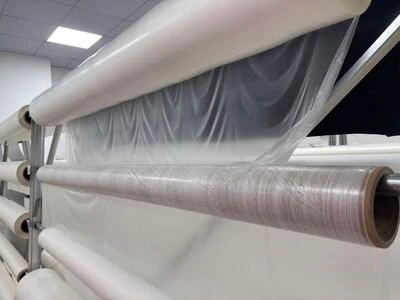
HJV85 Low-Temperature Hot Melt Film: Optimized for PC-XPE Composite Bonding
HJV85 is a customized EVA hot melt adhesive film engineered specifically for low-surface-energy substrates such as XPE foam. It solves the two most common industry pain points: poor penetration on non-polar surfaces and foam structural damage from high processing heat.
With a melting range of 45–83°C, the film activates at ultra-low temperatures, well below the 100°C threshold where XPE foam shrinks or collapses. This preserves the foam’s original microcellular structure, thermal performance, and soft texture without material deformation.
Its 25±5 g/10min melt flow index delivers balanced fluidity during thermal activation. The molten adhesive penetrates deeply into XPE micropores and forms a strong mechanical anchor after cooling. This physical interlocking bond provides superior peel resistance, thermal stability, and moisture resistance compared to conventional glue. As a solid film material, it leaves no overflow residue and requires no post-cleaning, supporting continuous automated production.
| Parameter | Specification |
| Product Model | HJV85 |
| Main Composition | EVA (Ethylene-Vinyl Acetate Copolymer) |
| Appearance | Translucent solid film (no release liner) |
| Melting Range | 45–83°C (113–181°F) |
| Melt Flow Index (190°C, 2.16kg) | 25±5 g/10min |
| Density | 0.95–0.99 g/cm³ |
| Customizable Thickness | 0.015–0.20 mm |
| Customizable Width | 5–1600 mm |
| Customizable Roll Length | 5–1000 m |
| Recommended Processing Temperature | 90–120°C (194–248°F) |
| Recommended Processing Pressure | 0.1–0.3 MPa |
| Recommended Pressing Time | 10–30 seconds |
| Wash Resistance | Moderate |
| Dry-Clean Resistance | Moderate |
| Elasticity | Highly elastic |
| Product Features | Elastic and soft texture |
| Environmental Compliance | SGS RoHS 2.0 Compliant |
| Raw Material | 100% virgin plastic pellets, no talc, diluents or recycled materials |
| HS Code | 3506100090 / 3920690000 |
Key Parameter Interpretation for PC-XPE Lamination
The ultra-low melting range ensures safe activation without damaging XPE foam structure. The balanced melt flow index allows optimal penetration into foam pores for stable mechanical bonding. All processing parameters serve as baseline guidelines and can be fine-tuned according to actual sheet thickness and foam density. Full RoHS compliance supports global export requirements for automotive, cold chain, and architectural insulation products.
Heat Resistance Performance of Cured Film Bonding
Many buyers confuse raw film melting temperature with final bonded heat resistance. Although the original film melts at 45–83°C, the thermoset composite layer reorganizes into a stable molecular structure after hot pressing. The cured bond provides reliable thermal resistance above 100°C.
Finished PC-XPE panels bonded with HJV85 consistently pass 80°C+ high-temperature soak tests without bubbling or delamination. Since PC and XPE feature different thermal expansion rates, full assembly thermal cycling testing is recommended for export orders to guarantee long-term stability during overseas transportation and end-use operation.
Standard Lamination Process Settings for Mass Production
For stable PC sheet and XPE foam lamination, the recommended process window is 90–120°C temperature, 0.1–0.3 MPa pressure, and 10–30 seconds pressing duration. Operators should adjust parameters according to material specifications.
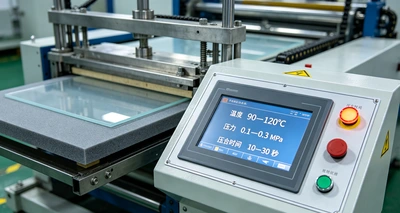
Thicker PC sheets require slightly higher temperature or longer pressing time to ensure complete heat transfer and adhesive activation. High-density XPE foam with compact cell structures needs uniform pressure to achieve full penetration.
Steam is prohibited during manual lamination to avoid interface failure. After hot pressing, panels must cool naturally to room temperature and rest for 24 hours before peel testing, as bonding strength continues stabilizing throughout the curing period.
Global Export Compliance & Material Safety
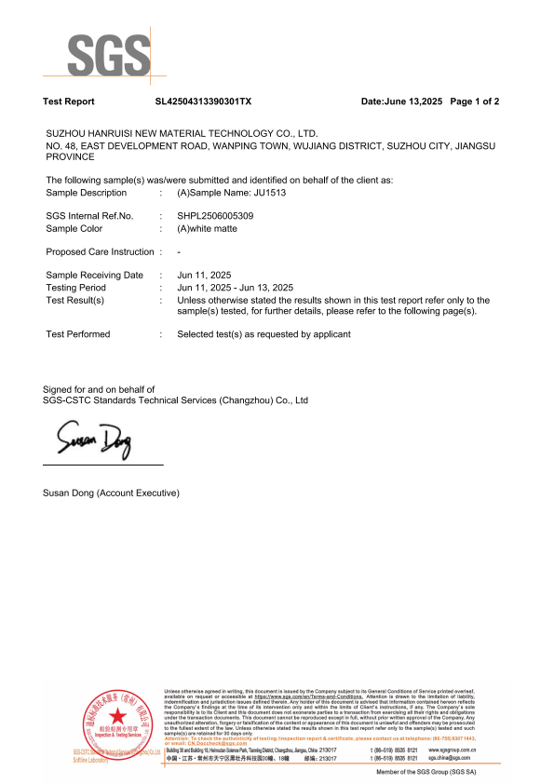
HJV85 low-temperature hot melt film has passed SGS RoHS 2.0 testing with no restricted substances detected. The solvent-free, formaldehyde-free formula eliminates VOC emissions and meets environmental standards for Europe, North America, Japan, and South Korea.
Manufactured with 100% virgin raw materials, the film maintains stable batch consistency for large-scale OEM production. Custom certification support is available for specialized industrial and export projects.
Solid Film vs Mesh Adhesive for Large-Surface Lamination
Mesh adhesive structures only provide intermittent bonding, leaving blank zones with no adhesive coverage. When applied to soft XPE foam, mesh grids tend to sink into foam cells, resulting in insufficient bonding area and inconsistent peel strength.
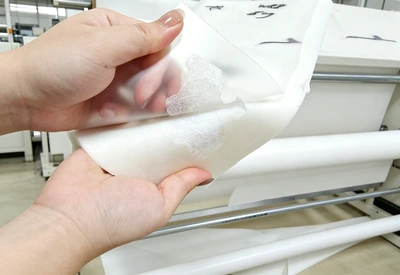
HJV85 solid EVA lamination film delivers 100% continuous coverage across the entire panel surface. It eliminates weak bonding spots, dry lines, and local delamination risks. For large insulation panels, thermoformed parts, and die-cut components, solid film provides far higher structural stability than mesh alternatives.
Why Conventional Adhesive Films Fail on XPE Foam
Most generic hot melt products are designed for high-surface-energy materials such as fabric, wood, PET, and metal. They lack the modified formula required for non-polar XPE substrates, resulting in weak surface adhesion and poor penetration.
HJV85 is purpose-built for difficult-to-bond low-surface-energy materials including XPE foam, EVA foam, and PP non-woven fabrics. Its low-temperature activation solves both common failure causes: formula incompatibility and heat-induced foam deformation.
Customized Film Specification & Process Support
Successful lamination depends on tailored material selection based on PC thickness, XPE density, product structure, and production volume. We provide customized film thickness, width, and roll size, alongside optimized process parameters for individual production lines.
HRS can submit material details to receive professional technical guidance and free sample testing within 24 hours.Feel free to contact us right away.
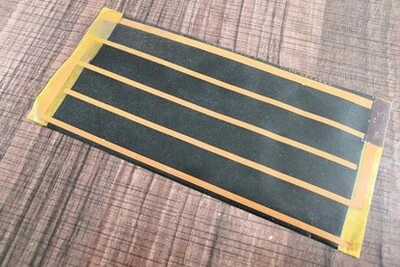
Verified Production Improvements After Film Replacement
Real factory data demonstrates clear quality and efficiency upgrades after replacing liquid adhesive with specialized hot melt adhesive film. A large automotive interior manufacturer in Ningbo improved overall production stability after switching to HJV85.
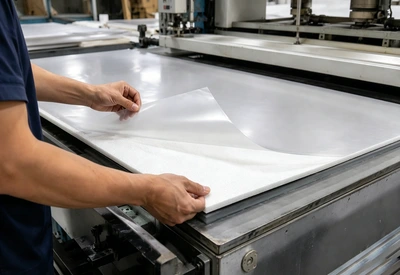
Key production upgrades include:
• 50% faster curing cycle, reducing hours-long drying to 30-second hot pressing
• Complete elimination of solvent odor, improving workshop working conditions
• Zero high-temperature delamination returns for export orders
• Production yield increased from 70% to over 95%
• Full environmental compliance without extra certification costs
All factories that have conducted side-by-side trials have permanently adopted hot melt film lamination for PC-XPE composite production.
Request Free HJV85 Hot Melt Film Samples
If your production still encounters bubbling, delamination, adhesive unevenness, or high-temperature failure during PC and XPE lamination, testing customized low-temperature hot melt adhesive film with your actual materials will help verify stable bonding results. We provide tailored specifications and process parameters to eliminate composite defects permanently.