What Are the Key Properties of Hot Melt Adhesive Film? A Complete Guide to Breathability, Washing Resistance, Melting Range, Transparency, Elasticity, and Temperature Resistance
Introduction: Why Hot Melt Adhesive Film Properties Matter More Than Bonding Strength
When selecting a hot melt adhesive film, many buyers and engineers initially focus on one question: “How strong is the bonding?” However, in real production environments, bonding strength alone does not determine long-term success.
A garment may peel after repeated washing. A laminated automotive component may fail after months of heat exposure. A transparent material may develop haze or yellowing. An elastic fabric may lose its softness and recovery after lamination.
These problems usually happen because the adhesive film was selected without considering its complete physical properties.
At Vomelt | HRS, we believe that choosing the right hot melt adhesive film starts with understanding six critical performance factors: breathability, washing resistance, melting range, transparency, elasticity, and temperature resistance.
These properties determine whether an adhesive film can survive real-world manufacturing conditions and end-use environments.
Hot melt adhesive film performance is mainly determined by six core properties: breathability, washing resistance, melting range, transparency, elasticity, and temperature resistance. Different polymer systems, including PA, PES, TPU, EVA, and PO, provide different advantages. By matching adhesive structure, activation temperature, and application requirements, manufacturers can achieve durable bonding solutions for textiles, automotive interiors, footwear, medical products, and optical applications.
Choosing a suitable hot melt adhesive film requires more than checking the melting point. The polymer structure, application environment, and lamination process must work together to achieve reliable performance.
What Are the Most Important Properties of Hot Melt Adhesive Film?
Hot melt adhesive film has become an important alternative to traditional liquid adhesives because it provides cleaner, faster, and more consistent lamination.
Unlike solvent-based adhesives or PVA glue systems, hot melt adhesive films offer:
- 100% solid content
- No solvent emission
- Fast thermal activation
- Precise adhesive distribution
- Reduced glue penetration
- Cleaner production processes
For industries such as apparel, automotive, footwear, medical products, and electronics, the challenge is no longer simply creating a bond. The challenge is creating a bond that maintains performance under repeated stress.
Different polymer systems provide different advantages:
- PA (Polyamide) hot melt adhesive film: excellent washing and chemical resistance
- PES (Polyester) hot melt adhesive film: high temperature resistance and strong industrial bonding
- TPU (Thermoplastic Polyurethane) hot melt film: elasticity, recovery, and transparency
- EVA and PO hot melt films: low activation temperatures for heat-sensitive materials
- Hot Melt Web / Mesh Film: lightweight structures requiring maximum breathability
The correct selection depends on the final application requirements.
How Does Breathability Affect Hot Melt Adhesive Film Performance?
Breathability is one of the most important properties in textile lamination.
A traditional solid adhesive film creates a continuous barrier between two materials. While it provides excellent bonding, it may reduce moisture transfer and create uncomfortable wearing conditions.
For outdoor apparel, sportswear, medical textiles, and footwear, manufacturers often require adhesive solutions that maintain air and moisture circulation.
The key measurement indicators include:
- MVTR (Moisture Vapor Transmission Rate)
- Air Permeability
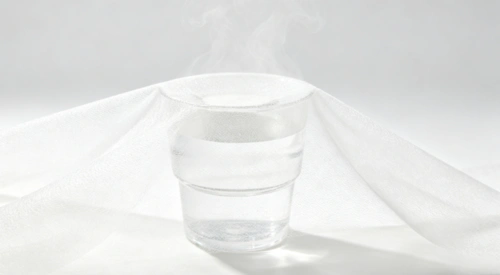
Vomelt | HRS provides breathable solutions including:
Hot Melt Web and Mesh Film
The open network structure allows:
- improved air circulation
- reduced weight
- better moisture management
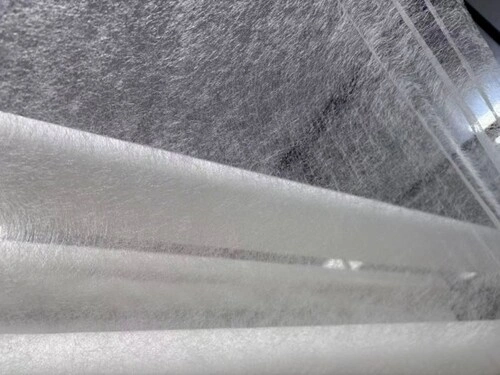
Micro-Perforated Film
Micro-perforated adhesive films provide a balance between:
- waterproof protection
- controlled breathability
- reliable bonding
Typical applications include:
- waterproof jackets
- seamless underwear
- breathable shoe insoles
- medical dressings
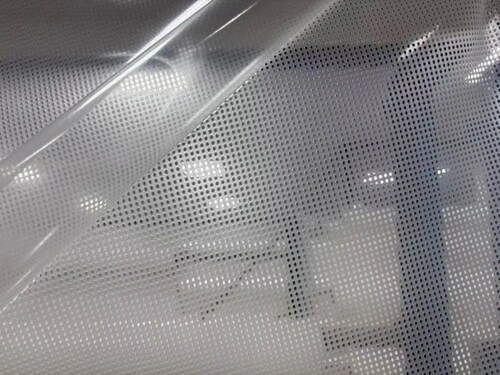
For these applications, choosing a breathable adhesive structure can prevent the common problem of a laminated product feeling “sealed” or uncomfortable.
📖 Technical Deep-Dive:
Want to calculate precise moisture vapor transmission rates (MVTR) or compare web mesh porosity for your breathable laminates? Read our detailed Breathability Performance & Web Mesh Guide.
How Resistant Is Hot Melt Adhesive Film to Washing and Chemicals?
Durability after washing is one of the most important concerns for apparel manufacturers.
A hot melt adhesive film must maintain adhesion after:
- household washing cycles
- industrial washing
- high-temperature washing
- dry cleaning solvents
International testing standards commonly used include:
- ISO 6330 washing test
- AATCC 135 washing evaluation
- AATCC 158 dry cleaning resistance
For demanding applications, PA hot melt adhesive film is widely selected because of its excellent:
- chemical resistance
- washing durability
- high bonding strength
Typical applications include:
- workwear
- outdoor clothing
- uniforms
- frequently washed textile products
A common production issue we see is:
“The product passed initial bonding tests but failed after washing.”
The cause is often not adhesive strength itself, but incorrect matching between:
- adhesive chemistry
- fabric structure
- activation temperature
- pressing conditions
📖 Technical Deep-Dive:
Facing delamination issues after commercial dry cleaning or high-temperature laundry? Read our detailed Washing Resistance & Chemical Durability Guide to compare polymer ratings, solvent stability, and ISO/AATCC test standards.
What Is the Melting Range and Activation Temperature of Hot Melt Adhesive Film?
Many buyers confuse melting point with activation temperature.
The melting range indicates when the polymer begins to soften and flow. However, successful lamination also depends on:
- temperature
- pressure
- dwell time
Different applications require different temperature windows.
Low Temperature Adhesive Films
Activation range:
60°C–90°C
Common materials:
- EVA
- PO
Advantages:
- protects heat-sensitive substrates
- reduces fabric damage
- suitable for delicate materials
Medium Temperature Films
Activation range:
100°C–130°C
Used for general textile and industrial bonding.
High Temperature Films
Activation range:
140°C–170°C+
Common materials:
- PA
- PES
Used where higher durability and thermal resistance are required.
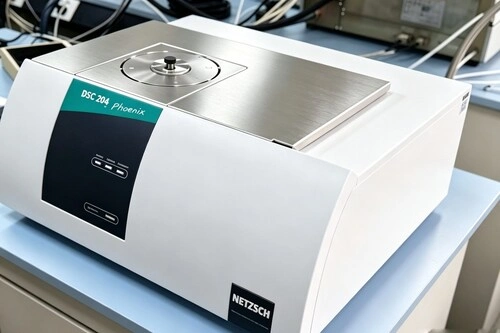
At Vomelt | HRS, we use DSC (Differential Scanning Calorimetry) testing to analyze polymer melting behavior and ensure consistent production performance.
📖 Technical Deep-Dive:
Trying to balance heat-press activation with heat-sensitive substrate protection? Read our detailed Melting Range & Activation Temperature Guide to analyze DSC thermal curves, melt viscosity, and processing windows.
How Does Transparency Influence Hot Melt Adhesive Film Selection?
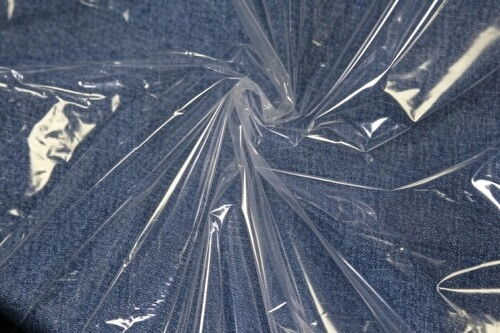
For optical and transparent applications, adhesive clarity becomes a critical performance factor.
Poor-quality adhesive films may cause:
- haze
- visible glue lines
- uneven appearance
- yellowing after aging
Transparent TPU hot melt films are often selected for applications requiring:
- high optical clarity
- flexibility
- UV resistance
Our aliphatic TPU film grades can achieve:
- over 90% light transmission
- excellent yellowing resistance
- smooth optical appearance
Typical applications:
- acrylic bonding
- glass lamination
- transparent films
- display components
📖 Technical Deep-Dive:
Looking to achieve invisible glue lines or prevent UV yellowing in clear overlays? Read our detailed Transparency & Optical Clarity Guide to evaluate light transmission metrics (>90%), aliphatic TPU formulations, and haze control technology.
Can Hot Melt Adhesive Film Maintain Elasticity After Stretching?
Modern textiles increasingly require flexibility.
Sportswear, seamless garments, and elastic components need adhesive films that stretch and recover with the fabric.
Poor adhesive selection may cause:
- stiff hand feel
- cracking after stretching
- reduced garment comfort
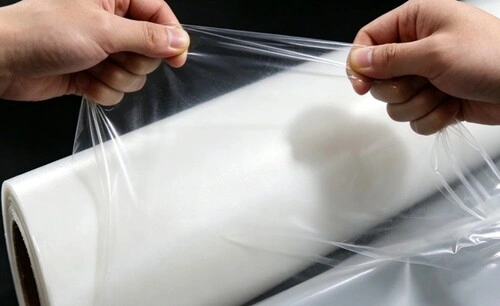
TPU hot melt adhesive film is designed for applications requiring elasticity.
Typical performance:
- over 400% elongation
- excellent stretch recovery
- soft touch
Applications include:
- elastic waistbands
- sportswear
- seamless clothing
- flexible textile assemblies
A successful elastic lamination requires the adhesive layer to move together with the substrate instead of becoming a rigid layer.
📖 Technical Deep-Dive:
Want to prevent rigid glue lines or cracking on stretchable fabrics like spandex and swimwear? Read our detailed Elasticity & Stretch Recovery Guide to analyze stress-strain curves, elongation metrics (>400%), and low-modulus TPU formulations.
How Does Temperature Resistance Affect Hot Melt Adhesive Film Durability?
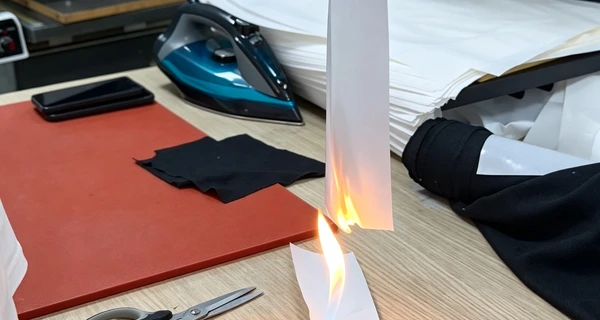
Temperature resistance determines whether an adhesive film can maintain performance during extreme environmental changes.
Automotive and industrial applications are especially demanding.
A vehicle interior may experience:
- summer temperatures above 80°C
- direct sunlight heating
- winter conditions below -30°C
The adhesive must resist:
- creep
- softening
- cracking
- delamination
PES hot melt adhesive film is commonly selected for:
- automotive interiors
- composite materials
- industrial laminations
Typical performance requirements include:
- thermal aging resistance
- high peel strength
- dimensional stability
📖 Technical Deep-Dive:
Need your laminates to withstand severe summer cabin heat (+105°C) or freezing sub-zero environments (-30°C)? Read our detailed Temperature Resistance & Thermal Aging Guide to evaluate high-heat creep limits, cold-crack resistance, and PES polymer performance.
Which Hot Melt Adhesive Film Should You Choose for Different Applications?
| Application | Recommended Adhesive Film | Key Properties |
| Outdoor Apparel | TPU / Mesh Film | Breathability + Elasticity |
| Workwear | PA Film | Washing + Chemical Resistance |
| Automotive Interior | PES Film | Temperature Resistance |
| Transparent Materials | TPU Film | Optical Clarity |
| Heat Sensitive Materials | EVA / PO Film | Low Activation Temperature |
| Medical Products | TPU / Web Film | Breathability + Safety |
Common Hot Melt Adhesive Film Problems and Troubleshooting
Washing Delamination
Possible causes:
- insufficient activation temperature
- incorrect adhesive selection
- insufficient pressing time
Solution:
Check the relationship between:
- temperature
- pressure
- dwell time
Fabric Damage During Lamination
Possible causes:
- excessive heat
- unsuitable melting range
Solution:
Use low-temperature EVA or PO adhesive films.
Elastic Fabric Becomes Hard After Bonding
Possible causes:
- incorrect adhesive hardness
- insufficient elasticity recovery
Solution:
Choose TPU elastic adhesive films.
Adhesive Creep Under Heat
Possible causes:
- insufficient temperature resistance
- unsuitable polymer system
Solution:
Use high-temperature PES or PA solutions.
Conclusion: Selecting the Right Hot Melt Adhesive Film Starts With Understanding Properties
Hot melt adhesive film selection is not only about achieving strong adhesion. The best solution balances six critical properties: breathability, washing resistance, melting range, transparency, elasticity, and temperature resistance.
By selecting the right polymer system and optimizing lamination conditions, manufacturers can achieve cleaner production, longer product life, and more reliable performance across textiles, automotive, footwear, medical, and optical applications.
Vomelt | HRS continues to develop customized hot melt adhesive film solutions that help global manufacturers solve complex bonding challenges.