
How to Use Hot-Melt Adhesive Film
place the adhesive film between two materials, apply heat and pressure, and allow it to cool. Once cooled, the adhesive forms a strong and permanent bond.
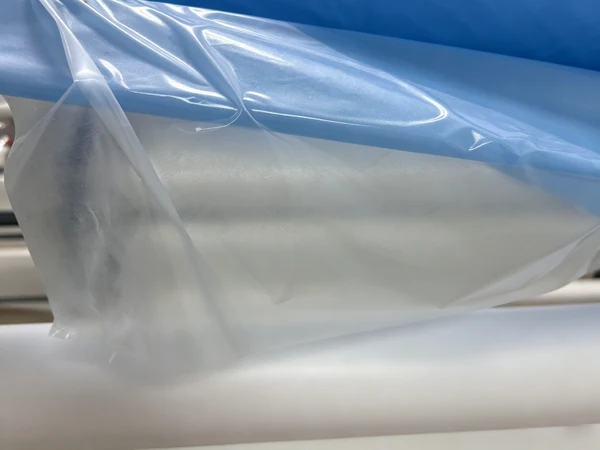
Unlike liquid glue, hot-melt adhesive film is applied as a dry film, making the bonding process cleaner, more consistent, and easier to control.
However, achieving reliable bonding depends on:
- Choosing the right application method
- Using suitable equipment
- Setting the correct temperature, pressure, and pressing time
- Selecting the appropriate adhesive film for your materials
In this guide, you’ll learn:
✔ How hot-melt adhesive film works
✔ The two different ways to use hot-melt adhesive film
✔ Equipment recommendations
✔ Processing parameters
✔ Common mistakes and solutions
✔ How to choose the right adhesive film
What Should You Prepare Before Using Hot-Melt Adhesive Film?
Before using hot-melt adhesive film, you need three things:
- Materials to be bonded
- Hot-melt adhesive film
- Heat-press equipment
Preparing these correctly is the first step toward achieving strong and reliable bonding.
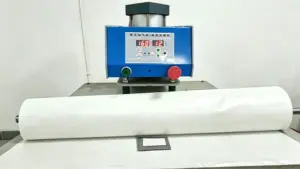
Materials to Be Bonded
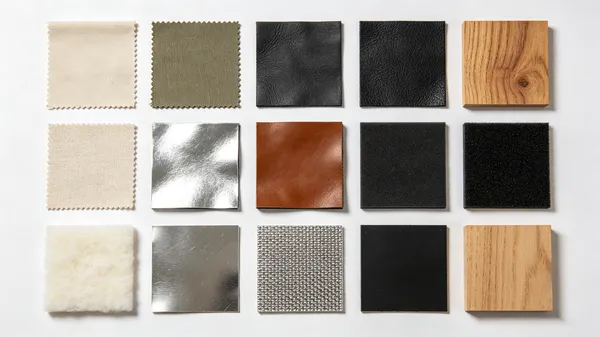
Hot-melt adhesive film can bond many materials, including:
| PU leather | TPU | TPE |
| Nylon fabric | Cotton | Polyester fabric |
| Composite fabrics | Leather | Metal |
| Wood | EVA foam | XPE foam PVC |
Before lamination, ensure all surfaces are:
✅ Clean
✅ Dry
✅ Free from dust and oil.
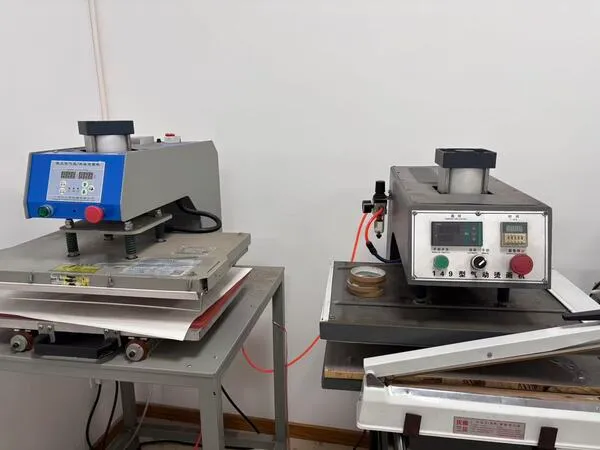
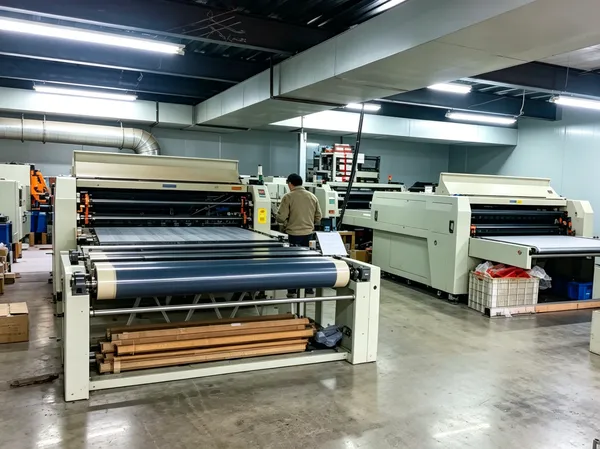
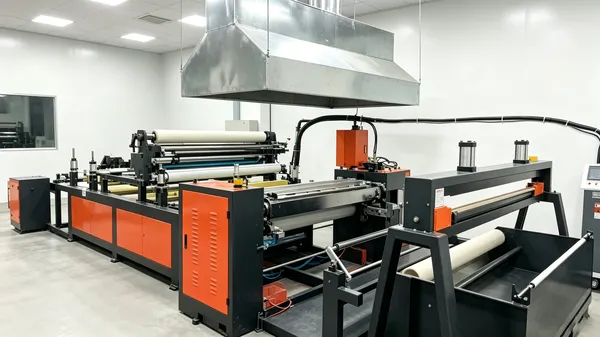
Heat Press Equipment
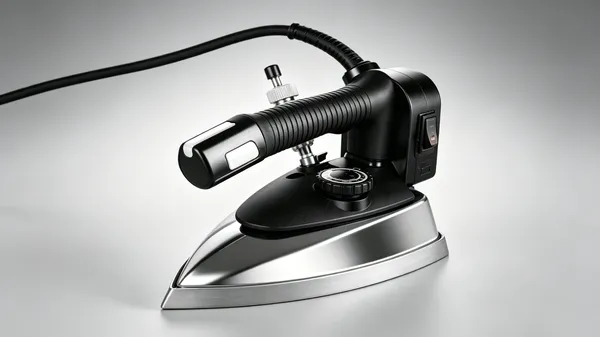
| Equipment | Best Application |
| Industrial Iron | Small repairs and home use |
| Flat Heat Press | Samples and logos |
| Flatbed Laminator | Medium-volume production |
| Roller Laminator | Continuous industrial production |
How to Use Hot-Melt Adhesive Film?
There are two common ways to use hot-melt adhesive film:
- Using film without release paper.
- Using film with release paper.
The correct method depends on your production process.
How to Use Hot-Melt Adhesive Film Without Release Paper
Film without release paper consists of only one layer of adhesive.
Simply place the adhesive film between two materials and apply heat and pressure.
This is the simplest and most efficient bonding method.
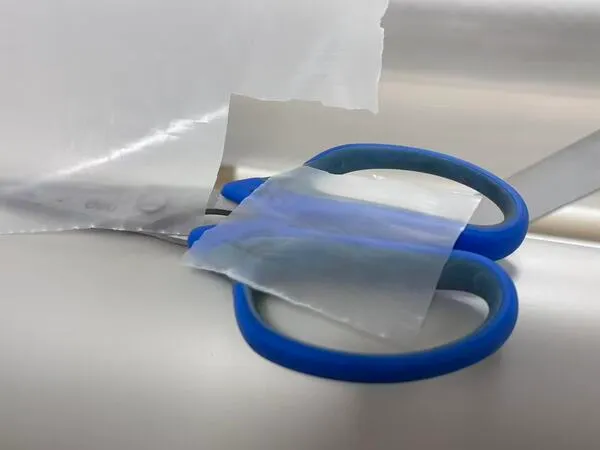
Step 1 Cut the Film
Cut the film into the required shape if necessary.
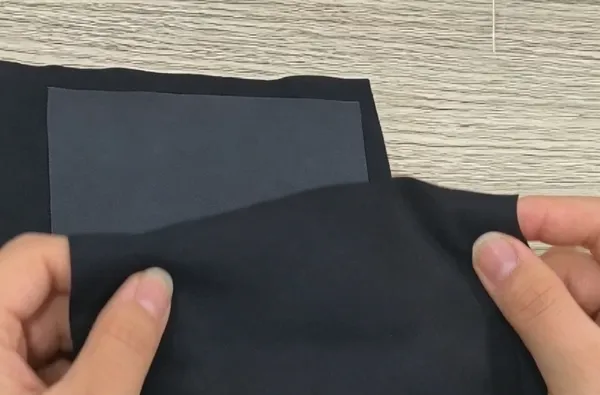
Step 2 Position the Film
Place the adhesive film between Material A and Material B.
Material A →Hot-Melt Adhesive Film→Material B
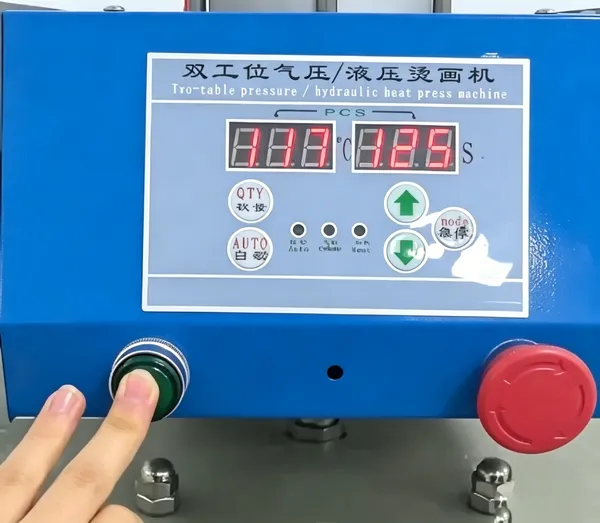
Step 3 Apply Heat and Pressure
The adhesive melts and penetrates both substrates.
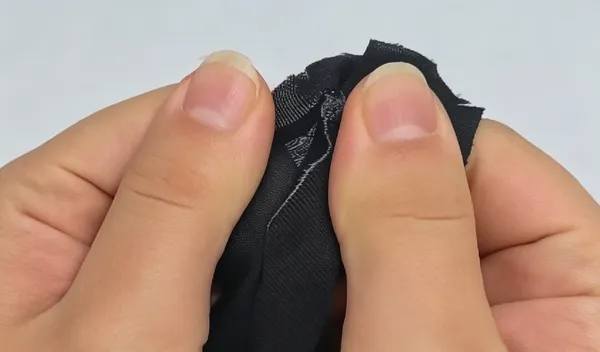
Step 4 Cooling
Allow the laminated materials to cool naturally.
Once cooled, a permanent bond is formed.
Best Applications
✅ Roll-to-roll lamination
✅ Large-area bonding
✅ Continuous manufacturing
✅ Textile composites
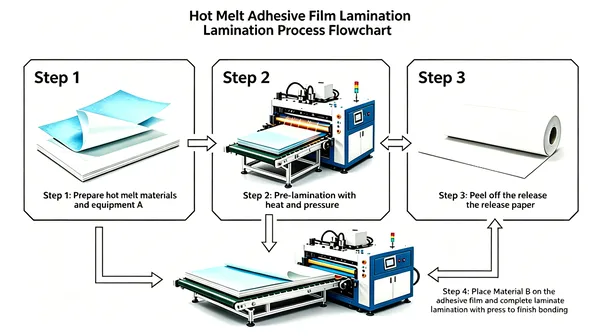
How to Use Hot-Melt Adhesive Film With Release Paper
Film with release paper requires a two-step lamination process.
First, laminate the adhesive film onto one material.
Second, remove the release paper and laminate the second material.
This method is ideal for applications that require precise positioning or pre-lamination.
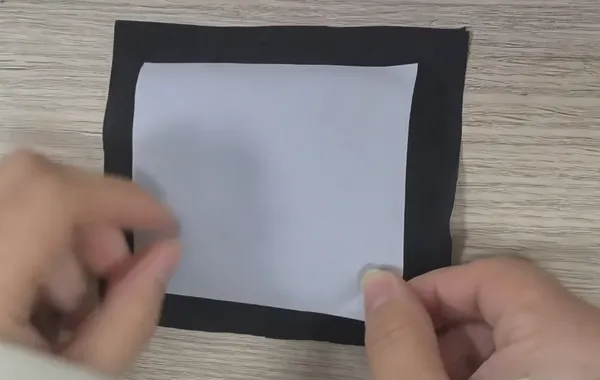
Step 1 Pre-Laminate the Film onto Material A
Place the adhesive side onto Material A.
Apply heat and pressure.
Only one side is bonded.
Material A → Hot-Melt Adhesive Film → Release Paper
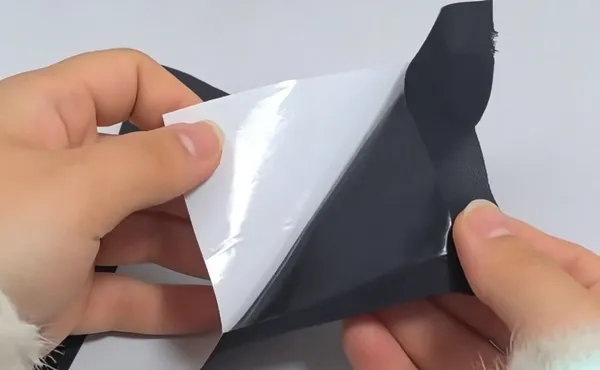
Step 2 Remove the Release Paper
Allow the material to cool slightly.
Carefully peel away the release paper.
The adhesive layer now remains attached to Material A.
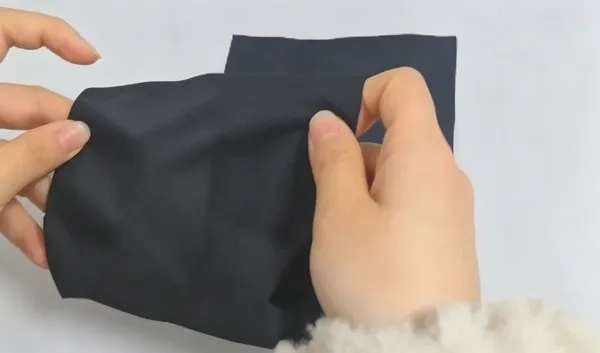
Step 3 Laminate Material B
Place Material B onto the exposed adhesive layer.
Apply heat and pressure again.
The adhesive melts and creates a permanent bond.
Material A → Hot-Melt Adhesive Film → Material B
Step 4 Cooling
Allow the laminated product to cool naturally.
Permanent bonding is achieved after cooling.
Best Applications
✅ Logos
✅ Embroidery patches
✅ Labels
✅ Automotive interior parts
✅ Die-cut products
Real Customer Example: Automotive Floor Mat Logo Application
One of our automotive customers manufactures custom car floor mats with replaceable vehicle brand logos.
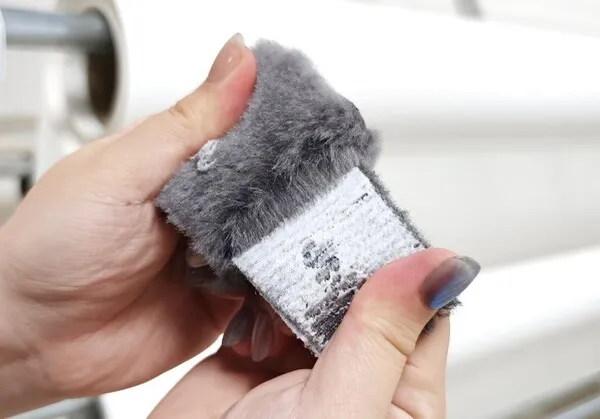
Instead of producing different floor mats for every vehicle brand, they developed a removable logo system.
Materials Used
Material A:
Needle-punch automotive carpet.
Material B:
Velcro loop fabric.
The loop fabric allows different embroidered vehicle logos to be attached and replaced easily.
Previous Production Problems
The customer originally used liquid spray glue.
Problems included:
- Glue penetration through the carpet surface
- Contaminated Velcro loops
- Uneven bonding
- High rejection rates
- Low production efficiency
- Edge lifting after long-term use
New Lamination Process
- Pre-laminate the hot-melt adhesive film onto the carpet.
- Remove the release paper.
- Laminate the Velcro loop fabric.
- Cool and inspect.
Final Results
✅ Cleaner production
✅ No glue contamination
✅ Better bonding consistency
✅ Lower rejection rates
✅ Easier automation
✅ Replaceable logo design
How to Set Temperature, Pressure, and Time?
It depends on the circumstances.Temperature, pressure, and pressing time directly affect bonding quality.
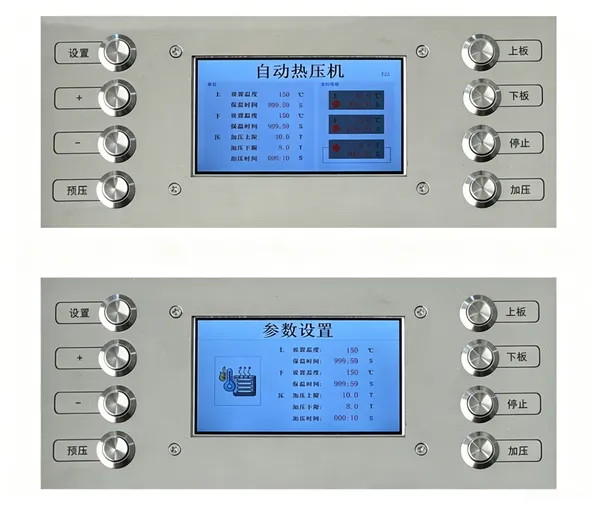
The optimal parameters depend on:
- Film thickness
- Material thickness
- Material type
- Equipment type
Recommended Parameters
| Parameter | Typical Range |
| Temperature | 120–160°C |
| Pressure | 2–5 bar |
| Time | 8–15 seconds |
General Rules
Thicker materials usually require:
- Higher temperature
- More pressure
- Longer pressing time
Most bonding failures happen because the adhesive is not fully melted.
Common Problems and Solutions
| Problem | Cause | Solution |
| Weak adhesion | Low temperature | Increase temperature |
| Glue bleed-through | Excessive heat | Reduce temperature |
| Delamination | Wrong adhesive film | Change adhesive type |
| Wrinkles | Uneven heating | Calibrate equipment |
| Edge lifting | Insufficient pressure | Increase pressure |
How to Choose the Right Hot-Melt Adhesive Film?
Material compatibility is the most important factor when selecting a hot-melt adhesive film.
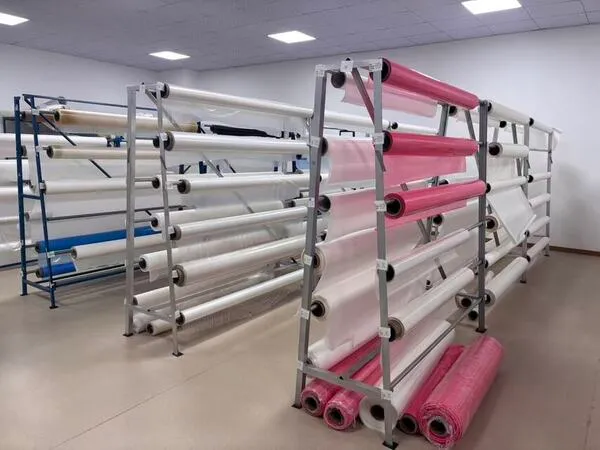
Different materials require different polymer systems.
| Material | Recommended Film |
| Polyester | PES |
| Nylon | PA |
| Leather | TPU |
| EVA Foam | EVA |
| PVC | TPU |
| TPE | TPU |
| Metal | PES |
| Wood | EVA |
General Selection Principles
Choose a film based on:
- Material compatibility
- Heat resistance requirements
- Wash resistance requirements
- Flexibility requirements
- Production process
If you are bonding two completely different materials, laboratory testing is highly recommended before mass production.
Frequently Asked Questions
Yes, for small projects. Industrial production should use professional equipment.
Possible causes include:
- Low temperature
- Insufficient pressure
- Short pressing time
- Wrong adhesive film selection
Yes. Wash resistance depends on the polymer type.
Without release paper:
✅ Continuous lamination.
With release paper:
✅ Precise positioning.
✅ Logos and patches.
Material compatibility is the most important factor.
If you are unsure, we recommend sending your substrates for laboratory testing.You can submit the form directly on the left.
Conclusion
Using hot-melt adhesive film is straightforward, but achieving strong and reliable bonding requires more than simply applying heat.
By understanding the two application methods, selecting suitable equipment, optimizing processing parameters, and choosing the right adhesive film, manufacturers can improve product quality, reduce production defects, and increase manufacturing efficiency.
Whether you’re manufacturing automotive interiors, apparel, footwear, furniture, or industrial composites, hot-melt adhesive film offers a clean, efficient, and dependable bonding solution.
Need Help Selecting the Right Hot-Melt Adhesive Film?
Our engineers can help you:
✅ Recommend the best adhesive film for your materials
✅ Optimize processing parameters
✅ Test your materials in our laboratory
✅ Provide free sample rolls for production trials
🔴 Get Free Sample
🔴 Request Material Testing