
Slot Die Coating Defects? How Hot Melt Adhesive Film Delivers Consistent Quality and Yield
Slot die coating is a core technology in high‑precision hot melt application, used extensively for automotive interiors, technical textiles, footwear, and electronics packaging. Coating quality—such as cross-web thickness uniformity and flawless surface finish—directly determines final product performance and overall manufacturing yield.
When coating flaws appear, many production managers and engineers instinctively spend endless hours micro-adjusting die gaps, pump pressures, and line speeds. However, the industry truth is that most of these problems originate not from your machinery, but from the quality of the adhesive raw material itself.
HRS is a dedicated hot melt adhesive film manufacturer. We formulate, produce, and rigorously test every roll of film to ensure it performs flawlessly on your existing slot die line. Our sole business is engineering high-purity films that eliminate coating defects at the source, saving you from costly and complex machinery modifications.
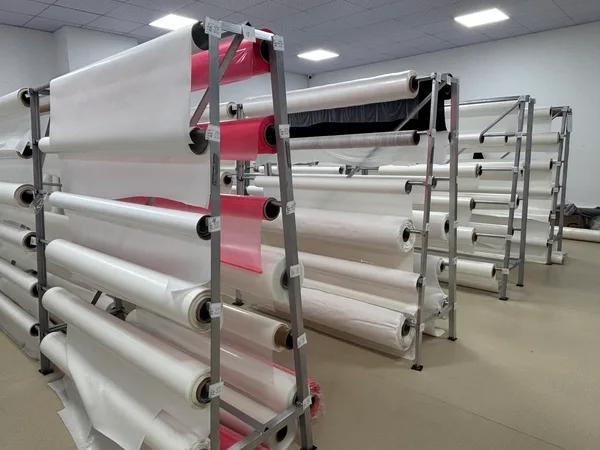
Global Market Context: Why Adhesive Film Quality Matters More Than Ever
Driven by skyrocketing demand from the automotive, apparel, electronics, and smart packaging sectors, the global hot melt adhesive film market is expanding rapidly. Independent research confirms strong, sustained growth:
| Market Segment | 2025 Value | Forecasted Value | CAGR | Data Source |
| Global Hot Melt Adhesive Film | USD 623 million | USD 809 million (2031) | 4.5% | LP Information, 2025 |
| Asia‑Pacific Adhesives Market | USD 32.08 billion | USD 42.92 billion (2030) | >6% | Research and Markets, 2025 |
As manufacturing lines accelerate and end-customers demand tighter tolerances, the choice of adhesive film has become the absolute divider between high-margin production and expensive scrap. HRS aligns with the world’s most rigorous manufacturing standards, supplying films engineered to meet the tightest slot die tolerances.
What Causes Thickness Variation in Slot Die Coating?
Cross-web thickness variation, such as left-to-right inconsistency, thin centers, or heavy edges, is primarily driven by poor melt flow stability and inconsistent viscosity of the adhesive polymer, rather than simple shim or die gap misalignment. If the adhesive raw material has wide viscosity swings when melted, even a perfectly calibrated set of die lips cannot deliver a constant, uniform coat weight.
To solve this, HRS hot melt adhesive films are produced using fully automated internal mixing and multi‑stage high-shear homogenization systems. This guarantees that batch‑to‑batch melt viscosity variation remains under 3%. Combined with real-time online gauge measurement during the slitting process, every roll ships with a thickness tolerance of ±2% or better, eliminating the need for constant machine tweaking and stabilizing your coat weight automatically.
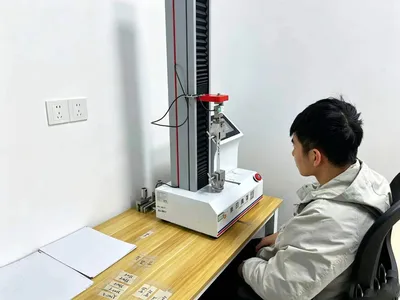
| Technical Parameter | Industry Average | HRS Film Performance | Reference Source |
| Slot Die Thickness Accuracy | ±1% (Theoretical machine limit) | ±2% film tolerance, ultra-stable melt flow | Converting Quarterly |
| Scrap Rate During Stable Runs | Up to 40% (Due to raw material instability) | Drastically reduced near 0% | Karlsruhe Institute of Technology (KIT) |
| First-Pass Yield During Changeover | 50% – 70% | Consistently >90% with HRS film | Karlsruhe Institute of Technology (KIT) |
How to Eliminate Streaks and Scratches in Slot Die Coating?
Longitudinal surface streaks and scratches are almost entirely caused by contaminants, such as carbonized particles, unmelted gel specks, or foreign debris trapped at the die lip. If the incoming adhesive film carries embedded impurities from the fabrication stage, standard in-line mesh filters are powerless to stop them from blocking the slot gap and ruining your surface finish.
This is why HRS begins with 100% high‑purity virgin base resins. During extrusion, the molten polymer passes through a proprietary five‑stage precision high-pressure filtration system, stripping out physical contaminants down to the micron level. Furthermore, all slitting and rewinding are conducted in a certified cleanroom environment to prevent any secondary dust contamination, keeping your die lips clean and ensuring a mirror-smooth finish hour after hour.
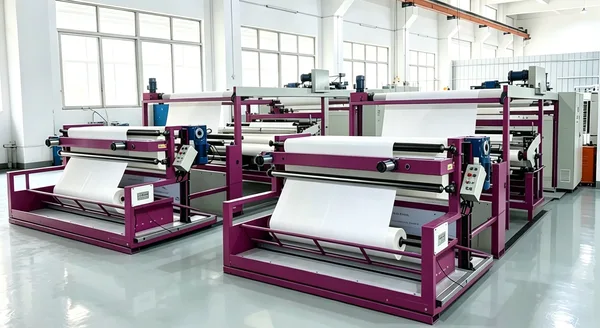
Industry Fact: According to the Adhesive and Sealant Council (ASC), 15% of all bonding failures are directly attributed to incomplete melting caused by impurities and hard particles within the adhesive matrix. HRS eliminates these non-meltable elements at the film stage.
Why is My Slot Die Coating Line Experiencing Intermittent Flow and Voids?
Sudden, momentary breaks in the adhesive curtain—which create un-coated blanks or “holidays” on the substrate—are typically caused by highly cross‑linked gel particles or un-melted hard spots within the raw adhesive. At high web speeds, a momentary blockage at the slot die gap will ruin hundreds of meters of substrate in a matter of seconds before the gel particle passes.
Through optimized polymer chemistry and unique low‑temperature, low-shear plasticization technology, HRS completely prevents the formation of these high-molecular-weight gel clusters. Our Melt Flow Index (MFI) fluctuates by less than 3% batch-to-batch, providing a continuous, reliable melt stream without sudden gaps or failures, even during aggressive high-speed production runs.
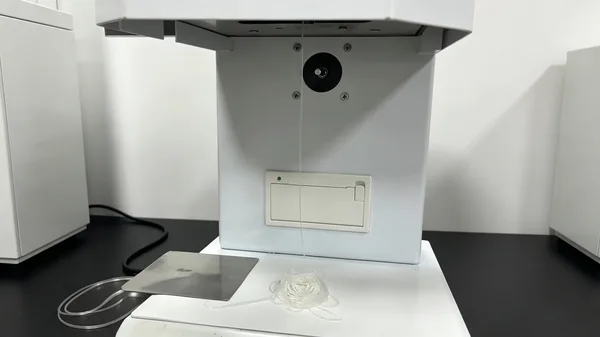
What Causes Pinholes and Air Bubbles in Hot Melt Coating?
Microscopic bubbles and pinholes trapped in the cured adhesive layer stem from atmospheric air entrained during melting and moisture absorbed by the raw material from the environment. When heated in the slot die system, this moisture vaporizes into steam bubbles, destroying the waterproof and hermetic sealing performance of the final lamination.
To eliminate this issue at the root, the extrusion systems at HRS utilize deep vacuum degassing channels to extract volatile gases directly from the molten polymer matrix during manufacturing. Additionally, we integrate proprietary anti-hydrolysis agents into our formulations, capping moisture absorption far below the industry average so that you get bubble-free lamination straight out of the box without time-consuming pre-baking.
Technical Guide Note: Proven melt vacuum degassing can reduce internal bubble counts from ~1,000 per cm² to fewer than 10 per cm² (Jaynn Industry Application Guide). HRS shifts this intensive degassing burden from your coating line to our factory.
How to Reduce Edge Bead Defects in Slot Die Application?
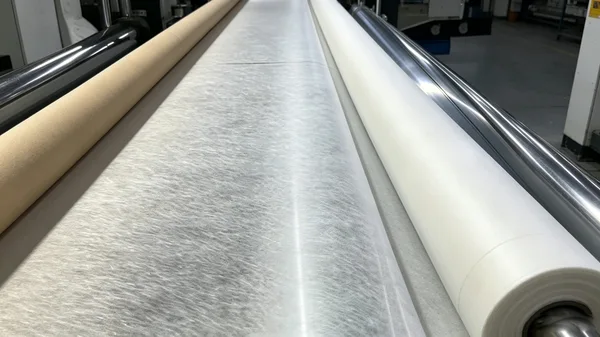
“Edge Bead”—where the adhesive layer is significantly thicker at the web margins than in the center—is deeply rooted in the rheological behavior and thixotropic property of the polymer. If the adhesive does not regain its viscosity quickly after exiting the die lips, the molten material sags and accumulates at the borders under surface tension, causing winding defects and heavy trim waste.
The HRS technical team solves this by designing adhesive formulations with precisely tailored thixotropic indexes and crystallization kinetics optimized specifically for slot die mechanics. Under high shear within the die, our film flows freely; however, the instant it exits the lips, its viscosity recovers rapidly to “lock” the film edge in place, achieving an edge bead reduction of over 30% and cutting down edge-trim scrap significantly.
Global Case Studies: Proving the Value of HRS Hot Melt Film
👟 Case 1: Footwear Manufacturing — Eco-Transformation & Efficiency Upgrades
- The Challenge: A major footwear OEM was facing strict environmental penalties due to VOC emissions from manual solvent-based glues, compounded by irregular adhesive thickness.
- The Transition: Switched to HRS Polyamide (PA) Hot Melt Adhesive Film utilizing inline heat-press lamination.
- The Results: VOC emissions dropped by 90%, labor requirements were reduced by 2 operators per line, and the final assembly yield jumped from 89% to 96%.
🚗 Case 2: Automotive Interiors — Absolute Durability in Extreme Environments
- The Challenge: A Tier-1 EV seat supplier using liquid solvent adhesives received constant complaints regarding severe cabin odors and heat-induced delamination under direct summer sunlight.
- The Transition: Adopted HRS Automotive Grade Adhesive Film, configured for rapid activation at
for 20 seconds.
- The Results: Component lamination cycle times fell from 4 hours to 25 minutes (an 87.5% increase in efficiency). After passing 100,000 rigorous vibration testing cycles and a harsh
to
thermal shock loop, the bond strength retained
of its value with zero odor complaints.
📱 Case 3: Consumer Electronics — Micro-Precision and Cost Reduction
- The Challenge: A top-tier wearable electronics contract manufacturer experienced display panel lifting caused by subtle raw material gauge variations, scrapping expensive display components.
- The Transition: Introduced HRS Ultra-Thin Precision Film, strictly controlled within a
thickness tolerance window.
- The Results: First-Pass Yield (FPY) climbed from 78% to 96%, generating an annual material scrap savings of over USD 280,000+.
Start with the Film, Not the Machine: Optimize Your Coating ROI
Your high-precision slot die coater can only perform as well as the material you feed it. Rather than allowing your engineering team to burn through valuable downtime recalibrating mechanical parameters, start with an adhesive film engineered for rheological perfection.
HRS is an adhesive film specialist that understands the realities of coating lines. We offer an expansive product portfolio across multiple polymer types, including PA, PES, EVA, TPU, and EAA. Our products range in thickness from to
with fully customizable slitting widths. Every batch is subjected to strict quality control, including melt viscosity stability testing, ball-and-ring softening point analysis, T-peel strength evaluation, and real-world slot die coating simulations before dispatch.
Long-term HRS partners report that new product setup times are cut by 50%, while continuous production line yields consistently exceed 97% (up from an industry average of 85%). We don’t just supply rolls of film; we provide full application engineering support to help your team establish the optimal processing window for your specific machinery.
Why Smart Factories Choose Hot Melt Adhesive Film
Slot die coating stability is 70% material rheology and 30% mechanical fine-tuning.
| HRS Film Technical Feature | Your Tangible Economic Benefit | Global Industry Benchmark |
| Five‑Stage Filtration & High Purity | Eradicates streaks and surface scratches; scales down die-cleaning frequency. | 15% of bonding failures stem from un-melted raw material impurities (ASC). |
| Strict | Guarantees consistent cross-web coat weight; eliminates dry spots and adhesive bleed. | Suboptimal raw materials cause up to 40% scrap rates in precision coating. |
| MFI Fluctuations Under 3% & Zero Gels | Eliminates flow disruptions during high-speed runs; starts up smoothly. | Average industry first-pass yields hover below 90% during product changeovers. |
| Integrated Melt Vacuum Degassing | Eliminates pinholes and voids; successfully passes extreme waterproof and pressure tests. | Untreated molten polymer can generate up to ~1,000 micro-bubbles per cm². |
| Tailored Slot Die Rheological Profiles | Reduces edge-bead accumulation by 30%, minimizing trimming waste. | Edge flaws are the primary cause of roll telescoping and hard-edge winding defects. |
Request Free Sample Rolls & Process Engineering Consultation
Are you struggling with persistent coating lines, air bubbles, or thickness variations on your slot die lines? Stop wasting material on blind mechanical troubleshooting.
HRS is now offering Free Trial Sample Rolls and comprehensive Technical Coating Audits for qualified manufacturing facilities worldwide. Our international application engineers are ready to assist you via remote diagnostics or on-site parameter tuning to optimize your manufacturing window.