
How Automotive Manufacturers Develop Anti-Slip Solutions with TPE Gel Adhesive Coating
Automotive interior manufacturers often need materials that can improve product stability without changing their existing design structure.
For applications such as automotive anti-slip mats, interior accessories, and protective components, the challenge is usually not the fabric itself. Many fabrics already meet requirements for appearance, comfort, and structure, but they lack the surface friction needed to prevent movement during use.
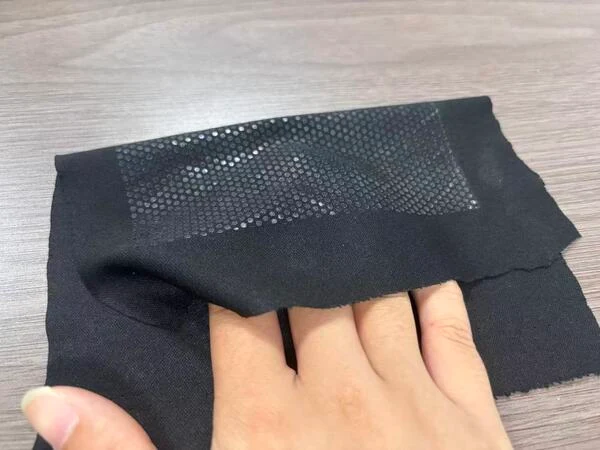
A TPE gel adhesive coating solution provides a practical way to add anti-slip functionality to different fabric substrates. By applying a functional TPE gel layer and protecting it with a PET transparent release film, manufacturers can develop ready-to-process anti-slip materials suitable for automotive applications.
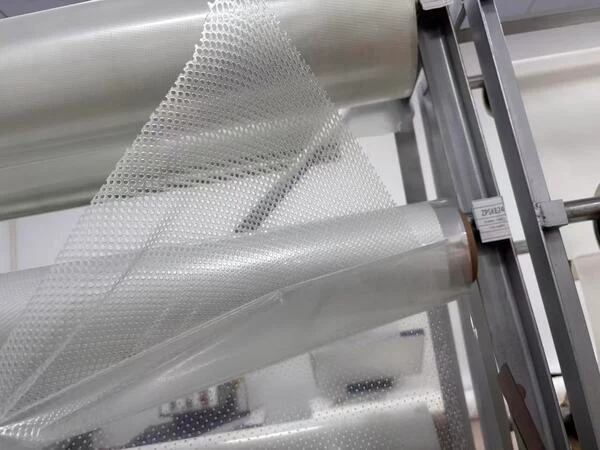
For bulk production, the key is not only choosing the right adhesive material, but also ensuring substrate compatibility, stable performance, and reliable supply support.
What Is TPE Gel Adhesive Anti-Slip Material?
A TPE Hot Melt Adhesive Film solution provides a practical way to add anti-slip functionality to different fabric substrates., a TPE gel adhesive layer, and a PET transparent release film.
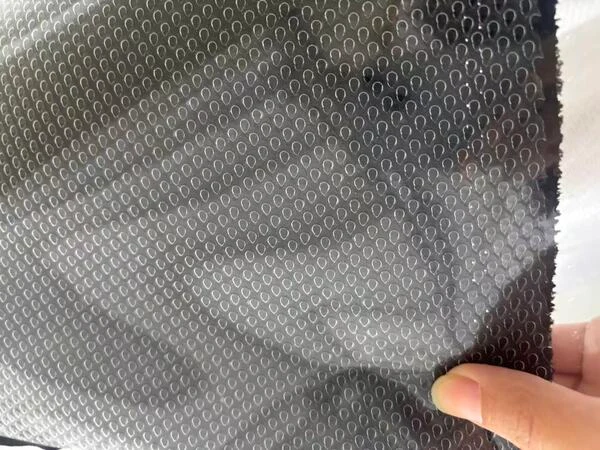
The main function of each component is different:
| Component | Main Function |
| Fabric substrate | Provides structure, appearance, and hand feel |
| TPE gel adhesive layer | Provides friction performance and anti-slip function |
| PET transparent release film | Protects the TPE surface before use |
The anti-slip performance mainly comes from the TPE gel adhesive layer.
The fabric is used as the supporting substrate and can be selected according to the customer’s product requirements.
Depending on the project, manufacturers may:
- Provide their own fabric materials
- Request assistance in selecting suitable fabrics
- Develop a complete composite material solution
After removing the PET release film, the exposed TPE gel surface provides the required anti-slip function.
Why Is TPE Gel Adhesive Used for Automotive Anti-Slip Applications?
Different automotive products require different levels of friction, flexibility, and surface performance.
TPE gel adhesive is suitable for these applications because it combines functional performance with material flexibility.
High Friction Surface Performance
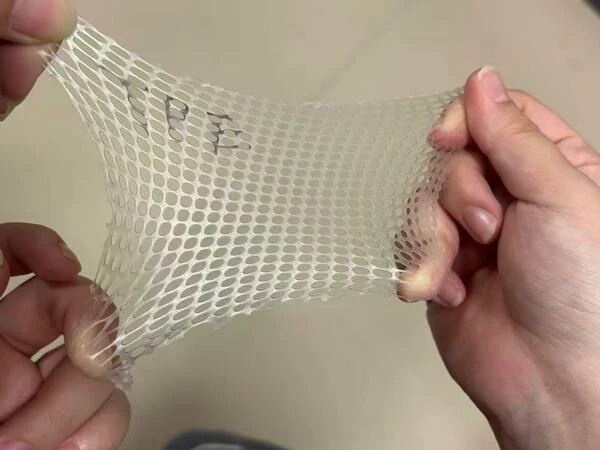
The primary purpose of TPE gel adhesive is to create a higher-friction surface.
Compared with untreated textile surfaces, the TPE gel layer improves contact stability between the product and the application surface.
This helps reduce:
- Unwanted movement
- Position shifting
- Product instability during use
For automotive accessory manufacturers, this provides a simple method to upgrade existing product designs.
Soft and Flexible Material Characteristics
Automotive interior products often require materials that maintain comfort and flexibility.
Compared with rigid anti-slip materials, TPE gel adhesive provides:
- Soft surface feeling
- Flexible performance
- Better adaptability to different product structures
This makes it suitable for applications where both functionality and user experience are important.
PET Release Film Protection During Handling
During storage and transportation, the TPE gel surface needs protection.
The PET transparent release film helps:
- Prevent dust contamination
- Protect the adhesive surface
- Maintain material cleanliness before use
This is especially important for bulk shipments where materials may be stored before production.
Engineering & Technical Considerations Before Production
For automotive applications, selecting a TPE gel adhesive solution requires more than checking whether the material provides anti-slip performance.
Engineers should evaluate the relationship between the adhesive layer, substrate, and final application environment.
Substrate Surface Compatibility
Although the anti-slip function mainly comes from the TPE gel adhesive layer, the substrate affects the final composite performance.
Important factors include:
- Fabric structure
- Surface treatment
- Thickness
- Flexibility
Common substrate considerations include:
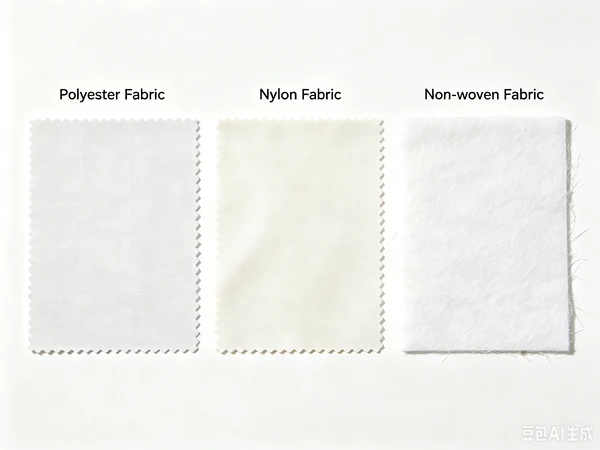
Polyester Fabrics
Polyester is widely used because of its stable structure and availability.
Nylon Fabrics
Nylon can provide good flexibility but may require evaluation depending on surface treatment.
Nonwoven Materials
Nonwoven substrates may require compatibility testing because surface structure can vary significantly.
Before bulk production, testing the actual customer substrate is recommended.
For different Textile Bonding Solutions, manufacturers should evaluate substrate structure, surface treatment, and flexibility requirements before mass production.
Coating Thickness and Hand Feel Balance
The TPE gel adhesive layer thickness affects both performance and product feeling.
A thicker coating may provide:
- Higher material presence
- Stronger surface performance
However, excessive thickness may affect:
- Flexibility
- Hand feel
- Product appearance
A thinner coating may improve:
- Softness
- Material flexibility
But the required anti-slip performance must still be maintained.
Therefore, selecting the correct coating thickness is an important part of product development.
Adhesion Performance and Durability
For long-term applications, manufacturers should evaluate:
- Adhesive bonding stability
- Resistance to repeated handling
- Surface performance after use
Before mass production, application testing can help confirm whether the selected TPE gel adhesive meets the product requirements.
Important validation items may include:
- Bonding performance between TPE and substrate
- Surface condition after storage
- Performance under expected usage conditions
Automotive Environment Considerations
Automotive interiors may experience different environmental conditions, including:
- High temperatures inside vehicles
- Temperature changes between seasons
- Long-term storage before assembly
Therefore, manufacturers should consider whether the selected TPE gel adhesive solution matches the expected application environment.
Material evaluation should consider:
- Temperature resistance requirements
- Surface stability
- Long-term performance expectations
How Can Automotive Manufacturers Cooperate with VOMELT?
Different manufacturers have different requirements when developing anti-slip materials.
Some customers already have their own fabric supply chain and only need a suitable TPE gel adhesive solution.
Others may need support in selecting both the substrate and adhesive system.
VOMELT provides two flexible cooperation models based on customer needs.
Cooperation Model 1: Customer Provides Fabric Materials
For manufacturers that already have fabric suppliers, the process focuses on selecting and developing the correct TPE gel adhesive solution.
Step 1: Customer Provides Fabric Information
Customers can provide:
- Fabric type
- Material specifications
- Product application
- Required performance
For better evaluation, customers may also provide fabric samples.
Step 2: VOMELT Evaluates Material Compatibility
Based on the customer’s fabric and application requirements, VOMELT evaluates:
- TPE gel adhesive compatibility
- Surface bonding performance
- Required coating solution
- Processing requirements
The purpose is to identify a suitable adhesive solution before moving into mass production.
Step 3: Supply TPE Gel Adhesive Solution
After confirmation, VOMELT provides the required material solution, including:
- TPE gel adhesive material
- PET transparent release film protection
- Customized specifications according to project requirements
This model is suitable for manufacturers that already control their fabric supply chain.
Cooperation Model 2: VOMELT Helps Source Fabric Materials
Some customers understand their final product requirements but do not have suitable fabric resources.
For these projects, VOMELT can provide additional fabric sourcing support.
Step 1: Customer Shares Product Requirements
Customers provide information such as:
- Final product application
- Required appearance
- Thickness requirements
- Flexibility requirements
- Expected performance
Step 2: Fabric Selection Support
Based on the application requirements, VOMELT helps identify suitable fabric options.
The selected fabric needs to match:
- Product design requirements
- TPE gel adhesive performance
- Final application conditions
Fabric sourcing service may involve additional cost depending on the project scope.
Step 3: Complete Material Solution Development
After confirming the fabric option, VOMELT supports the development of the complete solution.
The final solution may include:
- Selected fabric substrate
- TPE gel adhesive layer
- PET transparent release protection
This allows customers to receive a more complete material development service.
How Do Manufacturers Process TPE Gel Adhesive Materials?
The production process depends on the customer’s application and cooperation model.
The general workflow is:
Step 1: Material Evaluation
Before production, manufacturers confirm:
- Substrate compatibility
- Required material performance
- Product specifications
Sample testing is recommended before bulk orders.
Step 2: Material Preparation
Depending on the project:
- Customers provide their own fabric materials, or
- VOMELT provides a matched material solution
The material is prepared according to the agreed specifications.
Step 3: Cutting and Product Assembly
After receiving the material, manufacturers can cut it according to product requirements.
Common applications include:
- Automotive anti-slip mats
- Interior accessories
- Protective components
Step 4: Remove PET Release Film and Apply
Before final use, the PET transparent release film is removed.
The exposed TPE gel adhesive surface provides the required anti-slip performance.
The process does not require:
- Additional adhesive application
- Secondary coating
- Hot pressing equipment
This helps simplify production operations.
Case Study: Developing a TPE Gel Adhesive Solution for Automotive Anti-Slip Mats
Customer Background
An automotive accessory manufacturer was developing an anti-slip mat product for vehicle interiors.
The customer already had an existing fabric material and wanted to improve the product’s anti-slip performance without changing the original material structure.
Customer Challenge
The customer’s existing material met requirements for:
- Appearance
- Product structure
- Manufacturing process
However, the final product required improved surface friction to reduce movement during vehicle use.
The customer needed a solution that could add functional performance while maintaining the original product design.
Engineering Solution
VOMELT evaluated the customer’s fabric material and developed a suitable TPE gel adhesive solution.
The development process focused on:
- Substrate compatibility
- Adhesive performance
- Material handling requirements
The TPE gel adhesive layer was selected as the functional component to provide the required anti-slip performance.
PET transparent release film was used to protect the surface before application.
Result
The developed solution helped the customer achieve:
- Improved anti-slip functionality
- Compatibility with existing fabric materials
- Simplified material handling
- Easier integration into production
The project demonstrated how manufacturers can upgrade existing products through functional adhesive technology rather than redesigning the complete product structure.
What Should Buyers Confirm Before Bulk Purchasing TPE Gel Adhesive Solutions?
Before selecting a supplier for long-term cooperation, manufacturers should evaluate several important factors.
Can the Supplier Evaluate Your Actual Materials?
A suitable supplier should not only provide standard products.
Manufacturers should confirm whether the supplier can support:
- Actual substrate testing
- Application evaluation
- Material selection recommendations
This helps avoid problems after bulk production begins.
Can the Supplier Provide Customized Solutions?
Different applications may require different specifications.
Buyers should confirm whether the supplier can adjust:
- Adhesive characteristics
- Material structure
- Dimensions
- Processing requirements
Customization capability is especially important for automotive applications.
Does the Supplier Support Long-Term Production?
For bulk purchasing, manufacturers should evaluate:
- Production stability
- Quality consistency
- Delivery capability
- Technical communication
A reliable supplier should support the complete process from sample testing to continuous production.
Why Choose VOMELT for TPE Gel Adhesive Solutions?
For automotive manufacturers, choosing a supplier is not only about purchasing an adhesive material.
A reliable partner should understand the relationship between:
- Adhesive performance
- Substrate requirements
- Production conditions
- Final product application
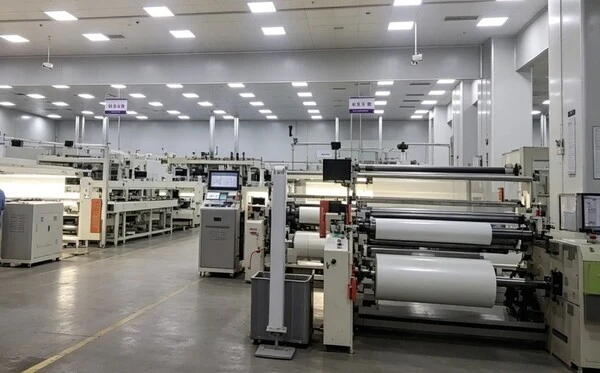
VOMELT focuses on providing customized TPE gel adhesive solutions for Automotive Interior Adhesive Solutions and other industrial applications.
Our support includes:
- Material evaluation before production
- Adhesive solution recommendations
- Customized material development
- Support from sample testing to bulk production
Whether customers already have their own fabric materials or require assistance in selecting suitable substrates, VOMELT works with manufacturers to develop practical anti-slip material solutions.
Conclusion: Developing Reliable Automotive Anti-Slip Solutions with TPE Gel Adhesive
For automotive interior manufacturers, improving anti-slip performance does not always require replacing existing materials or redesigning products.
A TPE gel adhesive solution provides a flexible approach by adding functional friction performance to different fabric substrates while maintaining production adaptability.
The success of a bulk project depends not only on the adhesive material itself, but also on proper material evaluation, technical support, and stable supply capability.
By working with an experienced supplier, manufacturers can develop anti-slip solutions that meet their product requirements while reducing development risks.
VOMELT supports automotive manufacturers with customized TPE gel adhesive solutions from material evaluation to mass production.
Frequently Asked Questions
To recommend a suitable solution, manufacturers should provide:
- Application details
- Product structure
- Fabric information (if available)
- Required material dimensions
- Expected performance requirements
Providing actual fabric samples can help improve the accuracy of material evaluation.
Yes. TPE gel adhesive solutions can be evaluated with different fabric substrates.
However, final performance depends on factors such as:
- Fabric surface structure
- Material composition
- Surface treatment
- Application requirements
Testing the actual substrate before bulk production is recommended.
Yes. Certain fabric treatments may influence bonding performance.
For example, surface coatings, waterproof treatments, or special finishing processes may affect adhesive compatibility.
Manufacturers should provide information about fabric treatment conditions during material evaluation.
The suitable coating thickness depends on the balance between:
- Anti-slip performance requirements
- Product flexibility
- Hand feel
- Final application conditions
A thicker coating may provide stronger surface presence, while a thinner coating may provide better flexibility.
The optimal specification should be confirmed through application testing.
The suitability depends on the specific TPE formulation and application requirements.
Manufacturers should evaluate:
- Expected temperature range
- Long-term exposure conditions
- Surface stability requirements
Testing under actual application conditions is recommended before mass production.
VOMELT mainly provides TPE gel adhesive solutions.
Depending on customer requirements, we can support:
- Customer-provided fabric materials
- Fabric selection assistance
- TPE gel adhesive solutions with PET release film protection
The cooperation model can be adjusted according to each project.
A typical process includes:
- Requirement discussion
- Material evaluation
- Sample testing
- Production confirmation
- Bulk order supply
This process helps manufacturers verify performance before entering large-scale production.
Contact VOMELT to discuss your application requirements and Request TPE Gel Adhesive Samples for evaluation before mass production.