
TPU Hot Melt Adhesive Film for Fabric and Sponge Lamination: Application Case Study
Flexible material lamination is widely used in automotive interiors, textile composites, and soft material applications. Selecting the right adhesive solution helps manufacturers achieve reliable bonding while maintaining material appearance, flexibility, and production efficiency.
In this application case, VOMELT TPU hot melt adhesive film XJU120 was used to bond diamond pattern polyester fabric with sponge through a controlled heat lamination process.
Project Overview
This project evaluated a bonding solution between diamond pattern polyester fabric and sponge using TPU hot melt adhesive film.
The material structure was:
Diamond Pattern Polyester Fabric + TPU Hot Melt Adhesive Film + Sponge
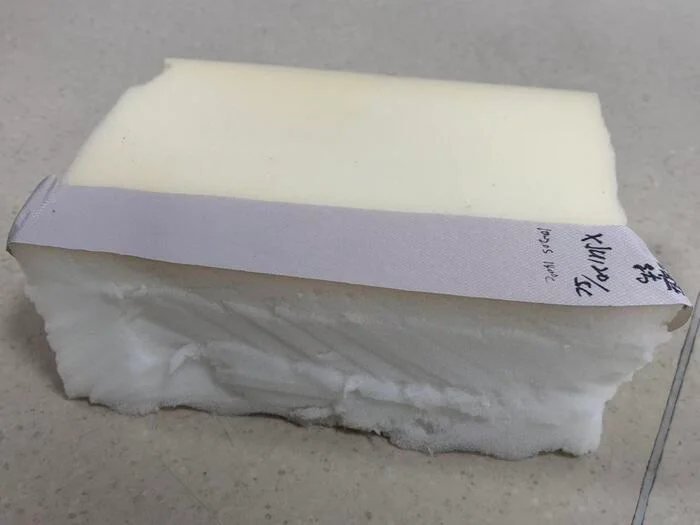
This laminated structure combines a decorative polyester fabric layer with a sponge substrate through a TPU hot melt adhesive film layer. The adhesive film provides a controlled bonding interface between different flexible materials.
Application Information
| Item | Specification |
|---|---|
| Application | Fabric and sponge lamination |
| Fabric Material | Diamond pattern polyester fabric |
| Substrate Material | Sponge |
| Adhesive Type | TPU Hot Melt Adhesive Film |
| Adhesive Model | XJU120 |
| Film Thickness | 0.05 mm |
| Pressing Temperature | 140°C |
| Pressing Time | 10–20 seconds |
| Equipment | Adjustable-gap flat heat press machine |
The purpose of this project was to evaluate a clean and efficient adhesive solution for flexible composite material bonding.
Why TPU Hot Melt Adhesive Film Was Selected
TPU hot melt adhesive film provides a dry adhesive layer that can simplify the lamination process while maintaining flexibility and bonding stability.
For this project, TPU hot melt adhesive film was selected because it provides:
- Good compatibility with polyester fabric and sponge materials
- Flexible bonding performance
- Clean lamination processing
- Controlled adhesive layer distribution
- Suitable performance for soft composite structures
Compared with traditional liquid adhesive systems, hot melt adhesive film provides a preformed adhesive layer that can improve process control during lamination.
Lamination Process
The TPU hot melt adhesive film was placed between the diamond pattern polyester fabric and sponge substrate.
The materials were bonded using an adjustable-gap flat heat press machine.
Before production evaluation, a laboratory sample was prepared to verify the bonding performance between the fabric and sponge materials.
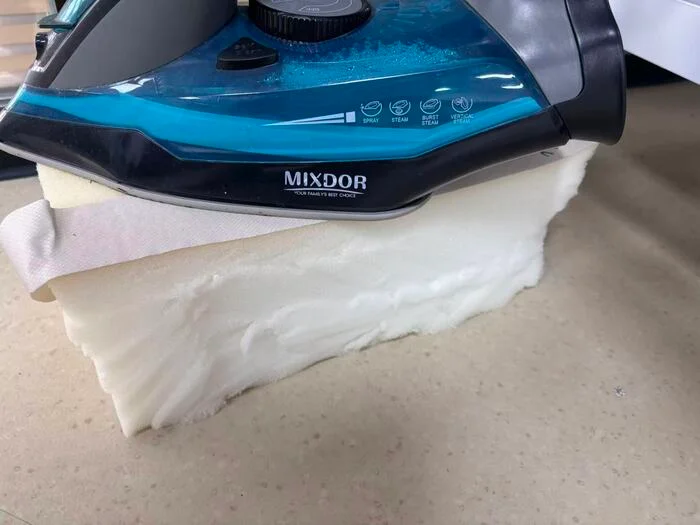
The heating process activates the TPU adhesive film, allowing the adhesive layer to melt and form contact with both material surfaces.
Processing Conditions
| Parameter | Value |
|---|---|
| Adhesive Film | TPU Hot Melt Adhesive Film XJU120 |
| Film Thickness | 0.05 mm |
| Temperature | 140°C |
| Pressing Time | 10–20 seconds |
| Equipment | Adjustable-gap flat heat press machine |
During the lamination process, heat activated the TPU adhesive film.
The adhesive layer melted and flowed between the fabric and sponge surfaces. After cooling, the adhesive formed a stable bond between the two materials.
Actual processing conditions may need adjustment depending on material structure, equipment configuration, and production requirements.
Application Results
The TPU hot melt adhesive film provided a practical bonding solution for fabric and sponge lamination.
After lamination, the bonded sample was evaluated to check the adhesion performance between the polyester fabric and sponge substrate.
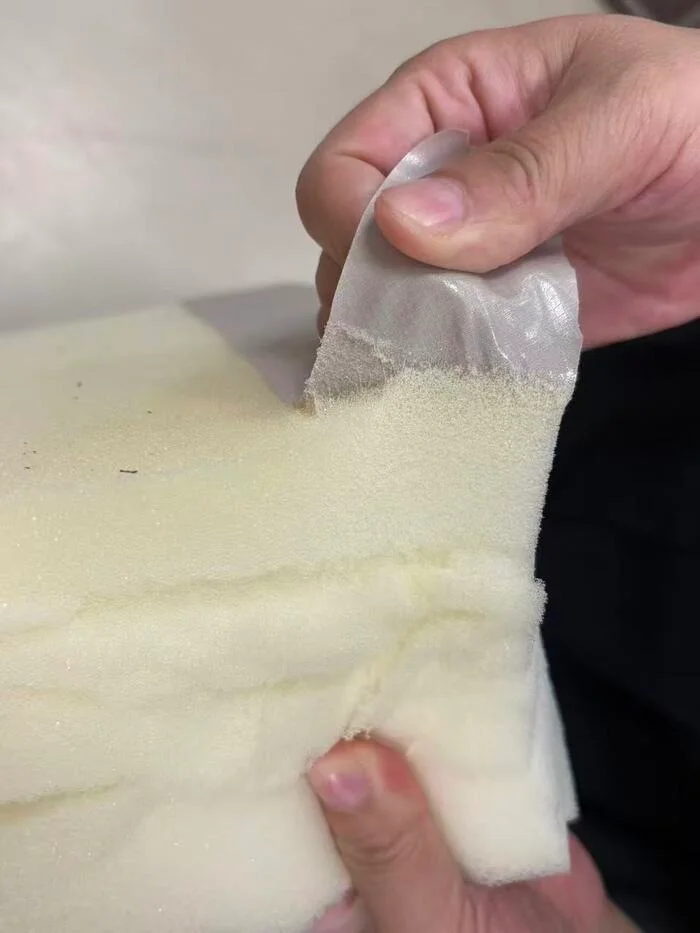
The test sample maintained the connection between the fabric layer and sponge structure, demonstrating the potential of TPU hot melt adhesive film for flexible composite bonding applications.
The laminated structure maintained:
- Fabric surface appearance
- Flexible material characteristics
- Stable bonding performance
For different applications, adhesive selection should be evaluated according to the actual materials and production conditions.
Advantages of TPU Hot Melt Adhesive Film for Lamination
TPU hot melt adhesive film is suitable for flexible bonding applications where softness, durability, and material compatibility are important.
Flexible Bonding Performance
TPU adhesive film can maintain flexibility after bonding, making it suitable for applications requiring soft hand feel and material movement.
Clean Production Process
The dry film format helps simplify adhesive handling compared with liquid adhesive coating systems.
Controlled Adhesive Application
The preformed adhesive layer provides consistent thickness and distribution during lamination.
Material Compatibility
TPU hot melt adhesive film can be evaluated with different fabrics, foams, and composite structures.
For textile-related bonding applications, learn more about hot melt adhesive film for textile applications.
Related Automotive Interior Applications
Hot melt adhesive film solutions are used for various automotive interior bonding applications, including:
- Fabric lamination
- Foam bonding
- Decorative interior materials
- Composite material assembly
Learn more about hot melt adhesive film for automotive interior applications.
How to Select the Right Hot Melt Adhesive Film
Selecting the correct adhesive film depends on several important factors.
Material Compatibility
Different fabrics, foams, and composite materials have different surface characteristics.
The adhesive should be evaluated with the actual materials to confirm bonding performance.
Processing Conditions
Important factors include:
- Lamination temperature
- Pressing time
- Pressure
- Equipment type
Final Application Requirements
The adhesive solution should match requirements for:
- Flexibility
- Bonding strength
- Material appearance
- Long-term durability
Different adhesive chemistries such as TPU, PA, and PES may provide different bonding characteristics.
Learn more about PA vs PES hot melt adhesive web selection.
FAQ
Can TPU hot melt adhesive film bond fabric to sponge?
Yes. TPU hot melt adhesive film can be evaluated for fabric-to-sponge lamination applications.
The final bonding performance depends on material compatibility and processing conditions.
What thickness of TPU adhesive film is suitable for fabric lamination?
The suitable thickness depends on the material structure and required bonding performance.
In this application case, a 0.05 mm TPU hot melt adhesive film was used for bonding polyester fabric and sponge.
What temperature is used for TPU hot melt adhesive film lamination?
Processing temperature depends on adhesive grade and material combination.
For this application case, the lamination temperature was 140°C with a pressing time of 10–20 seconds.
What materials can TPU hot melt adhesive film bond?
TPU hot melt adhesive film can be evaluated for bonding various flexible materials, including:
- Polyester fabrics
- Textile materials
- Sponge
- Foam
- Synthetic leather
- Composite structures
Need Help Choosing the Right Adhesive Film?
Selecting the correct hot melt adhesive film depends on the actual materials and production requirements.
VOMELT provides support including:
- Material evaluation
- Adhesive film selection
- Bonding trials
- Lamination process evaluation
- Sample testing
Customers can send their materials for testing. We can evaluate suitable hot melt adhesive film solutions based on application requirements.
Free samples are available for testing.