
How to Bond PP Fabric to Sponge for Mouse Pads with TPU Hot Melt Adhesive Film
Bonding PP fabric to sponge for mouse pad production can be more difficult than it looks. PP has a relatively difficult-to-bond surface, while the soft sponge layer adds another variable to the lamination process. In this application, we used corona-treated PP fabric, TPU hot melt adhesive film, and heat pressing to complete the laminate.
TPU hot melt adhesive film can be used to bond corona-treated PP fabric to sponge for mouse pad lamination. In one VOMELT application, YJU102 TPU hot melt adhesive film was processed at 130°C for 45 seconds, and the finished laminate met the customer’s bonding requirement. New projects should still be tested with the actual fabric, sponge, and production equipment.
This case shows why adhesive selection, PP surface treatment, and processing conditions need to be considered together rather than choosing an adhesive only by its name.
TL;DR: PP Fabric to Sponge Mouse Pad Bonding
| Item | Application Detail |
|---|---|
| Application | Mouse pad lamination |
| Top material | PP fabric |
| PP surface treatment | Corona treated |
| Backing material | Sponge |
| Adhesive | TPU hot melt adhesive film |
| VOMELT model | YJU102 |
| Processing temperature | 130°C |
| Pressing time | 45 seconds |
| Pressure | Not recorded |
| Sponge type | Not recorded |
| Result | Met the customer’s bonding requirement |
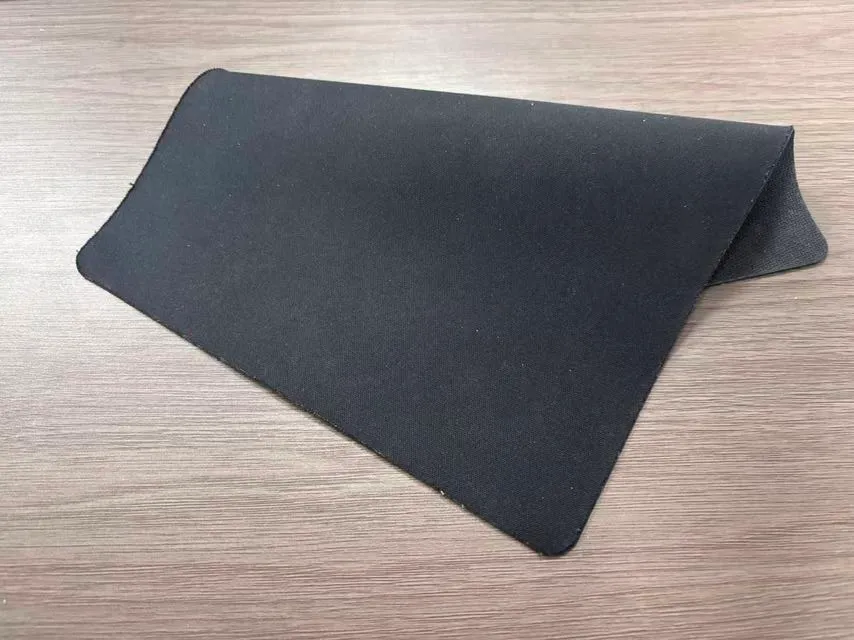
Why Is PP Fabric Difficult to Bond?
Polypropylene is lightweight and widely used in industrial fabrics, but its surface can make adhesive bonding more challenging than bonding many higher-surface-energy materials.
In this mouse pad application, the PP fabric was corona treated before lamination.
Corona treatment changes the surface condition of the PP fabric and can make it more suitable for adhesive bonding. However, surface treatment alone does not guarantee a good result.
The adhesive still needs to work with both sides of the laminate:
- the treated PP fabric;
- the sponge layer;
- the required flexibility;
- the available lamination process; and
- the finished mouse pad requirements.
This is why we normally recommend evaluating the complete material combination instead of selecting a hot melt adhesive film based on only one substrate.
How Was the Mouse Pad Lamination Tested?
The tested structure was simple:
Corona-treated PP fabric → YJU102 TPU hot melt adhesive film → Sponge
The materials were laminated using a heat-press process.
The confirmed processing conditions were:
- Temperature: 130°C
- Pressing time: 45 seconds
The original pressure setting was not recorded, so we do not use a pressure value as a recommendation for other projects.
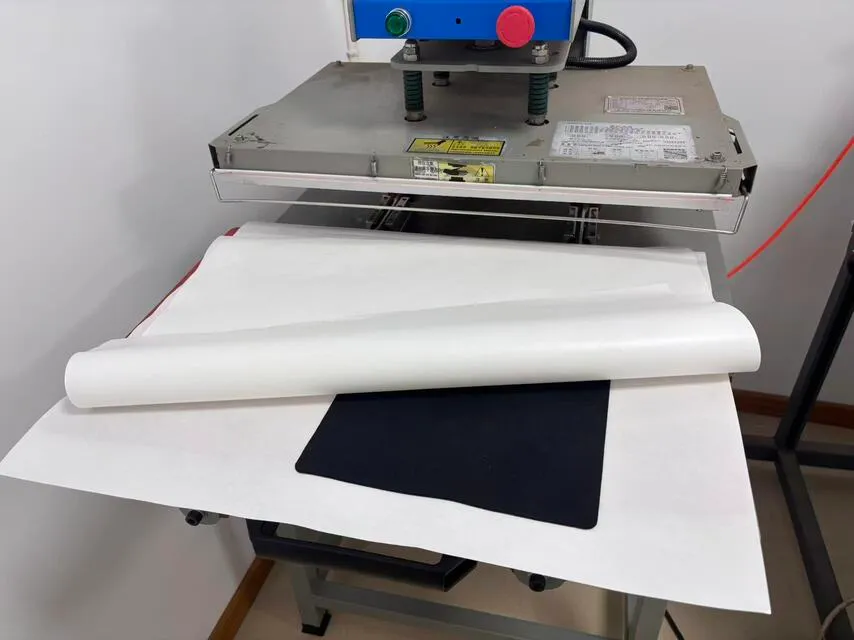
After lamination, the finished structure met the customer’s bonding requirement.
The 130°C and 45-second conditions are therefore useful as a record of this particular application, but they should not be treated as universal processing settings for every mouse pad.
Why Was TPU Hot Melt Adhesive Film Used?
A mouse pad is a flexible structure rather than a rigid panel. The adhesive layer therefore needs to work between a fabric surface and a soft backing without unnecessarily turning the laminate into a stiff structure.
For this project, we used YJU102 TPU hot melt adhesive film as the bonding layer.
Hot melt adhesive film also provides a dry adhesive format. The film can be positioned between the two substrates and activated with heat and pressure, avoiding the need to coat a liquid adhesive during the lamination step.
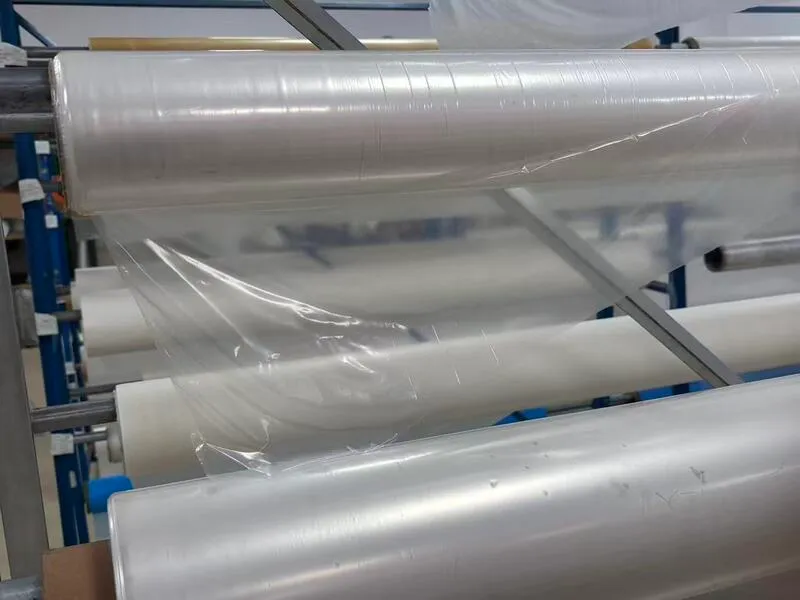
For manufacturers evaluating TPU hot melt adhesive film, this kind of film-based process can be worth testing when a clean and controlled adhesive layer is required.
Real Application: PP Fabric Bonded to Sponge
The important part of this case is that we are not discussing a theoretical PP-to-foam combination.
The actual application used:
- corona-treated PP fabric;
- sponge backing;
- YJU102 TPU hot melt adhesive film;
- 130°C processing temperature; and
- 45 seconds pressing time.
The finished laminate met the customer’s bonding requirement.
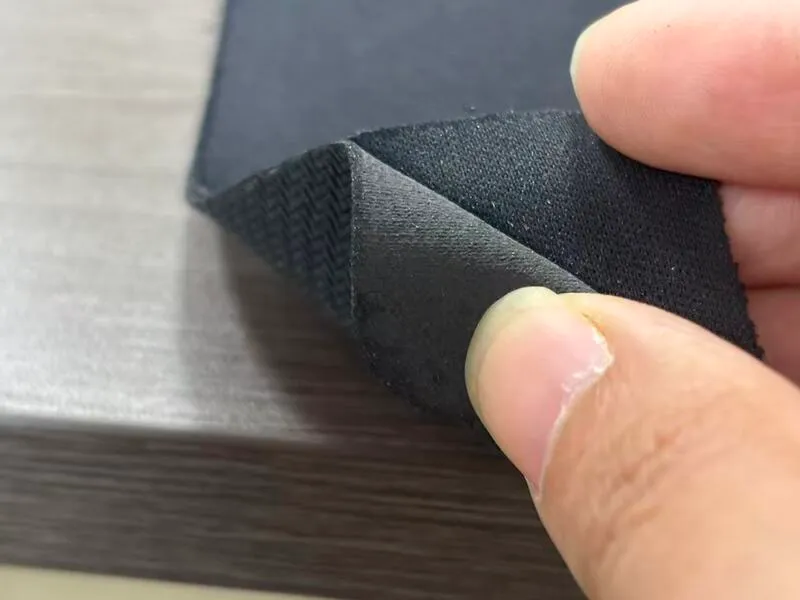
We do not have a standardized peel-strength value from this trial, so we do not describe the result using an invented N/25 mm figure. The recorded result is simply that the bonded structure met the customer’s application requirement.
Why Does Corona Treatment Matter for PP Fabric?
When a bonding problem involves polypropylene, increasing adhesive temperature is not always the right first response.
The condition of the PP surface also matters.
| Factor | Corona-Treated PP Fabric | Untreated PP Fabric |
|---|---|---|
| Surface preparation | Surface has been treated | No corona treatment |
| Adhesive evaluation | Better starting point for this application | May require additional evaluation |
| Bonding result | Depends on adhesive and process | Depends on surface and adhesive compatibility |
| Recommendation | Test the actual production fabric | Evaluate whether surface treatment is required |
In our mouse pad case, the PP fabric supplied for the trial had already been corona treated.
For a different PP fabric, we would first confirm its surface condition before assuming the same TPU adhesive and processing settings will produce the same result.
What Should You Check Before Bonding PP Fabric to Sponge?
1. Check the PP Fabric Surface
Confirm whether the PP fabric is corona treated, coated, printed, laminated, or otherwise surface modified.
Two fabrics described simply as “PP fabric” may behave differently during bonding.
2. Identify the Sponge Material If Possible
The exact sponge chemistry used in this particular project was not recorded.
That is important because different sponge materials can respond differently to heat, pressure, compression, and adhesive chemistry.
For a new project, we prefer to test the customer’s actual sponge rather than assume that all sponge materials behave the same way.
3. Evaluate Processing Temperature
The adhesive needs enough heat to activate properly, but the temperature must also be compatible with the PP fabric and sponge.
In this application, the successful trial used 130°C.
This is a useful starting reference for this case, not a universal specification.
4. Adjust Pressing Time
The confirmed pressing time was 45 seconds.
Production equipment, material thickness, heat transfer, and laminate size can all affect the required dwell time.
5. Establish Suitable Pressure
Pressure helps create contact between the PP fabric, adhesive film, and sponge.
Because the original pressure value was not recorded, we would establish the appropriate pressure during a new material trial instead of copying an unsupported number.
Common Problems When Laminating PP Fabric to Sponge
Weak Bonding at the PP Fabric
If the laminate separates at the PP interface, possible factors include surface condition, contamination, adhesive compatibility, and the heat-press process.
We would check the PP treatment first rather than immediately increasing the temperature.
Sponge Compression or Deformation
Sponge is sensitive to the complete combination of temperature, pressure, and pressing time.
More heat or pressure is not automatically better. The process needs to activate the adhesive while maintaining an acceptable finished structure.
Uneven Bonding Across the Mouse Pad
Large laminates need reasonably uniform heat and pressure. Otherwise, one section may bond correctly while another section remains weak.
Choosing the Adhesive Only for PP
This is one of the most important mistakes to avoid.
The adhesive sits between two different materials. A film that interacts well with treated PP still needs to be compatible with the sponge on the other side.
TPU Hot Melt Adhesive Film vs Liquid Glue for Mouse Pad Lamination
| Criteria | TPU Hot Melt Adhesive Film | Liquid Adhesive |
|---|---|---|
| Adhesive form | Dry film | Liquid |
| Placement | Film positioned between layers | Adhesive coated onto substrate |
| Activation | Heat and pressure | Depends on adhesive system |
| Liquid coating step | No | Usually required |
| Adhesive distribution | Controlled by film format | Depends on coating process |
| Material testing required | Yes | Yes |
Neither method is automatically the best adhesive solution for every mouse pad.
The right process depends on the actual PP fabric, sponge, equipment, required production speed, and finished-product requirements.
When Should You Evaluate TPU Hot Melt Adhesive Film?
TPU hot melt adhesive film is worth evaluating when a mouse pad or similar laminate uses a flexible fabric-to-sponge construction and the manufacturer prefers a dry film bonding process.
It may be particularly relevant when:
- the PP fabric has suitable surface treatment;
- a flexible laminate is required;
- a dry adhesive layer is preferred over liquid coating;
- the production line can provide controlled heat and pressure; and
- the actual materials can be tested before production.
The final adhesive selection should always be confirmed with the actual substrates.
How We Would Test a New Mouse Pad Material Combination
- Confirm the PP fabric construction and surface treatment.
- Identify the sponge type if that information is available.
- Review the current adhesive or bonding problem.
- Select a suitable hot melt adhesive film starting point.
- Run a small lamination trial.
- Adjust temperature, pressure, and dwell time according to the materials and equipment.
- Allow the laminate to cool before checking the bonded interface.
- Evaluate the finished structure according to the customer’s actual requirements.
This approach is more reliable than selecting an adhesive only from a generic hot melt glue temperature chart.
FAQ About TPU Hot Melt Adhesive Film for Mouse Pads
Is TPU hot melt adhesive film suitable for mouse pad lamination?
Yes, it can be evaluated for flexible mouse pad laminates. In one VOMELT application, YJU102 TPU hot melt adhesive film bonded corona-treated PP fabric to sponge at 130°C for 45 seconds, and the finished laminate met the customer’s bonding requirement.
Does PP fabric need surface treatment before bonding?
PP can be more difficult to bond than many other materials. Corona treatment is one method used to modify the surface before adhesive bonding. The PP fabric used in this application was corona treated.
What temperature was used for the mouse pad lamination?
The confirmed processing temperature in this specific application was 130°C.
How long was the laminate pressed?
The confirmed pressing time was 45 seconds.
What pressure was used?
The original pressure setting was not recorded. For a new project, pressure should be established using the actual PP fabric, sponge, adhesive film, equipment, and laminate thickness.
What type of sponge was used?
The exact sponge type was not recorded. We recommend testing the actual production sponge because different sponge materials can react differently to heat, pressure, and adhesive bonding.
Can I use the same 130°C and 45-second settings for every mouse pad?
No. These parameters describe this particular application. Different fabrics, surface treatments, sponge materials, thicknesses, machines, and product requirements may require different processing conditions.
Need to Test PP Fabric to Sponge Bonding?
If you are developing a mouse pad or another PP fabric-to-sponge laminate, we can help evaluate a suitable TPU hot melt adhesive film starting point.
For a more useful recommendation, send us:
- PP fabric type;
- whether the PP fabric is corona treated;
- sponge material, if known;
- current adhesive;
- available processing temperature;
- pressure and dwell-time range;
- material width or panel size; and
- expected monthly usage.
We recommend confirming the final adhesive and processing conditions with your actual production materials before mass production.