
Elastic Hot Melt Adhesive Film for Stretch Fabrics: Complete Selection Guide for Apparel Manufacturers
Introduction
Stretch fabrics such as spandex, Lycra, nylon, and polyester blends are widely used in modern apparel, sportswear, and functional textiles. However, selecting the wrong adhesive film can create serious manufacturing problems, including fabric stiffness, poor stretch recovery, edge peeling, and bonding failure after repeated washing.
Elastic hot melt adhesive film is developed to provide strong bonding while maintaining flexibility and elasticity with stretch fabrics. By selecting the correct adhesive polymer, thickness, and processing conditions, manufacturers can achieve reliable lamination performance without sacrificing garment comfort.
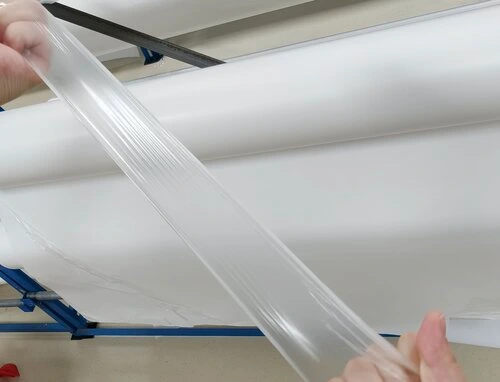
This guide explains how apparel manufacturers can choose the right elastic hot melt adhesive film based on fabric composition, production requirements, and end-use performance.
What Is Elastic Hot Melt Adhesive Film?
Elastic hot melt adhesive film is a flexible thermoplastic bonding material designed for stretch fabrics, providing elasticity, soft hand feel and durable bonding performance for apparel manufacturers. Unlike traditional rigid adhesive films, elastic adhesive films can deform and recover together with elastic fabrics, making them suitable for applications requiring continuous movement and stretching.
Elastic hot melt adhesive films are commonly produced using flexible polymer systems such as TPU (Thermoplastic Polyurethane) and TPE elastomers.
They are widely used in:
- Seamless apparel
- Sportswear
- Compression garments
- Stretch footwear components
- Functional textiles
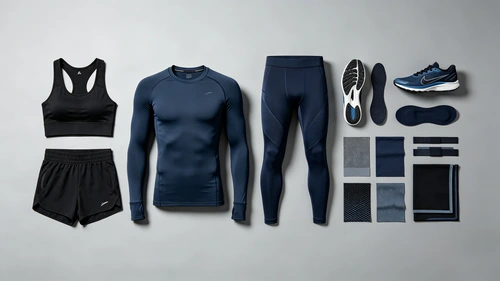
For manufacturers, the main purpose of an elastic adhesive film is not only creating a strong bond, but also maintaining the original properties of the fabric after lamination.
How Elastic Hot Melt Adhesive Film Works
During the lamination process, the adhesive film is heated until it reaches its activation temperature. The melted adhesive flows into the surface structure of the substrate and creates bonding after cooling.
For stretch applications, the adhesive layer needs to perform three functions:
- Strong initial adhesion: The adhesive must create a reliable connection between different materials, such as nylon and TPU, polyester and elastic fabrics, or multi-layer textiles.
- Elastic movement with the fabric: When the garment stretches during use, the adhesive layer must expand without cracking or delaminating.
- Recovery after deformation: After stretching, the adhesive should return close to its original structure together with the fabric.
This balance between adhesion and elasticity is what separates elastic adhesive films from standard hot melt films.
Key Performance Benefits of Elastic Hot Melt Adhesive Film
For industrial textile manufacturers, elastic adhesive films provide several important advantages:
- High Stretch Compatibility: Designed for fabrics that repeatedly expand and contract, preserving garment flexibility and shape.
- Soft Hand Feel: Maintains a soft textile feeling without stiff glue lines, essential for seamless underwear, activewear, and yoga apparel.
- Improved Washing Durability: Withstands repeated mechanical stress during laundering, reducing bond cracking, edge peeling, and layer separation.
- Better Product Appearance: Eliminates surface wrinkles, fabric distortion, and uneven bonded areas after continuous stretching.
Why Traditional Hot Melt Adhesive Films Fail on Stretch Fabrics
Stretch fabrics create dynamic mechanical challenges that traditional adhesive films are often unable to handle. Many conventional hot melt films are designed for dimensionally stable materials. When applied to highly elastic fabrics, severe failures often occur during production or customer use.
Elastic Hysteresis Causes Fabric Deformation
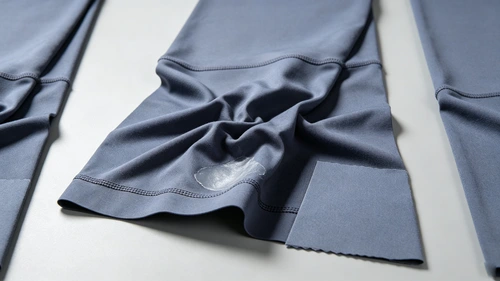
One of the most critical factors in stretch bonding is elastic recovery. When a stretch fabric is repeatedly extended, the adhesive layer must follow the movement and return to its original condition. If the adhesive film exhibits poor recovery (high elastic hysteresis), it leads to permanent fabric wrinkles, loss of shape retention, and a baggy appearance around high-movement zones like knees, waistbands, and cuffs.
Rigid Adhesive Layers Reduce Fabric Comfort
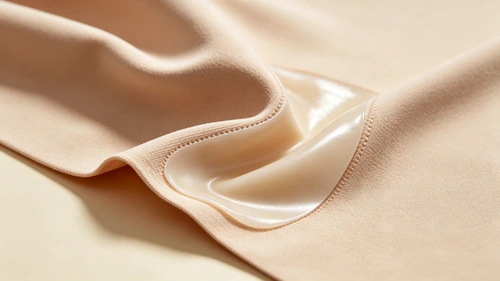
Traditional PA or PES adhesive films provide high structural bonding strength but create a stiff, boardy hand-feel. For stretch apparel worn close to the skin, excessive adhesive rigidity compromises drape, restricts natural body motion, and causes chafing.
Poor Adhesive Flexibility Can Cause Delamination
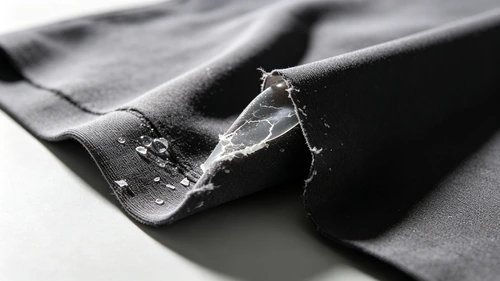
Under repeated stretching, folding, and machine laundering, brittle adhesive layers cannot absorb dynamic shear stresses. This results in progressive bond fatigue, leading to edge lifting, bubble formation, and complete delamination.
TPU vs TPE vs Traditional Hot Melt Films for Stretch Applications
Different adhesive polymers exhibit distinct viscoelastic and mechanical characteristics. Selecting the proper polymer system depends on stretch requirements, fabric chemistry, washing standards, and processing windows.
| Adhesive Polymer | Elastic Recovery | Soft Hand Feel | Washing Resistance | Typical Applications |
|---|---|---|---|---|
| TPU Hot Melt Film | Excellent (>95%) | Excellent | Excellent (40°C–60°C) | Seamless apparel, sportswear, high-stretch fabrics |
| TPE Film | Very Good | Excellent | Good | Lightweight elastic textiles, low-temp bonding |
| PA Film | Limited | Medium / Stiff | Excellent | High-temperature industrial bonding, non-stretch areas |
| PES Film | Limited | Medium | Very Good | Rigid polyester textile lamination |
| EVA Film | Moderate | Good | Moderate | Cost-sensitive bonding, non-washable components |
TPU Hot Melt Adhesive Film for High Elasticity Applications
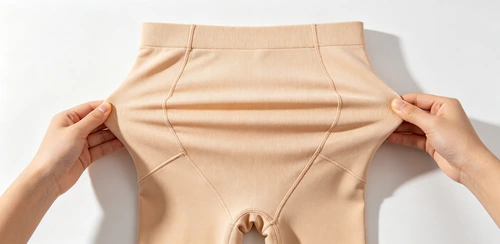
TPU materials are widely used because TPU hot melt adhesive film provides excellent elasticity, recovery and soft touch for stretch fabric bonding.It uniquely combines high elongation, rapid elastic recovery, low modulus, and superior wash resistance. Manufacturers seeking maximum performance can utilize specialized TPU Hot Melt Adhesive Films engineered specifically for seamless activewear.
Comparison of Different Adhesive Polymer Types
- TPU: Best overall choice for high-spandex blends, close-fitting garments, and dynamic stretch applications.
- TPE: Ideal for lightweight, heat-sensitive fabrics requiring low activation temperatures.
- PA & PES: Suitable for rigid reinforcement, interlinings, and stable structural seams.
- EVA: Economical solution for low-stress, general assembly with limited wash requirements.
How to Select the Right Elastic Hot Melt Adhesive Film
Proper film selection requires matching adhesive viscoelastic properties to the substrate construction and factory equipment parameters.
Fabric Composition and Surface Compatibility
Different synthetic and blended fabrics require specific adhesive formulations for proper surface wetting:
| Fabric Type | Typical Composition | Recommended Adhesive Direction |
|---|---|---|
| Spandex / Lycra Fabric | Nylon + Elastane (15%–30%) | High-elastic, low-modulus TPU film |
| Polyester Stretch Fabric | Polyester + Elastane | Modified TPU or PES-compatible elastic film |
| Nylon Stretch Fabric | Nylon 6 / 66 + Spandex | High-polarity TPU with optimized nylon affinity |
| Mesh / Knitted Fabric | Open-structure knit | Controlled-flow or web mesh elastic film |
Elastic Recovery Rate and Modulus Performance
Tensile strength alone does not determine stretch performance. Two key rheological metrics must be evaluated:
- Elastic Recovery Rate: Measures the percentage of original dimension restored after elongation (e.g., after 100% or 200% strain). A higher recovery rate prevents bagging and deformation.
- Modulus (Stress at Specified Elongation): Low-modulus films stretch effortlessly with the fabric, providing a natural, non-restrictive feel.
Film Thickness Selection and Trade-Offs
- 30–50 μm (Thin): Delivers ultra-soft hand feel, zero bulk, and maximum flexibility. Ideal for seamless underwear, lingerie, and lightweight activewear.
- 50–100 μm (Medium): Balances high bonding strength with elasticity. Perfect for yoga leggings, sportswear hems, and waistband lamination.
- 100–150 μm (Thick): Provides maximum adhesive mass and gap-filling capability for heavy stretch knits, footwear uppers, and structural overlays.
Activation Temperature and Heat Sensitivity
Heat-sensitive fibers (like elastane) degrade under prolonged high temperatures. Optimal elastic TPU films activate within a controlled window of 110°C–140°C at 2–4 bar for 8–15 seconds, ensuring deep fiber penetration without thermal shrinkage or yellowing.
Common Production Problems and Troubleshooting Solutions
Problem 1: Adhesive Film Peeling After Washing
Root Causes: Under-activation due to insufficient press temperature/dwell time, or incompatibility between the adhesive polymer and fabric finishing agents (e.g., silicone softeners).
Engineering Fixes: Increase press temperature by 5°C–10°C, verify glue-line temperature with thermal strips, or switch to a higher wash-durability TPU grade.
Problem 2: Fabric Becomes Too Stiff After Lamination
Root Causes: High-modulus polymer selection, excessive film thickness, or excessive adhesive penetration into core fibers.
Engineering Fixes: Downgrade to a 30–50 μm film thickness, reduce pressing pressure, and select a lower-durometer TPU formulation.
Problem 3: Wrinkles Appear After Stretching
Root Causes: Severe elastic hysteresis where the adhesive recovery rate lags behind high-spandex fabric recovery.
Engineering Fixes: Switch to an ultra-high elastic recovery TPU film specifically formulated for 4-way stretch fabrics.
Problem 4: Adhesive Strike-Through and Overflow
Root Causes: Overly low melt viscosity, excessive bonding pressure, or uncalibrated platen heat.
Engineering Fixes: Reduce press pressure by 0.5–1.0 bar, decrease dwell time, or select a film grade with higher melt viscosity.
Industrial Manufacturing Process & Core Applications
Step-by-Step Apparel Production Process
- Fabric Preparation: Ensure textiles are clean, tension-relaxed, and free from excessive silicone oil residues.
- Film Slitting & Positioning: Slit film into rolls/tapes for automatic feeding, or die-cut into shape overlays.
- Pre-Lamination: Lightly heat-tack the film onto the primary substrate while retaining the release paper.
- Liner Removal & Final Pressing: Peel the release backing and execute full heat press lamination under calibrated parameters.
- Cooling & QC Verification: Allow bond lines to cool completely before performing stretch-recovery and peel tests.
Key Industry Applications
- Seamless Apparel: Bonded hems, shoulder straps, waistband facings, and stitchless seams for lingerie and activewear.
- Sportswear & Compression Gear: Reinforcement overlays, pocket bonding, and ergonomic compression taping.
- Footwear & Functional Textiles: Seamless upper lamination, stretch tongue bindings, and orthopedic supports.
Case Study: Improving Elastic Bonding Performance for Yoga Leggings
Customer Background: A premium activewear manufacturer producing 4-way stretch yoga leggings (75% Nylon, 25% Spandex) experienced high return rates due to seam failures.
Production Challenges: Edge delamination after 8 home wash cycles, waistband stiffness, and unsightly ripple wrinkles along the hem after repeated stretching.
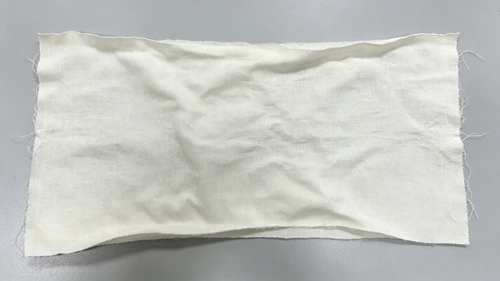
VOMELT Engineering Solution: Implemented VOMELT 50 μm high-elasticity TPU hot melt film. Calibrated pressing parameters to 125°C, 3.0 bar, and 12 seconds dwell time.
Quantitative Results:
- Wash Durability: Exceeded 30 machine wash cycles (ISO 6330) with zero edge lifting.
- Elastic Recovery: Maintained >98% recovery without ripple wrinkling.
- Wearing Comfort: Achieved seamless, ultra-soft waistband contact, reducing production defect rates by 14%.
What Should Buyers Confirm Before Bulk Ordering Elastic Adhesive Film?
- Application & Lab Testing: Does the supplier offer lab-scale compatibility and wash testing on your actual fabrics?
- Customization Capabilities: Can the supplier customize film thickness (30–150 μm), roll slitting width, and activation temperature?
- Batch Consistency & Capacity: Are Melt Flow Index (MFI), thickness tolerances, and tensile modulus strictly maintained across production batches?
Why Choose VOMELT Elastic Hot Melt Adhesive Film Solutions?
Custom Elastic Adhesive Film Development
VOMELT engineers custom TPU and TPE formulations tailored to specific fabric modulus and surface energy requirements.
VOMELT provides custom elastic hot melt adhesive film solutions with adjustable thickness, elasticity, activation temperature and roll specifications for different production requirements.
Application-Based Technical Support
We provide full parameter optimization support (temperature, time, pressure) to eliminate trial-and-error in your production line.
Stable Industrial Supply & Capacity
With continuous precision extrusion lines and strict QC inspection, VOMELT guarantees reliable roll consistency for global export.
Frequently Asked Questions (FAQ)
TPU-based elastic hot melt adhesive film is the industry-preferred solution for high-spandex and Lycra fabrics due to its superior elongation, elastic recovery, and soft hand feel.
Typical elastic TPU films activate between 110°C and 140°C. The exact setting depends on fabric heat tolerance, dwell time, and machine pressure.
Yes. Correctly laminated TPU adhesive films form strong cross-linked physical bonds within textile fibers, easily enduring 30 to 50 standard wash cycles without delaminating.
Adhesive overflow can be eliminated by reducing press pressure, lowering the activation temperature slightly, shortening dwell time, or selecting a thinner/higher-viscosity film grade.
Yes. VOMELT provides custom film thicknesses from 30 μm to 150 μm, tailored roll widths, precision slitting for seamless taping, and custom polymer formulations.
Conclusion: Choosing the Right Elastic Hot Melt Adhesive Film
In modern seamless apparel and sportswear manufacturing, adhesive selection directly dictates garment comfort, elasticity, and wash durability. Selecting the right TPU hot melt film eliminates stiffness, prevents wrinkles, and ensures durable, high-quality production.
Contact VOMELT today to request custom elastic hot melt adhesive film samples and technical lamination consultation for your production line.