
PA vs PES Hot Melt Adhesive Web: Which Should You Choose?
Choosing between PA and PES hot melt adhesive web can be confusing because both are used for heat-activated lamination and their processing temperatures may overlap. The right choice depends more on your substrate, washing requirements, and actual adhesive grade than on polymer type alone.
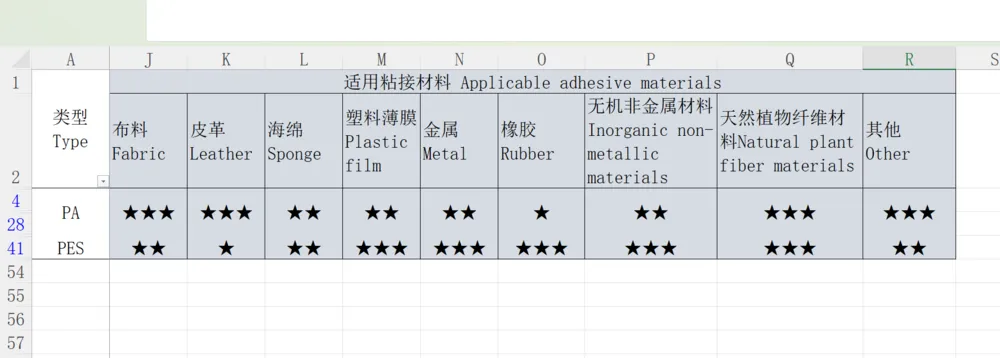
Choose PA hot melt adhesive web when dry-clean resistance and bonding to textiles, interlinings, leather, sponge, or automotive interior materials are key requirements. Consider PES web for polyester/PET, plastic films, metals, or rubber, especially when water washability is important. Do not choose by melting temperature alone: PA and PES grades can have overlapping processing ranges. Always confirm the final grade with your actual substrates and lamination conditions.
We compare PA and PES by substrate, washing requirements, and processing temperature so you can narrow down the right adhesive web for testing.
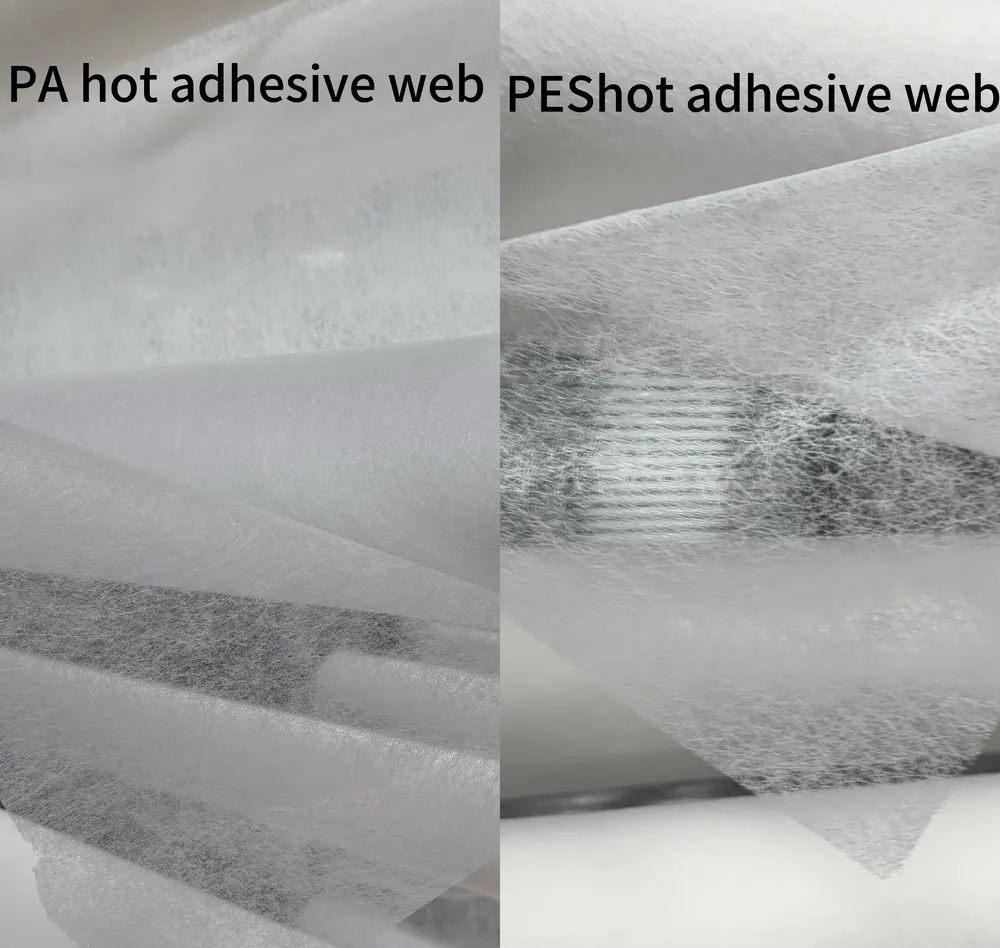
What Is the Difference Between PA and PES Hot Melt Adhesive Web?
PA and PES hot melt adhesive webs are thermoplastic bonding materials supplied in an open web structure. Both are activated by heat during lamination, but we use them for different substrate combinations and end-use requirements.
For an initial material selection, we normally compare the substrate first, then washing requirements and processing conditions.
| Selection Factor | PA Hot Melt Adhesive Web | PES Hot Melt Adhesive Web |
|---|---|---|
| Polymer Type | Polyamide (PA) | Polyester (PES) |
| Elasticity | Inelastic | Inelastic |
| Typical Bonding Materials | Textiles, garment interlinings, leather, automotive interiors, sponge | Polyester/PET, plastic films, metals, rubber |
| Washing Requirement | Prioritize when dry-clean resistance is important | Prioritize when water washability is important |
| Melting Range | Medium / high, depending on grade | Medium / high, depending on grade |
| Selection Basis | Substrate + end use + actual grade | Substrate + end use + actual grade |
This table is a starting point rather than a universal performance rule. Different PA and PES grades can have different processing windows, so we recommend checking the actual grade before specifying the adhesive.
For projects involving fabrics, you can also review our fabrics and textiles material guide before selecting the adhesive.
Is PA Hot Melt Adhesive Web Better Than PES?
No single material is better for every lamination project.
If we’re bonding textiles, garment interlinings, leather, sponge, or certain automotive interior materials, we normally start by evaluating a PA hot melt adhesive web.
If the project involves polyester/PET, plastic films, metals, or rubber, PES hot melt adhesive web may be a more appropriate starting point.
The end-use washing requirement also matters. We prioritize PA when dry-clean resistance is important and PES when water washability is an important selection requirement.
For more background on this selection factor, see our wash resistance guide.
This does not mean every PA or PES grade will perform the same way. The final choice still needs to be checked with the actual substrates and lamination process.
When Should You Choose PA Hot Melt Adhesive Web?
We typically evaluate PA adhesive web when the project involves textile-related materials or requires dry-clean-resistant lamination.
Textile and Garment Interlining Lamination
PA web can be considered for bonding textiles and garment interlinings.
However, the fabric itself is only one part of the selection. We also need to know the second substrate and the temperature the materials can tolerate during lamination.
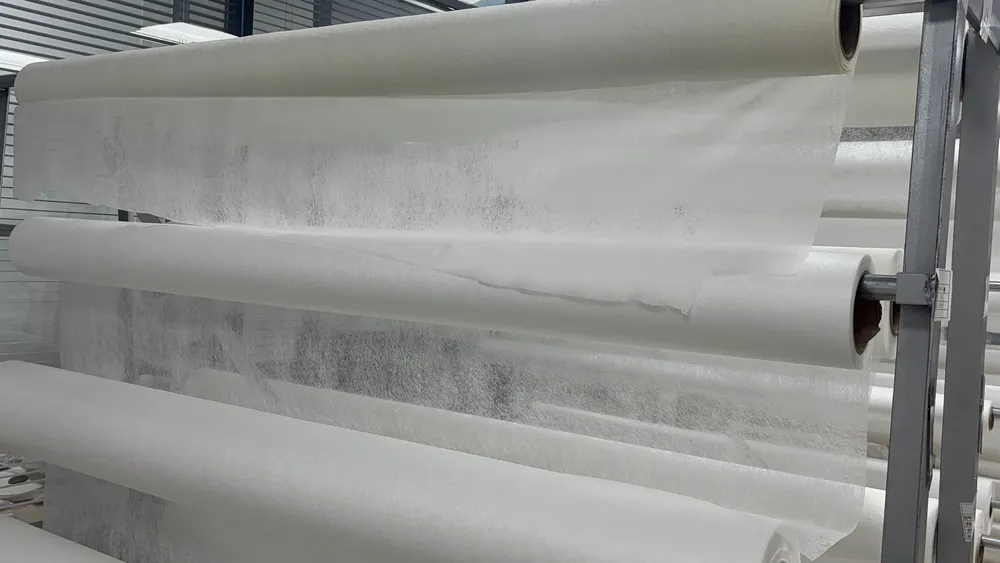
Leather and Sponge Bonding
Leather and sponge are also among the materials for which we evaluate PA web.
Because these substrates can vary considerably in surface treatment, structure, and heat sensitivity, we recommend testing the actual material combination instead of selecting a PA grade only by its polymer name.
Automotive Interior Applications
PA hot melt adhesive web can also be evaluated for automotive interior applications.
For example, VOMELT XWA120H is a black PA web intended for dark fabrics and automotive interior applications where a black adhesive web can help reduce visual show-through.
This application statement should not be interpreted as a VDA 278, DIN 75201, VOC, or fogging certification. Those requirements need separate test data for the actual material construction.
Applications Requiring Dry-Clean Resistance
When dry-clean resistance is an important project requirement, PA is our preferred material family to evaluate first.
Our current PA web range includes:
| Model | Backing Paper | Initial Melting Point | Recommended Temperature | Elasticity | Selection / Application |
|---|---|---|---|---|---|
| XWA95 | No | 95–105°C | 120–140°C | Inelastic | Low-temperature PA for heat-sensitive fabrics |
| P-XWA116 | Yes, paper | 100–110°C | 140–160°C | Inelastic | Secondary bonding |
| XWA116 | No | 100–115°C | 130–150°C | Inelastic | General-purpose PA web |
| XWA120H | No | 105–115°C | 140–160°C | Inelastic | Black PA web for dark fabrics and automotive interiors |
| XWA112 | No | 105–115°C | 140–160°C | Inelastic | General dry-clean-resistant lamination |
Notice that even within the PA family, the initial melting point and recommended processing temperature vary by grade.
That is why we select the actual adhesive grade, not simply “PA.”
When Should You Choose PES Hot Melt Adhesive Web?
We normally start evaluating PES web when the substrate combination includes polyester/PET, plastic films, metals, or rubber.
PES is also our preferred material family to evaluate when water washability is an important requirement.
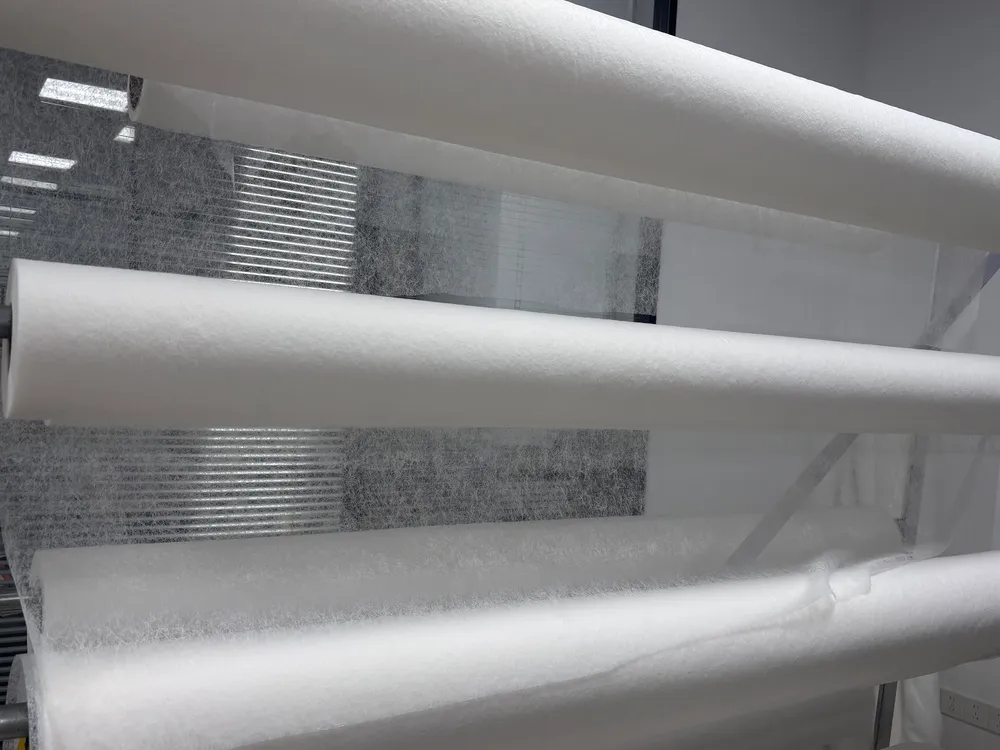
Polyester and PET Fabric Bonding
For polyester or PET materials, PES hot melt adhesive web can be a practical starting point.
Our TWS105 grade, for example, is intended for applications including polyester/PET fabric bonding.
Plastic Film Lamination
TWS105 can also be evaluated for plastic film lamination.
Because plastic films differ in composition, coatings, surface energy, thickness, and heat resistance, we still recommend testing the actual film rather than assuming compatibility from the word “plastic.”
Metal and Rubber Bonding
Metal laminating and rubber are also listed applications for TWS105.
The actual bonding result will depend on the surface and second substrate, so samples should be tested under the intended processing conditions before production.
Applications Where Water Washability Matters
When water washability is a key requirement, PES is our preferred family to evaluate before moving to application testing.
Here is the confirmed specification for TWS105:
| Attribute | TWS105 |
|---|---|
| Material | PES |
| Backing Paper | No |
| Initial Melting Point | 95–105°C |
| Recommended Temperature | 120–140°C |
| Elasticity / Recovery | Inelastic |
| Yellowing Resistance | Grade 4 (Slight Yellowing) |
| Common Applications | Polyester/PET fabric, plastic films, metal laminating, rubber |
| Selection Direction | Excellent water washability |
For projects requiring quantitative wash-cycle performance or a particular test standard, the requirement should be confirmed separately rather than inferred from this general selection guidance.
Can You Choose PA or PES by Melting Temperature?
No. Melting temperature alone is not enough to decide between PA and PES hot melt adhesive web.
Our XWA95 PA web and TWS105 PES web are a useful example:
| Grade | Polymer | Initial Melting Point | Recommended Temperature |
|---|---|---|---|
| XWA95 | PA | 95–105°C | 120–140°C |
| TWS105 | PES | 95–105°C | 120–140°C |
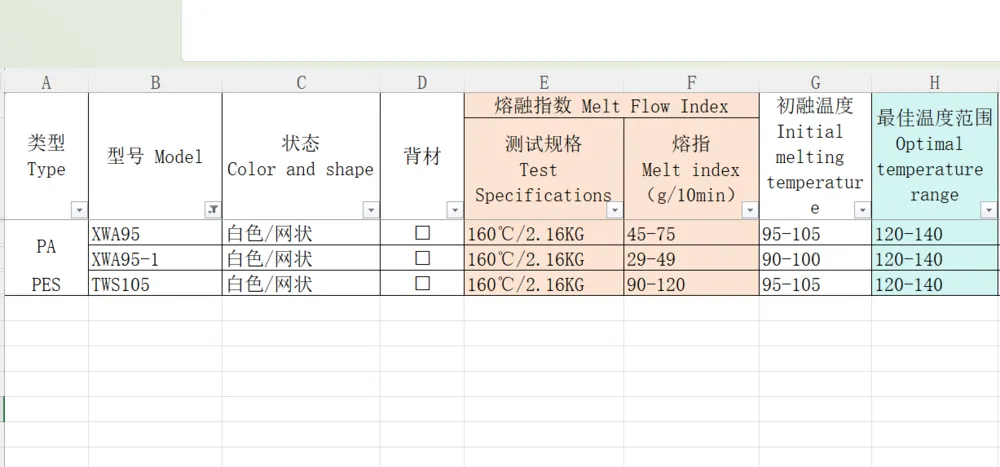
Despite using different polymer families, these two grades have the same listed initial melting range and recommended processing-temperature range.
That means a buyer asking only for a “95–105°C hot melt adhesive web” has not provided enough information for us to distinguish between these two materials.
We would also want to know:
- What is the first substrate?
- What is the second substrate?
- Is water washing or dry cleaning important?
- How heat-sensitive are the substrates?
- What lamination conditions will be used?
- What end-use performance does the finished laminate need?
Also, the initial melting point is a material property and should not be treated as the recommended lamination temperature.
If you’re comparing processing windows, our melting range guide explains this selection factor in more detail.
Actual processing conditions should always be confirmed by testing the target substrates.
PA vs PES Hot Melt Adhesive Web Selection Guide
For a quick initial selection, we use the following decision guide:
| Your Requirement or Substrate | Start by Evaluating |
|---|---|
| Textile / garment interlining | PA |
| Leather / sponge | PA |
| Automotive interior materials | PA |
| Dry-clean resistance is important | PA |
| Polyester / PET | PES |
| Plastic film | PES |
| Metal / rubber | PES |
| Water washability is important | PES |
| Only the melting temperature is known | Not enough information |
This table helps narrow down the material family. It does not replace bonding tests.
If you’re still comparing material options, explore our hot melt adhesive web materials before choosing a specific grade.
What Information Should You Provide Before Selecting PA or PES Web?
When customers ask us to recommend an adhesive web, knowing only the material name or desired temperature is rarely enough.
For a more useful initial recommendation, send us:
- First substrate
- Second substrate
- Required washing or dry-cleaning conditions
- Heat sensitivity of both materials
- Available lamination temperature and process
- Final application of the laminate
With this information, we can narrow down a PA or PES grade for actual material testing.
Need Help Choosing Between PA and PES Adhesive Web?
Tell us your first substrate, second substrate, washing requirements, lamination temperature, and final application. We can help you narrow down a suitable PA or PES hot melt adhesive web grade for material testing.
Discuss Your Application With VOMELT →
Not sure whether PA or PES is better for your application? See our PA vs PES hot melt adhesive web comparison to compare substrates, washing requirements, and processing conditions.
Frequently Asked Questions
What is the main difference between PA and PES hot melt adhesive web?
For our initial selection, PA web is commonly evaluated for textiles, interlinings, leather, sponge, automotive interiors, and dry-clean-resistant applications. PES web is commonly evaluated for polyester/PET, plastic films, metals, rubber, and applications where water washability is important.
Is PA or PES better for textile lamination?
It depends on the textile, second substrate, washing requirement, and processing conditions. PA is commonly evaluated for textile and garment interlining applications, while PES is particularly relevant when polyester/PET is involved. We recommend selecting by the complete material combination rather than the textile name alone.
Which adhesive web is better for washing and dry cleaning?
When dry-clean resistance is important, we prioritize evaluating PA hot melt adhesive web. When water washability is important, we prioritize PES. The required test method and performance level should still be verified on the actual finished laminate.
Can PA and PES adhesive webs use the same lamination temperature?
Yes, some grades can have overlapping processing ranges. For example, VOMELT XWA95 PA web and TWS105 PES web both have a listed initial melting point of 95–105°C and recommended temperature of 120–140°C. Therefore, processing temperature alone is not enough to select the polymer family.
Summary
PA and PES adhesive webs can have overlapping processing temperatures, so polymer type alone should not determine your choice. Start with the substrates and end-use requirements, then compare actual grade specifications. For production projects, test the selected web with your real material combination before finalizing the process.