
TPU Hot Melt Adhesive Film: Properties, Grades, Applications & Selection Guide
Choosing a TPU hot melt adhesive film is not simply a matter of selecting “TPU.”
Different TPU grades can vary significantly in elasticity, melting point, processing temperature, thickness, backing, and substrate compatibility. A film suitable for seamless underwear may not be the right choice for PVC, leather, foam, coated fabrics, or heat-sensitive textiles.
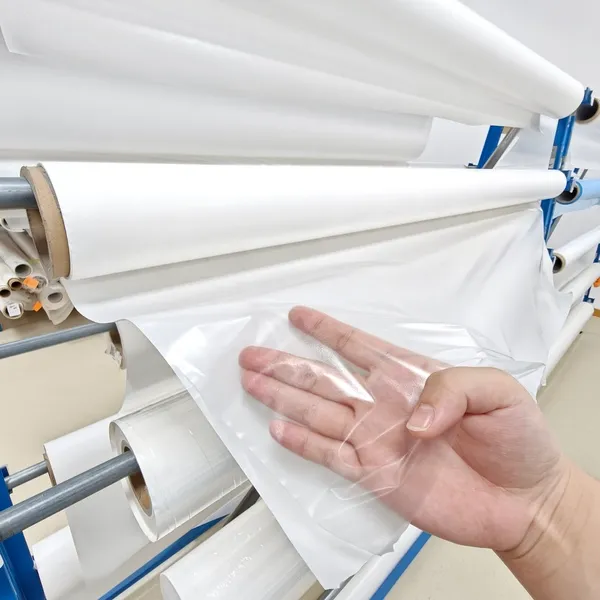
TPU hot melt adhesive film is a heat-activated thermoplastic polyurethane adhesive supplied in film form for bonding compatible textiles, leather, foam, plastics, and other substrates. Depending on the formulation, TPU adhesive films can provide high elasticity, low-temperature processing, soft hand feel, yellowing resistance, or specialized bonding performance. The correct grade should be selected according to the substrate combination, required elasticity, processing window, film thickness, and end-use conditions.
This guide explains how we evaluate those factors at VOMELT, how different TPU grades differ, and what manufacturers should verify before moving from sample testing to mass production.
What Is TPU Hot Melt Adhesive Film?
TPU stands for thermoplastic polyurethane.
In a hot melt adhesive film, the TPU formulation remains solid at room temperature and is activated by heat during lamination.
Unlike liquid adhesives, adhesive film can provide controlled adhesive thickness and can be positioned only where bonding is required. It can also be converted into rolls, narrow strips, sheets, or die-cut shapes for different manufacturing processes.
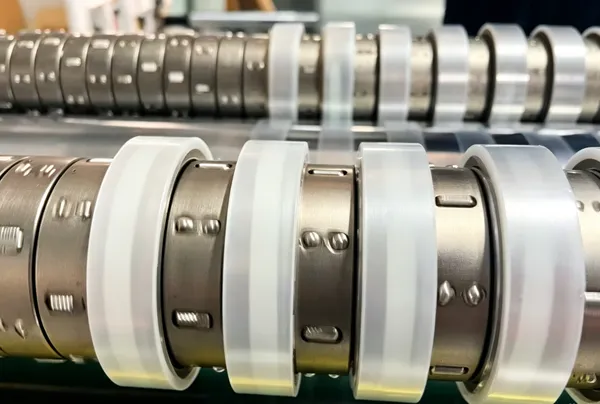
However, “TPU hot melt adhesive film” describes a family of adhesive materials—not one universal specification.
Within VOMELT’s current TPU range, for example, different grades cover melting points from approximately 52°C to 135°C, while suggested processing temperatures range from approximately 80°C to 180°C.
That difference matters when selecting a film for stretch fabrics, heat-sensitive materials, coated textiles, leather, PVC, foam, or industrial composites.
For available grades and specifications, see our TPU hot melt adhesive film solutions.
How TPU Hot Melt Adhesive Film Works
A typical bonding process involves four stages:
- Film placement: The TPU adhesive film is positioned between the substrates.
- Heat activation: Heat softens or melts the adhesive layer.
- Pressure and wetting: Pressure helps the activated adhesive contact the substrate surfaces.
- Cooling and bonding: The adhesive solidifies during cooling and forms the final bond.
Successful bonding depends on more than temperature alone.
Material thickness, surface condition, coatings, pressure, dwell time, adhesive thickness, equipment, and cooling conditions can all influence the final result.
This is why a processing-temperature range should be treated as a starting point for trials, rather than a universal machine setting.
Why TPU Films Are Not All the Same
Two products labeled “TPU hot melt adhesive film” may perform very differently.
Formulation differences can affect:
- Elasticity
- Flexibility
- Melting point
- Processing temperature
- Substrate compatibility
- Yellowing resistance
- Suitability for heat-sensitive materials
- Adhesive flow
- Film handling during converting and lamination
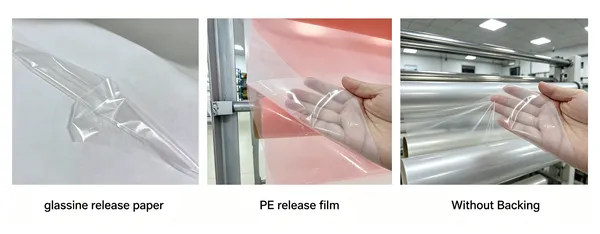
Backing format also varies.
Depending on the grade, TPU film may be supplied with glassine release paper, PE release film, or without a backing.
Manufacturers should therefore select TPU according to the complete bonding system, rather than choosing it as a generic polymer category.
What Are the Key Properties of TPU Hot Melt Adhesive Film?
TPU is widely associated with flexibility and elasticity, but not every TPU adhesive film is highly elastic.
VOMELT’s TPU range includes high-elastic, medium-elastic, low-elastic, and inelastic grades.
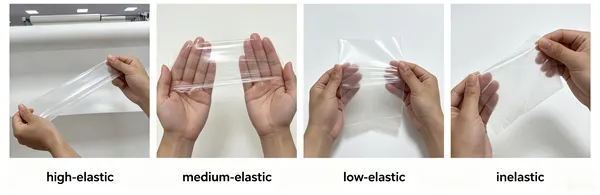
The required performance of the finished product should determine which type is evaluated.
Flexibility and Elasticity
Elasticity becomes particularly important when the adhesive layer forms part of a stretchable structure.
Typical examples include:
- Seamless underwear
- Stretch textiles
- Sportswear components
- Flexible laminates
For these applications, the adhesive should work with the mechanical behavior of the surrounding material.
VOMELT XJU120, for example, is a high-elastic TPU adhesive film used in seamless underwear applications.
XJU150-1 is also a high-elastic grade, but it has a higher melting point and processing-temperature range.
Not every application requires elasticity, however.
Selected leather, PVC, foam, and heat-sensitive textile applications may instead benefit from a lower-temperature inelastic TPU grade.
Therefore, the correct question is not:
Is TPU elastic?
It is:
How much elasticity does this finished laminate require, and which TPU grade matches it?
Bonding Performance
Bonding performance is created by the entire system:
Material A + Material B + surface condition + adhesive grade + thickness + temperature + pressure + dwell time + cooling.
This is particularly important with difficult surfaces.
A coating, water-repellent treatment, silicone-related finish, or other surface modification can significantly change adhesive behavior.
In some cases, simply increasing temperature or using more adhesive will not solve the problem. Surface treatment may be necessary to create a compatible bonding interface.
We will look at a real example of this later in the guide.
Wash and Durability Requirements
Washability matters for apparel and textile applications, but “washable TPU” should not be treated as a universal performance guarantee.
Actual durability can depend on:
- Fabric composition
- Fabric finishing
- TPU grade
- Lamination conditions
- Garment construction
- Washing temperature
- Detergent
- Number of wash cycles
- Mechanical stress
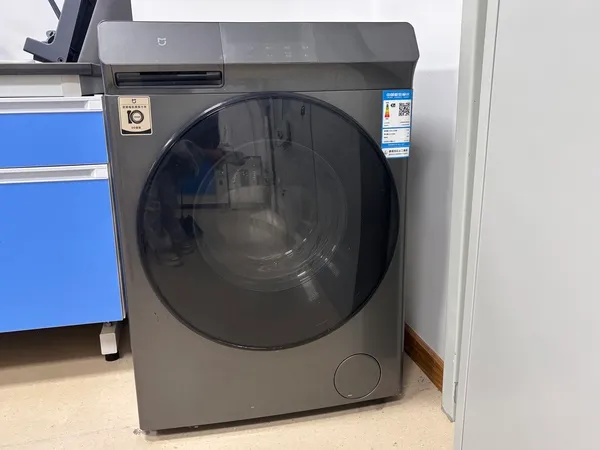
VOMELT has laboratory washing equipment for evaluating laminated samples when wash performance is part of the project requirement.
Specific durability claims should be based on defined test conditions and actual results rather than assumed from the polymer name alone.
Melting Point vs. Processing Temperature
These specifications are often confused.
The melting point of a TPU adhesive film is not the same as its recommended lamination temperature.
For example:
| VOMELT Grade | Melting Point | Suggested Processing Temperature |
| XJU83 | 52–56°C | 80–120°C |
| HJU80-2 | 60–70°C | 90–130°C |
| XJU135 | 80–90°C | 110–150°C |
| MJU95 | 85–90°C | 120–160°C |
| XJU120 | 90–100°C | 120–160°C |
| XJU150-1 | 125–135°C | 150–180°C |
The processing temperature is typically higher because heat needs to pass through the substrate and activate the adhesive sufficiently within the available production time.
The final machine settings still need to account for the actual substrate, equipment, pressure, and dwell time.
How Do Different TPU Hot Melt Adhesive Film Grades Compare?
There is no single “best” TPU grade.
A better question is:
Which TPU grade fits the materials and production conditions of this application?
Here are several representative VOMELT options:
| TPU Film Type | Example Grade | Melting Point | Suggested Processing Temperature | Elasticity | Typical Selection Consideration |
| High-elastic TPU | XJU120 | 90–100°C | 120–160°C | High | Seamless underwear and elastic textile bonding |
| High-elastic TPU | XJU150-1 | 125–135°C | 150–180°C | High | Elastic applications compatible with a higher processing window |
| Yellowing-resistant TPU | MJU95 | 85–90°C | 120–160°C | Low | Applications where yellowing resistance matters |
| Specialty TPU | XJU135 | 80–90°C | 110–150°C | Medium | Functional or difficult bonding requirements |
| Low-temperature TPU | XJU83 | 52–56°C | 80–120°C | Inelastic | Selected heat-sensitive materials, leather, PVC, and textiles |
These films are not interchangeable simply because they are all TPU.
High-Elastic TPU Hot Melt Adhesive Film
High-elastic grades are designed for structures where the bonded area needs to remain flexible during deformation.
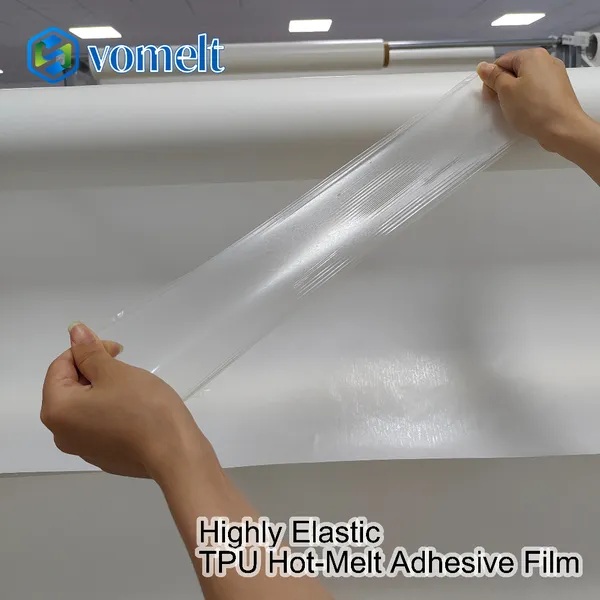
XJU120 is one of VOMELT’s key grades for this requirement.
Its current specifications include:
- Melting point: 90–100°C
- Suggested processing temperature: 120–160°C
- Thickness: 0.015–0.60 mm, customizable
- Width: 5–1500 mm
- Roll length: 5–500 m
- Backing: glassine release paper
- Elasticity: high
XJU120 has been used in seamless underwear applications.
For production, however, the final temperature, pressure, and dwell time should be established with the customer’s actual fabric.
Medium-Elastic TPU Hot Melt Adhesive Film
Some products require flexibility without the high stretch characteristics needed for seamless garments.
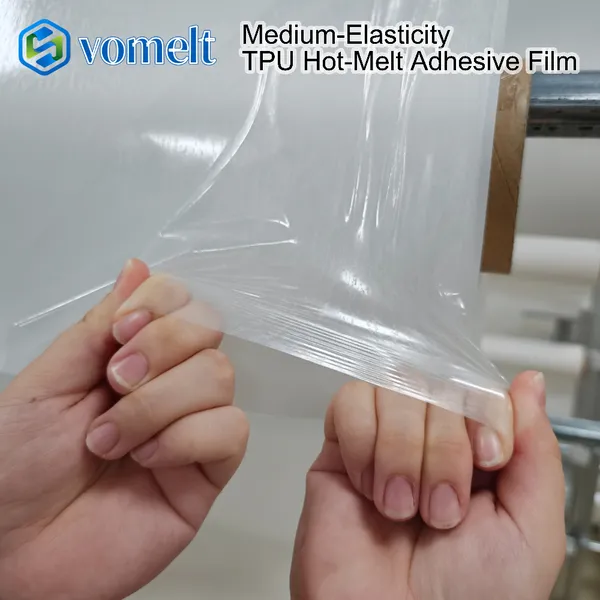
VOMELT’s medium-elastic options include XJU135, HJU120-2, PE-XJU120, and YJU102-1.
XJU135, for example, has:
- Melting point: 80–90°C
- Suggested processing temperature: 110–150°C
- Elasticity: medium
- Thickness: 0.05–0.40 mm, customizable
It can be evaluated for functional and more challenging bonding requirements, including applications involving water-repellent-related materials.
Low-Temperature TPU Hot Melt Adhesive Film
TPU does not always need to be elastic.
For substrates sensitive to high temperatures, a lower-temperature grade may be more appropriate.
Examples include:
- XJU83: 52–56°C melting point
- HJU80-2: 60–70°C melting point
- PE-DJU90: 52–55°C melting point
These grades are classified as inelastic within the current VOMELT range.
Potential materials include selected:
- Genuine leather
- PVC
- Shoe-upper materials
- Foam
- Heat-sensitive textiles
Low melting temperature, however, does not guarantee compatibility with every heat-sensitive substrate. The actual materials still need to be evaluated.
Backing Options: Release Paper, PE Film and Unsupported Film
Backing affects handling, positioning, slitting, and lamination.
Depending on the grade, VOMELT TPU adhesive films are available with:
- Release paper
- Glassine release paper
- PE release film
- Unsupported / bare-film constructions
For example:
- XJU120 uses glassine release paper.
- PE-XJU120 uses PE release film.
- YJU102-1 is available without backing.
- PE-DJU90 uses PE release film.
Many TPU grades can also be slit to approximately 5 mm, while maximum widths can reach approximately 1500 mm, depending on the product.
How to Select the Right TPU Hot Melt Adhesive Film
For industrial production, we recommend selecting the adhesive around the application rather than beginning with a model number.
A practical sequence is:
substrates → elasticity → heat sensitivity → thickness/backing → testing → production parameters.
Step 1 — Identify the Substrate Materials
Start with:
What two materials need to be bonded?
TPU adhesive films can be evaluated for selected:
- Textile fabrics
- Elastic fabrics
- Leather
- TPU film
- PVC
- Foam and sponge
- Shoe-upper materials
- Heat-sensitive fabrics
- Industrial composite structures
But “polyester,” “fabric,” or “plastic” may not provide enough information.
Surface coatings, water-repellent treatments, silicone-related finishes, and other modifications can completely change adhesion.
If you are unsure which adhesive family matches your substrates, use our hot melt adhesive material guide as a starting point.
Step 2 — Determine Elasticity Requirements
Next, determine whether the finished bonded structure needs to stretch.
For seamless underwear and other stretch textiles, the adhesive becomes part of a flexible composite. A mechanical mismatch between fabric and adhesive can affect the behavior of the bonded area.
A high-elastic grade such as XJU120 may therefore be evaluated.
For non-stretch structures, maximum elasticity may provide no practical benefit.
Manufacturers working specifically with Spandex, Lycra, activewear, and other high-stretch fabrics can also read our elastic hot melt adhesive film selection guide.
Step 3 — Match the Processing Temperature to the Substrate
A film may provide suitable adhesion but still be inappropriate if its processing window damages the substrate.
This is especially important with:
- Thin textiles
- Heat-sensitive fabrics
- PVC-related constructions
- Coated materials
- Multilayer structures
VOMELT’s TPU portfolio provides different temperature windows, from lower-temperature grades such as XJU83 to higher-temperature grades such as XJU150-1.
The film should therefore be selected together with the substrate’s thermal limitations.
Step 4 — Select Film Thickness and Backing
Thickness affects more than adhesive consumption.
It can influence:
- Bonding interface
- Adhesive coverage
- Hand feel
- Flexibility
- Flow during pressing
- Strike-through risk
Examples of available thickness ranges include:
| Grade | Customizable Thickness |
| XJU120 | 0.015–0.60 mm |
| MJU95 | 0.03–0.20 mm |
| XJU135 | 0.05–0.40 mm |
| XJU83 | 0.05–0.60 mm |
| PE-XJU120 | 0.025–0.15 mm |
Thicker is not automatically better.
For thin textiles, excessive adhesive can affect hand feel or increase visible penetration and overflow. Other substrates may require a different adhesive coverage.
Backing should also be selected according to the converting and lamination process.
Step 5 — Validate the Film With Actual Material Testing
For a new industrial application, the final decision should be based on actual materials whenever possible.
A typical qualification process is:
- Identify Material A and Material B.
- Confirm surface treatments and end-use requirements.
- Select one or more candidate TPU grades.
- Prepare trial laminates.
- Adjust temperature, pressure, and dwell time.
- Record the processing conditions.
- Evaluate the bonded samples.
- Conduct peel, tensile, or wash testing when required.
- Confirm the sample before mass production.
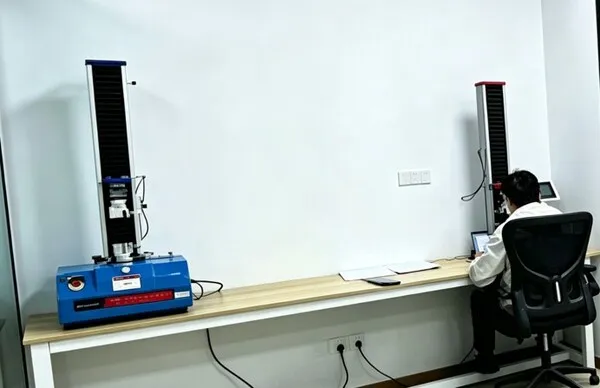
VOMELT has dedicated tensile/peel testing equipment and laboratory washing equipment for application evaluation.
The goal is not to claim one universal heat-press setting. It is to establish a repeatable processing window for the customer’s actual materials.
Where Is TPU Hot Melt Adhesive Film Used?
Different TPU formulations make the material useful across several manufacturing sectors.

Seamless Underwear and Textile Lamination
Seamless underwear can require a flexible adhesive layer that works with the textile construction without introducing unnecessary stiffness.
Important considerations include:
- Elasticity
- Hand feel
- Bond integrity
- Fabric compatibility
- Processing temperature
- Finished-product durability
XJU120 is one of VOMELT’s high-elastic TPU grades used in this area.
Manufacturers working specifically in this segment can review our TPU hot melt adhesive film for seamless underwear application guide.
Leather, PVC, Foam and Footwear Materials
Selected lower-temperature TPU grades can be evaluated for:
- Genuine leather
- PVC
- Foam
- Shoe-upper materials
- Heat-sensitive substrates
Because leather, PVC, and foam cover many different formulations and surface conditions, the actual material should be evaluated rather than relying on the category name alone.
See our footwear and leather application solutions for related bonding applications.
Functional and Heat-Sensitive Fabrics
Functional fabrics introduce another variable: surface finishing.
The textile may be water repellent, coated, silicone-oil treated, or otherwise modified.
For example, XJU83 has been used in an application involving down-proof fabric and silicone-oil-treated fabric.
XJU135 can also be considered for certain bonding requirements involving water-repellent-related materials.
This illustrates why “100% polyester” or “nylon fabric” may not provide enough information for adhesive selection.
Automotive and Industrial Composite Bonding
TPU adhesive films are not limited to garments.
Depending on the grade and material combination, they can also be evaluated for flexible industrial and composite structures.
One VOMELT application involved XJU135 bonding an ABS carbon-fiber component with PVC film for an electric bicycle cover.
The example demonstrates why industrial inquiries should specify both substrates rather than simply requesting “TPU film for plastic.”
Real TPU Bonding Examples From Production Applications
Real applications show something that a datasheet cannot: why the film was selected and what other variables affected bonding.
XJU120 for Seamless Underwear
Application: Seamless underwear
TPU grade: XJU120
Elasticity: High
Melting point: 90–100°C
Suggested processing range: 120–160°C
XJU120 is used where a high-elastic adhesive layer is required in a flexible textile construction.
Instead of assigning one fixed heat-press recipe to every customer, the actual fabric is evaluated and suitable temperature, pressure, and dwell time can be recorded during testing.
This matters because fabric composition, thickness, finishing, and stretch behavior vary between garment programs.
XJU83 for Down-Proof and Heat-Sensitive Fabric Bonding
Application: Down-proof fabric + silicone-oil-treated fabric
TPU grade: XJU83
XJU83 is an inelastic low-temperature grade with:
- Melting point: 52–56°C
- Suggested processing range: 80–120°C
- Thickness: 0.05–0.60 mm
- Appearance: white-translucent / semi-transparent
- Backing: glassine release paper
This application highlights two selection variables at once:
thermal sensitivity and surface treatment.
When a fabric has a specialized finish, testing should be carried out on the treated production material.
XJU135 for ABS Carbon-Fiber Composite and PVC Film
Application: Electric bicycle cover
Materials: ABS carbon-fiber component + PVC film
TPU grade: XJU135
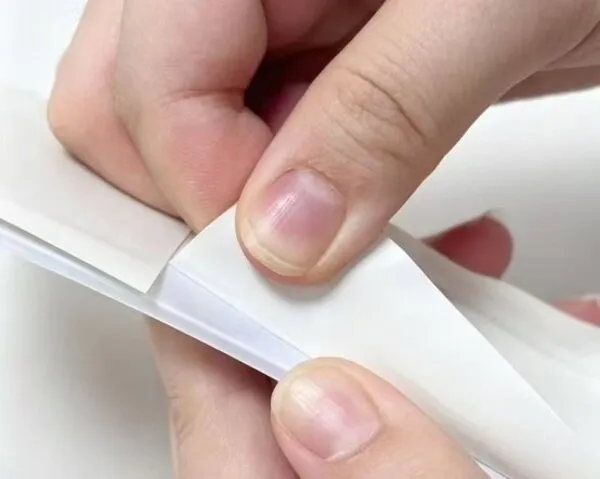
XJU135 has:
- Melting point: 80–90°C
- Suggested processing range: 110–150°C
- Medium elasticity
- Thickness: 0.05–0.40 mm
This example demonstrates that TPU film can also be evaluated for non-textile composite bonding.
More importantly, it reinforces a basic selection principle:
“Plastic” is not a sufficiently precise substrate description.
The actual polymer, surface condition, and second substrate matter.
Solving Abrasive Material-to-Foam Bonding With Surface Treatment
This case illustrates an important engineering principle.
Customer product: Abrasive tool
Problem: The abrasive material could not bond reliably to foam.
Simply increasing temperature or using more adhesive was not the solution.
The back of the abrasive material was first treated with a coating. XJU135 was then used for bonding, allowing the two materials to form a secure bond.
The lesson is important:
Adhesive selection cannot always compensate for an incompatible surface.
When an adhesive cannot properly interact with the substrate, surface preparation may be more effective than continually increasing temperature, pressure, or film thickness.
Common TPU Hot Melt Adhesive Film Problems and How to Troubleshoot Them
When a TPU adhesive film fails, the polymer itself is only one possible cause.
The complete bonding process should be investigated.
Why Does the Bond Peel After Lamination or Washing?
Possible causes include:
- Incorrect TPU grade
- Insufficient adhesive activation
- Inadequate pressure
- Insufficient dwell time
- Surface coating interfering with adhesion
- Incorrect film thickness
- Surface contamination
- Finished-product conditions beyond the qualified bonding system
If peeling occurs immediately, start with activation and substrate compatibility.
If the initial bond is good but fails after washing, evaluate the wash conditions and durability requirements of the finished laminate.
Specific wash-performance claims should always be linked to actual test conditions.
Why Does Adhesive Strike-Through or Overflow Occur?
Possible causes include:
- Excessive temperature
- Excessive pressure
- Excessive dwell time
- Film that is too thick
- Thin or open fabric construction
- Adhesive flow that does not match the structure
Adding more adhesive is therefore not automatically the solution to weak bonding.
For thin textiles, optimizing film thickness and process conditions may improve both appearance and performance.
Why Does a TPU Film Bond Well to One Fabric but Fail on Another?
Because visually similar fabrics can have very different surfaces.
Differences may include:
- Fiber composition
- Dyeing and finishing
- Water-repellent treatment
- Silicone-related treatment
- Coating
- Surface contamination
- Fabric density
This is why recommendations based only on “nylon,” “polyester,” or “fabric” can fail in production.
Why Is Sample Testing Important Before Mass Production?
A successful laboratory or hand-pressed sample is not automatically ready for thousands of meters of production.
Before bulk ordering, manufacturers should ideally confirm:
material compatibility → TPU grade → thickness → processing window → required performance.
This reduces the risk of discovering a compatibility problem only after production materials have already been committed.
When Should You Choose TPU Instead of PA, PES or EVA?
TPU is not automatically the best hot melt adhesive polymer for every application.
As a quick starting point:
| Main Requirement | Polymer to Consider |
| High flexibility or elastic bonding | TPU |
| Seamless apparel and stretch textiles | TPU |
| Heat-sensitive substrates | Suitable low-temperature TPU or another compatible low-temperature adhesive |
| Certain textile, leather, or higher-temperature bonding requirements | PA |
| Dimensionally stable textile or industrial lamination | PES |
| General-purpose or cost-sensitive applications where performance requirements allow | EVA |
Different hot-melt adhesive films offer varying levels of adhesion, flexibility, temperature behavior, and chemical properties; therefore, it is necessary to select the hot-melt adhesive film that is best suited for your product based on the specific substrate.
What Should Buyers Confirm Before Ordering TPU Hot Melt Adhesive Film?
Substrate and End-Use Requirements
Tell the supplier:
- Material A
- Material B
- Material composition
- Surface coating or treatment
- Required elasticity
- Heat sensitivity
- Finished-product application
- Wash or environmental requirements
Instead of:
I need TPU film for fabric.
A more useful inquiry is:
We need to bond a Nylon/Spandex stretch fabric to another elastic textile for seamless underwear.
That information immediately improves grade selection.
Thickness, Width and Roll Format
Also specify, when known:
- Film thickness
- Width
- Roll length
- Backing preference
- Quantity
- Converting requirements
If the grade is not yet known, provide the application first rather than guessing a model number.
Many VOMELT TPU grades can be customized in thickness and slit into narrow rolls according to the product specification.
Test Samples and Recorded Lamination Parameters
For new applications, a practical development path is:
customer materials → candidate TPU → lamination trial → parameter optimization → performance evaluation → sample approval → bulk production.
Relevant parameters can then be recorded, including:
- Temperature
- Pressure
- Dwell time
- Film thickness
- Material combination
When required, tensile/peel or laboratory washing evaluation can be incorporated into the qualification process.
Compliance and Test Documentation
Compliance requirements should be discussed before ordering, especially for apparel, consumer products, and export projects.
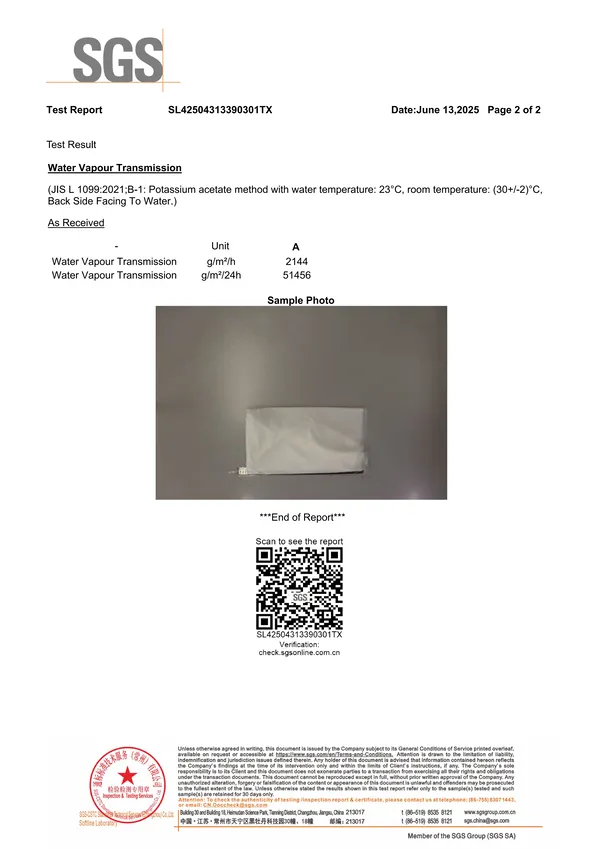
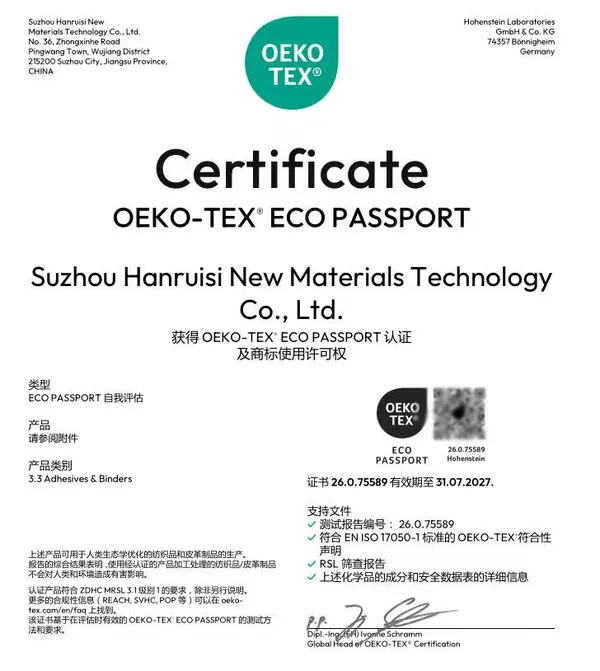
VOMELT can provide applicable OEKO-TEX certification and SGS-issued test documentation upon request.
Buyers should confirm the specific document scope for the selected TPU grade and target market rather than assuming that one certificate covers every product or regulatory requirement.
Why Work With VOMELT for TPU Hot Melt Adhesive Film?
For industrial customers, the challenge is often not finding “a TPU film.”
It is finding the right TPU film for a specific material combination and production process.
XJU120 and Customized TPU Film Options
XJU120 is one of VOMELT’s key high-elastic TPU grades.
| Parameter | XJU120 |
| Polymer | TPU hot melt adhesive film |
| Elasticity | High |
| Melting point | 90–100°C |
| Suggested processing range | 120–160°C |
| Thickness | 0.015–0.60 mm, customizable |
| Width | 5–1500 mm |
| Roll length | 5–500 m |
| Backing | Glassine release paper |
| Example application | Seamless underwear |
But XJU120 is not intended to replace every TPU grade.
Lower-temperature, medium-elastic, yellowing-resistant, and different backing configurations are available for other requirements.
Slitting and Roll Customization
Depending on the selected grade, VOMELT can support:
- Customized thickness
- Customized width
- Narrow-width slitting
- Sheet cutting
- Different roll lengths
- Release-paper-backed film
- Glassine-backed film
- PE-release-film-backed film
- Unsupported film
This allows the adhesive format to be matched more closely to the customer’s converting and lamination process.
Application Testing and Technical Support
The most useful inquiry is not simply:
Which TPU film do you sell?
It is:
Which TPU film should we test for these two materials and this finished-product requirement?
Customers can provide substrate information and, when necessary, actual material samples for evaluation.
Candidate films can then be selected and tested according to the application requirements before large-volume production.
Need Help Choosing TPU Film for a Specific Fabric?
TPU film selection can change significantly depending on fabric construction, stretch, surface treatment, heat sensitivity, and the final application. For a material-by-material approach, see our TPU hot melt adhesive film guide for different fabrics, covering selection considerations for stretch fabrics, nylon, polyester, coated fabrics, and other textile substrates.
Frequently Asked Questions About TPU Hot Melt Adhesive Film
TPU hot melt adhesive film is a solid thermoplastic polyurethane adhesive supplied in film form. Heat activates the film during lamination, and the adhesive forms a bond after pressure and cooling.
Different TPU formulations can provide different levels of elasticity, melting temperature, processing temperature, and substrate compatibility.
Depending on the formulation and surface condition, TPU adhesive films can be evaluated for selected textiles, elastic fabrics, leather, TPU film, PVC, foam, shoe-upper materials, and industrial composite structures.
Coated or specially treated surfaces should be tested using the actual production material.
Certain TPU grades are particularly suitable for stretch applications because they are formulated for high elasticity and flexibility.
However, not every TPU film is elastic.
VOMELT, for example, offers both high-elastic TPU grades such as XJU120 and inelastic low-temperature grades. The film should therefore be matched to the mechanical behavior of the finished product.
TPU adhesive films can be used in textile applications requiring washing durability, but actual performance depends on the complete bonded structure.
Fabric, finishing, adhesive grade, lamination parameters, washing temperature, detergent, and number of cycles can all influence the result.
Washability should therefore be verified under the required test conditions.
There is no single bonding temperature for all TPU films.
For example, VOMELT’s suggested processing ranges include approximately 80–120°C for XJU83, 120–160°C for XJU120, and 150–180°C for XJU150-1.
These are starting ranges. Final temperature, pressure, and dwell time should be validated with the actual substrates and equipment.
Yes. Depending on the grade, VOMELT supports customized film thickness, roll width, roll length, slitting, and different backing configurations.
For a new application, provide the two substrates, finished-product requirements, desired dimensions, and current lamination process so that a suitable configuration can be evaluated.
Final Takeaway
There is no single TPU hot melt adhesive film that is ideal for every application.
The correct selection depends on:
substrates + surface treatment + elasticity + heat sensitivity + film thickness + backing + processing conditions + end-use requirements.
For stretch textile applications, a high-elastic grade such as XJU120 may be a suitable starting point. Heat-sensitive materials may require a lower-temperature TPU. Difficult surfaces may require a specialty formulation or surface treatment before bonding.
For mass production, we recommend following this sequence:
Identify the materials → Select candidate TPU grades → Test actual substrates → Optimize and record processing parameters → Verify required performance → Approve the sample → Move to bulk production.
Need Help Selecting a TPU Hot Melt Adhesive Film?
Send us your Material A + Material B, application, required thickness or finished-product requirements, and current lamination conditions.
VOMELT can help evaluate a suitable TPU hot melt adhesive film solution and determine whether sample lamination, peel testing, or wash evaluation is needed before mass production.