
How to Choose TPU Hot Melt Adhesive Film for Different Fabrics
Choosing a TPU hot melt adhesive film is not simply a matter of matching an adhesive to “nylon,” “polyester,” or “spandex.”
Two fabrics with similar fiber compositions can behave very differently during lamination. Stretch ratio, fabric construction, surface treatments, thickness, heat sensitivity, and the requirements of the finished product can all affect bonding performance.
The right TPU hot melt adhesive film should therefore be selected according to the complete fabric structure and application requirements—not fiber composition alone. For stretch fabrics, elasticity and recovery may be the priority. For coated or water-repellent fabrics, surface adhesion becomes more important. For heat-sensitive materials, the available lamination temperature window may determine which TPU grade can be used.
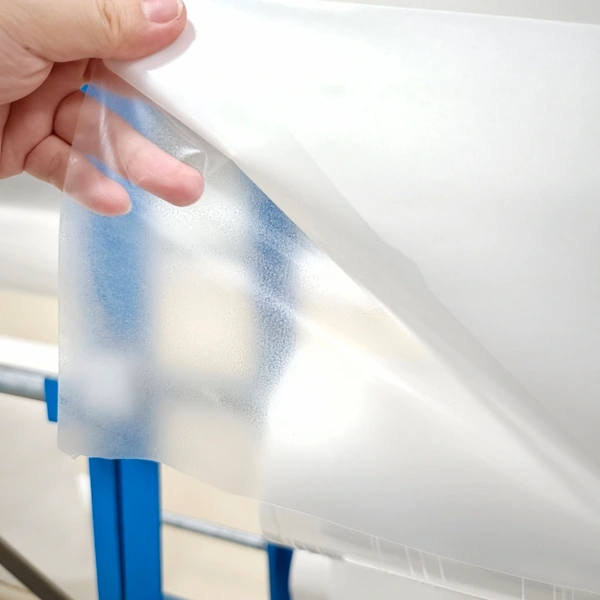
At VOMELT, we normally recommend evaluating the actual materials before confirming a TPU film grade for production.
This guide explains what buyers and engineers should check when selecting TPU adhesive film for spandex, nylon, polyester, seamless fabrics, and other textile applications.
Why Does Fabric Type Change TPU Hot Melt Adhesive Film Selection?
A TPU film that performs well on one textile construction may not produce the same result on another.
This is because adhesive selection depends on the interface between the adhesive and the actual bonding surface.
Fiber Composition Is Only the Starting Point
Knowing whether a fabric contains nylon, polyester, or spandex is useful, but it is only the beginning.
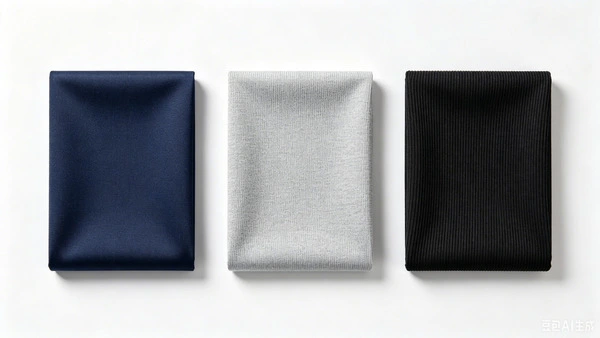
For example, two fabrics described as “nylon/spandex” may have different:
- fiber ratios;
- knitting structures;
- surface textures;
- fabric weights;
- stretch ratios;
- coatings or finishing agents;
- heat sensitivity.
These differences can change how the molten TPU wets the surface and how the bonded structure behaves after cooling.
For this reason, we do not recommend selecting a TPU grade from the fiber name alone.
The actual fabric sample should be considered whenever possible.
Stretch, Surface Finish and Fabric Construction Also Matter
Before choosing a film, we normally look at three groups of variables.
Mechanical requirements include stretch direction, elongation, recovery, flexibility, and the hand feel required after lamination.
Surface conditions include coatings, water-repellent finishes, silicone-related treatments, surface texture, and other factors that may influence adhesive wetting.
Processing conditions include fabric heat resistance, lamination equipment, temperature, pressure, dwell time, and production speed.
A film can have adequate initial adhesion and still be unsuitable if the laminated area becomes noticeably stiff or cannot recover together with the fabric.
Likewise, simply increasing temperature is not always the correct response to poor adhesion.
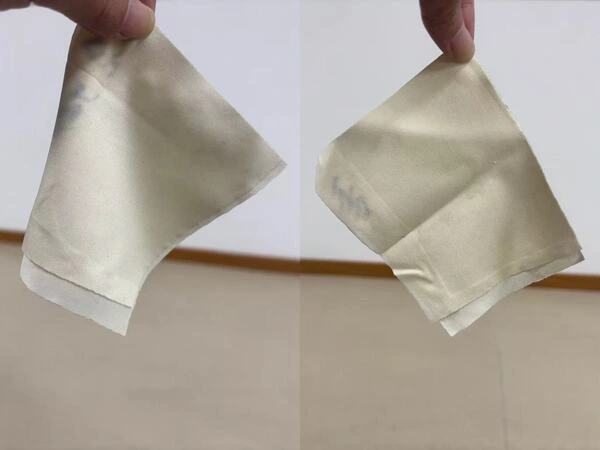
How Do You Choose TPU Hot Melt Adhesive Film for Spandex and Stretch Fabrics?
Stretch fabrics place a different mechanical demand on the adhesive layer.
The adhesive does not only need to hold two substrates together. In many applications, it also needs to deform repeatedly with the fabric.
Match Adhesive Elasticity With Fabric Stretch
For high-stretch constructions, we generally evaluate whether the adhesive layer can follow the movement of the substrate without excessively restricting it.
This is particularly important in applications such as:
- seamless underwear;
- activewear;
- compression garments;
- elastic waist structures;
- stretch textile laminates.
For example, VOMELT XJU120 is one of the high-elasticity TPU grades we evaluate for stretch textile applications.
Its available thickness range is approximately 0.015–0.60 mm, depending on the required specification, and its recommended lamination-temperature range is 120–160°C.
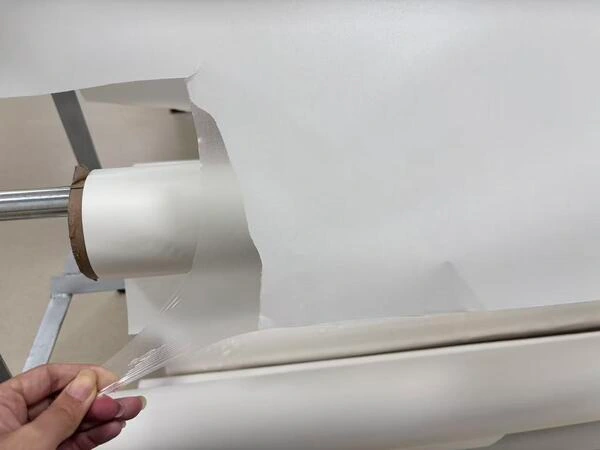
However, these figures should be treated as a starting process window rather than a fixed recipe.
The final temperature, pressure, and dwell time need to be tested according to the actual fabric construction and equipment.
For a deeper discussion of elastic recovery, film thickness and stretch-fabric bonding, see our elastic hot melt adhesive film selection guide.
Why Does Elastic Recovery Matter After Bonding?
Stretchability alone is not enough.
A laminated structure also needs to recover after being stretched.
If the fabric returns quickly but the adhesive layer does not respond in the same way, the bonded area may gradually show:
- deformation;
- wrinkles;
- edge lifting;
- localized stiffness;
- changes in garment fit.
This is why stretch and recovery evaluation should be performed on the laminated structure, rather than evaluating the adhesive film by itself.
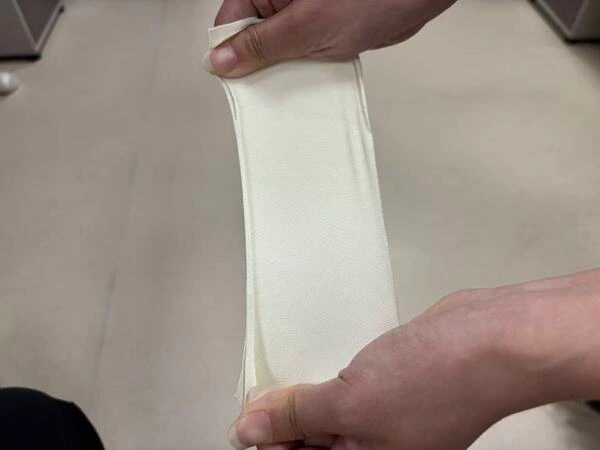
VOMELT has dedicated equipment for stretch and peel-strength testing, allowing candidate films to be compared after lamination with the customer’s actual materials.
How Does Film Thickness Affect Hand Feel and Stretch?
More adhesive is not automatically better.
A thicker film can provide more adhesive mass and may help compensate for certain irregular surfaces. But excessive thickness can also change the flexibility and hand feel of lightweight fabrics.
For seamless apparel and other applications where softness is important, we therefore consider thickness together with:
bond strength + elasticity + fabric weight + hand feel.
The objective is not to select the thickest possible TPU film.
It is to identify a thickness that provides sufficient bonding performance without unnecessarily changing the characteristics of the textile.
How Do You Choose TPU Hot Melt Adhesive Film for Nylon Fabrics?
Nylon is widely encountered in apparel and functional textile applications, but “nylon fabric” is too broad a description to determine an adhesive grade by itself.
Check the Nylon Surface Condition First
Before recommending a TPU film, check whether the fabric has:
- a coating;
- a water-repellent treatment;
- a special surface finish;
- a very smooth or dense surface;
- other treatments that may affect bonding.
The surface the adhesive actually contacts can matter as much as the underlying fiber.
This is why a TPU film that works on one nylon fabric should not automatically be assumed to work on every nylon fabric.
Balance Adhesion With Fabric Heat Sensitivity
Processing temperature also needs to be considered.
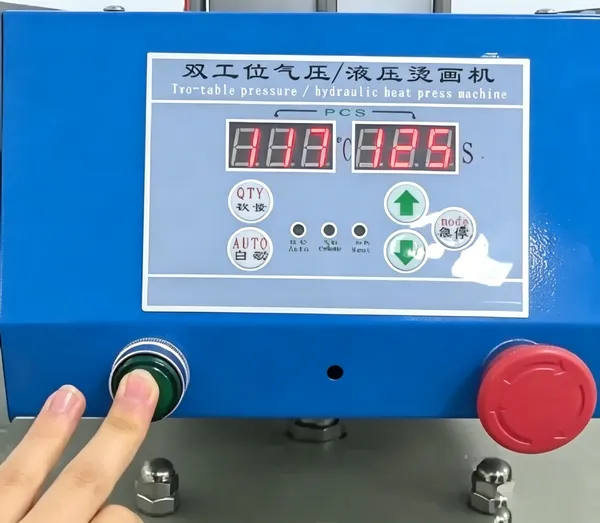
The objective is to provide enough heat for the adhesive to flow and wet the bonding surface while avoiding unnecessary thermal exposure to the fabric.
Rather than immediately raising the temperature when adhesion is insufficient, we recommend checking the entire combination of:
TPU grade → temperature → pressure → dwell time → substrate condition.
A change in any one of these variables can affect the final bond.
Test the Complete Nylon Fabric Construction
For production selection, a useful test should reproduce the actual material combination as closely as possible.
If Material A is nylon/spandex and Material B is another textile, the test should use those materials—not simply a generic piece of nylon.
After preliminary lamination, peel strength, appearance, flexibility, stretch performance where applicable, and washing performance can then be evaluated according to the intended end use.
How Do You Choose TPU Hot Melt Adhesive Film for Polyester Fabrics?
Polyester is another common textile substrate, but the same selection principle applies: start with the finished fabric rather than the fiber name.
Why Does Polyester Fabric Construction Affect Bonding?
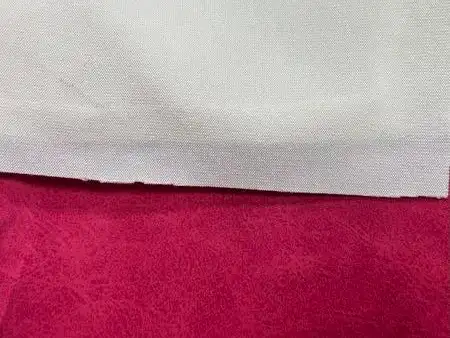
Woven polyester, knitted polyester, brushed fabric, coated polyester and lightweight functional fabrics can present very different bonding surfaces.
Fabric density and surface texture can also influence how the molten adhesive interacts with the substrate.
Therefore, “suitable for polyester” should be regarded as an initial compatibility indication—not a guarantee of production performance.
Consider Coatings, Finishes and Lamination Temperature
If the polyester has received functional finishing, the surface condition should be included in the evaluation.
The lamination process must also remain within a practical temperature window for the complete construction.
For heat-sensitive structures, a lower-processing-temperature adhesive may need to be evaluated rather than simply increasing the press temperature.
When Might TPU Not Be the Only Adhesive Option?
TPU is useful when properties such as flexibility, elasticity, soft hand feel, or certain textile-bonding characteristics are important.
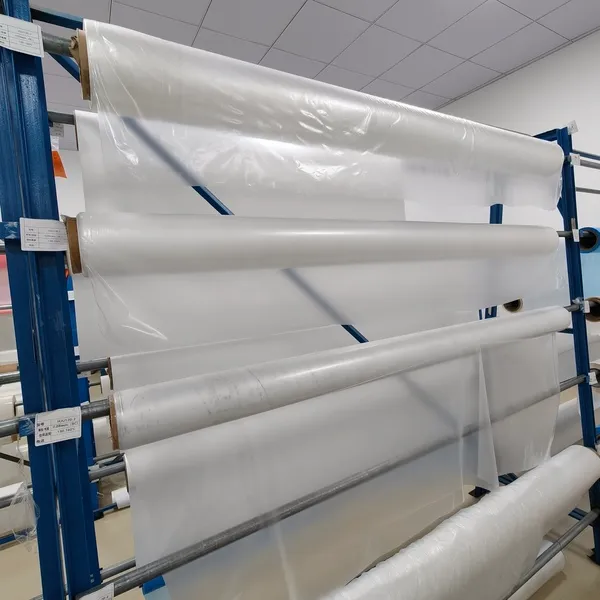
But it is not the automatic answer to every polyester application.
Depending on the substrate combination, processing requirements and final performance target, PES, PA, EVA or other hot melt adhesive chemistries may also deserve evaluation.
If you have not yet determined which polymer family is appropriate, start with our hot melt adhesive film selection guide before selecting a specific TPU grade.
What If the Fabric Has a Water-Repellent or Surface Treatment?
This is where material samples become particularly important.
A fabric may have a fiber composition that normally appears compatible with TPU, while its actual finished surface behaves very differently.
Why Can Fabric Finishes Reduce Adhesive Wetting?
For a thermoplastic adhesive to form an effective bond, the molten adhesive needs to interact adequately with the bonding surface.
Some surface treatments can make this more difficult.
That means a poor result cannot always be diagnosed from the base fiber composition.
When a customer reports that “TPU does not stick to my fabric,” one of the first questions should therefore be:
What treatment or coating is present on the bonding surface?
Why Doesn’t Higher Temperature Always Solve Poor Adhesion?
Increasing temperature can improve adhesive flow under some conditions, but it is not a universal solution.
Excessive temperature may:
- affect heat-sensitive fabrics;
- change appearance or hand feel;
- create unnecessary process instability;
- still fail to solve an underlying surface-compatibility problem.
We prefer to identify whether the problem comes from the adhesive formulation, surface condition, process parameters, or a combination of these factors.
When Should a Specialized TPU Grade Be Tested?
VOMELT XJU135 is one TPU grade we can evaluate for applications involving water-repellent materials.
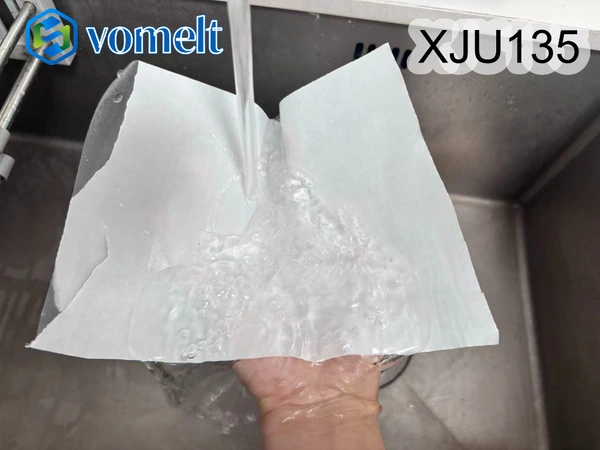
Its melting range is approximately 80–90°C, with a recommended lamination-temperature range of approximately 110–150°C.
These specifications do not mean XJU135 will bond every water-repellent fabric.
The actual treated material should still be tested before bulk production.
That distinction is important: a recommended application tells us what to test first; the material test tells us what should actually go into production.
How Should You Select TPU Adhesive Film Thickness for Fabrics?
There is no universal “best” TPU film thickness.
The appropriate thickness depends on the substrate and finished product.
| Fabric / Application Condition | Main Concern | TPU Property to Evaluate | Recommended Test |
| Spandex / high-stretch fabric | Elastic recovery | Elasticity and flexibility | Stretch + peel |
| Nylon fabric | Surface condition and heat | Adhesion and process window | Peel |
| Polyester fabric | Finish and construction | Surface compatibility | Peel + wash |
| Seamless underwear | Hand feel and recovery | Elasticity + film thickness | Stretch + wash |
| Water-repellent fabric | Difficult surface wetting | Formulation compatibility | Peel |
| Heat-sensitive fabric | Thermal damage | Lower-temperature processing | Appearance + peel |
Thin and Lightweight Fabrics
For lightweight fabrics, unnecessary adhesive thickness may negatively affect softness and drape.
Start by evaluating whether a thinner film can provide the required bond.
Stretch and Seamless Fabrics
For stretch structures, thickness should be considered together with elasticity.
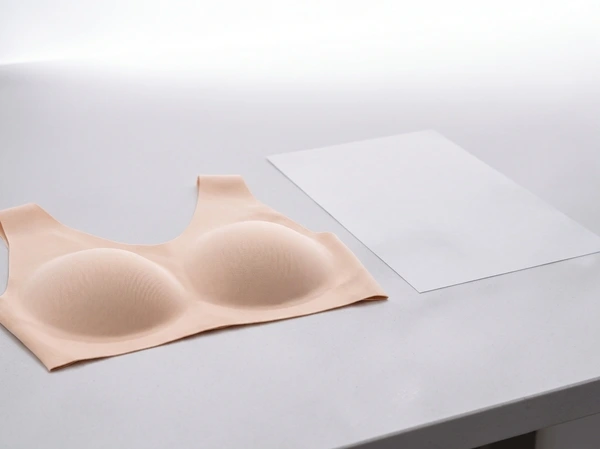
This is particularly important for seamless underwear, where the bonding zone becomes part of the garment’s flexible structure.
XJU120, for example, has been used in seamless underwear applications, but the correct thickness and processing conditions still depend on the actual fabric combination.
Rough or Uneven Bonding Surfaces
More textured materials may require a different adhesive amount or process condition to obtain sufficient contact.
This does not mean “rough surface = thick film” in every case.
A lamination trial should determine whether changing film thickness actually improves the interface.
Why Isn’t a Thicker TPU Film Always Better?
Because the objective is not maximum adhesive consumption.
It is sufficient bond performance with acceptable finished-product properties.
For textile applications, that balance can include peel strength, softness, stretch, recovery, appearance and wash durability.
What Temperature Should You Use for TPU Hot Melt Adhesive Film?
One of the most common mistakes is treating the adhesive’s melting range as the machine’s required lamination temperature.
They are related, but they are not the same specification.
Melting Range Is Not the Same as Lamination Temperature
Take XJU120 as an example:
- Melting range: 90–100°C
- Recommended lamination temperature: 120–160°C
Why is the recommended processing temperature higher?
Because the machine heats the complete laminate structure. Heat must pass through fabric, release liner and other layers before the adhesive reaches the condition required for effective wetting and bonding.
This is also why copying another factory’s temperature setting can produce different results.
Fabric Thickness Changes Heat Transfer
A thick textile structure and a thin lightweight fabric do not transfer heat in exactly the same way.
Equipment configuration, heating method and production speed can further change the actual thermal conditions at the adhesive interface.
Heat-Sensitive Fabrics Require a Different Process Window
If a fabric cannot tolerate the process window of one TPU grade, the answer should not automatically be to force the substrate through that temperature.
A lower-temperature adhesive option may need to be evaluated.
VOMELT’s TPU portfolio includes grades with different melting and recommended processing ranges for this reason.
Temperature, Pressure and Dwell Time Must Be Tested Together
A useful lamination parameter is not simply:
140°C
It is closer to:
Temperature + pressure + dwell time + equipment + Material A + Material B
Change the material or equipment and the optimized setting may also change.
That is why we recommend recording the complete parameter combination during sampling and reproducing the validated conditions during production.
How Does VOMELT Test TPU Film Before Recommending a Grade?
For applications where the material combination is uncertain, testing is more useful than guessing from a specification sheet.
Our evaluation can include:
1. Material Compatibility Testing
We first identify both bonding materials, their construction, surface condition and finished-product requirements.
2. Lamination Trials
Candidate TPU films can be evaluated under different temperature, pressure and dwell-time combinations.
3. Peel Strength Testing
VOMELT has dedicated testing equipment for evaluating peel performance of bonded samples.
4. Stretch and Recovery Evaluation
For elastic applications, we can evaluate the behavior of the laminated structure under stretching rather than looking only at initial adhesion.
5. Washing Evaluation
Wash testing can be performed when washing durability is relevant to the application.
The number of cycles, washing temperature and acceptance criteria should be defined according to the customer’s finished-product requirements.
Important: A universal wash-cycle number should not be assumed for a TPU grade without defining the fabric combination and test conditions.
What Information Should You Provide Before Requesting a TPU Film Sample?
The fastest way to narrow down a TPU grade is to give us information about the actual application.
When contacting VOMELT, provide as much of the following information as possible:
- Material A and Material B
- Fiber composition
- Fabric construction
- Required stretch and recovery
- Surface coating or treatment
- Heat sensitivity
- Required wash resistance
- Current lamination equipment
- Existing temperature, pressure and dwell time, if available
- Desired film thickness, width and roll specification
- Current bonding problem, if you are replacing another adhesive
For projects where these details are not yet clear, samples of the actual substrates can help narrow down the appropriate starting grade.
Send Us Your Fabric Specifications for TPU Film Selection
Frequently Asked Questions About TPU Hot Melt Adhesive Film for Fabrics
For high-stretch spandex fabrics, elasticity, recovery, film thickness and hand feel should be evaluated together. A high-elasticity TPU such as XJU120 may be a starting candidate, but the final grade and processing conditions should be confirmed using the actual fabric combination.
TPU hot melt adhesive films can be evaluated for many nylon textile applications, but compatibility depends on the finished surface, coatings, fabric construction and processing conditions. Testing the actual nylon substrate is more reliable than selecting an adhesive based only on the fiber name.
Yes, TPU film can be considered for polyester textile bonding, particularly where flexibility or elasticity is required. However, coatings, finishes, heat sensitivity and end-use requirements can affect selection, and TPU is not necessarily the best chemistry for every polyester application.
Use the minimum practical thickness that meets the required bonding and durability performance without unnecessarily increasing stiffness. Lightweight and seamless fabrics often require particular attention to the balance between adhesive thickness, bond strength and hand feel.
Use the supplier’s recommended processing range as a starting point, then optimize temperature together with pressure and dwell time using the actual substrates and equipment. Do not treat the TPU melting range as the required machine temperature.
Possibly, but water-repellent finishes can change the bonding surface and make adhesion more difficult. Specialized TPU formulations such as XJU135 can be evaluated as starting candidates, but the treated fabric should be tested before production.
Yes. A production trial should confirm adhesion, appearance and relevant end-use properties. For stretch textiles, this may include peel, stretch/recovery and washing evaluation under conditions appropriate to the finished product.
Frequently Asked Questions About TPU Hot Melt Adhesive Film for Fabrics
What TPU hot melt adhesive film is best for spandex fabric?
For high-stretch spandex fabrics, elasticity, recovery, film thickness, and hand feel should be evaluated together. A high-elasticity TPU such as XJU120 may be a starting candidate, but the final grade and processing conditions should be confirmed using the actual fabric combination.
Can TPU hot melt adhesive film bond nylon fabric?
TPU hot melt adhesive films can be evaluated for many nylon textile applications, but compatibility depends on the finished surface, coatings, fabric construction, and processing conditions. Testing the actual nylon substrate is more reliable than selecting an adhesive based only on the fiber name.
Can TPU adhesive film be used on polyester?
Yes, TPU film can be considered for polyester textile bonding, particularly where flexibility or elasticity is required. However, coatings, finishes, heat sensitivity, and end-use requirements can affect selection, and TPU is not necessarily the best chemistry for every polyester application.
What thickness of TPU adhesive film should I use for thin fabric?
Use the minimum practical thickness that meets the required bonding and durability performance without unnecessarily increasing stiffness. Lightweight and seamless fabrics often require particular attention to the balance between adhesive thickness, bond strength, and hand feel.
What temperature should I use to laminate TPU adhesive film?
Use the supplier’s recommended processing range as a starting point, then optimize temperature together with pressure and dwell time using the actual substrates and equipment. Do not treat the TPU melting range as the required machine temperature.
Can TPU adhesive film bond water-repellent fabric?
Possibly, but water-repellent finishes can change the bonding surface and make adhesion more difficult. Specialized TPU formulations such as XJU135 can be evaluated as starting candidates, but the treated fabric should be tested before production.
Should I test TPU adhesive film before mass production?
Yes. A production trial should confirm adhesion, appearance, and relevant end-use properties. For stretch textiles, this may include peel, stretch/recovery, and washing evaluation under conditions appropriate to the finished product.
Final Recommendation: Start With the Fabric, Not the TPU Grade
The most reliable way to choose TPU hot melt adhesive film is to work from the actual bonding materials and finished-product requirements: identify the substrates, examine their surfaces, define stretch and durability requirements, establish a safe processing window, select a candidate film thickness, and then verify the combination through lamination testing.
If you need a broader understanding of TPU chemistry, available grades and applications, read our TPU Hot Melt Adhesive Film Guide.
For product specifications and customized roll requirements, visit our TPU Hot Melt Adhesive Film product page.