
Hot Melt Adhesive Film for Textile Fabric: Selection & Bonding Guide
Choosing a hot melt adhesive film for textile fabric is not only about the fabric name. The second substrate, surface finish, flexibility, processing temperature, and end-use requirements all affect the final adhesive selection.
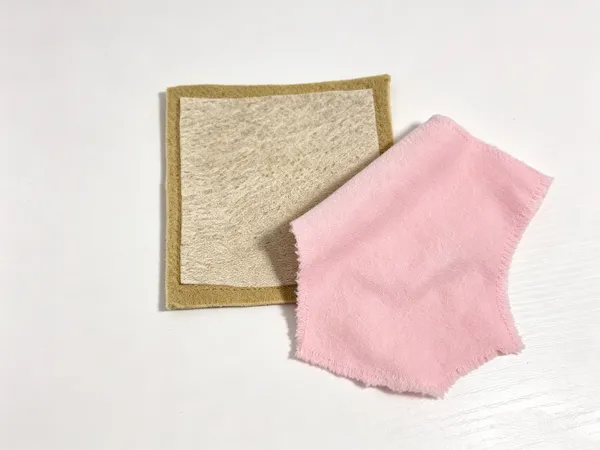
Hot melt adhesive film for textile fabric is a heat-activated thermoplastic bonding layer used to laminate fabric to fabric, foam, nonwoven, leather, felt, or other substrates. The right film depends on both materials, fabric finish, flexibility, processing temperature, and end-use requirements. TPU, PES, PA, and other thermoplastic films can suit different textile constructions, so final selection should be confirmed with the actual laminate.
This guide explains how textile manufacturers can compare adhesive film types, avoid common bonding problems, and select a practical starting point for production testing.
Why Use Hot Melt Adhesive Film for Textile Fabric?
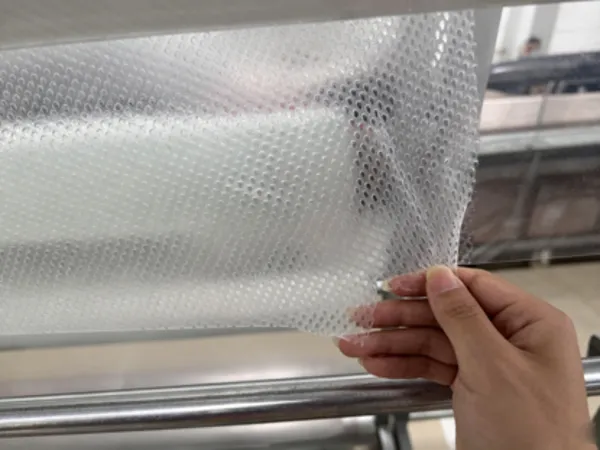
Hot melt adhesive film is a dry, preformed adhesive layer that is activated by heat and pressure during textile lamination. After cooling, the thermoplastic adhesive solidifies and forms the bond between the two substrates.
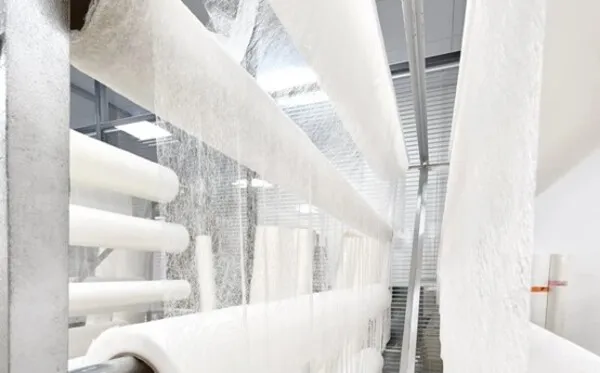
Compared with some liquid-adhesive processes, a preformed hot melt adhesive film can simplify adhesive handling and help control adhesive coverage. Depending on the production setup, manufacturers may evaluate hot melt film when they want to improve control over:
- Adhesive coverage across the laminate
- Strike-through on porous or delicate textile surfaces
- Adhesive handling during production
- Drying or curing steps used by some liquid adhesive systems
- Bonding consistency
- Integration with compatible heat-lamination equipment
The actual benefit depends on the adhesive grade, textile construction, second substrate, machine, and processing conditions. Hot melt adhesive film should therefore be evaluated against the requirements of the specific textile lamination process.
How Does Hot Melt Adhesive Film Bond Textile Fabric?
Hot melt adhesive film is positioned between the textile and the second substrate. Heat softens the adhesive, pressure brings the bonding surfaces into contact, and the adhesive solidifies again as the laminate cools.
1. Heat Activation
The adhesive film is placed between the textile and the second material and heated within the processing range appropriate for the selected adhesive grade.
2. Flow and Wetting
As the adhesive softens, it wets the bonding surfaces. Wetting behavior depends on adhesive chemistry, textile structure, surface finish, temperature, pressure, and dwell time.
3. Bond Formation
Pressure helps establish contact between the adhesive and both substrates. The bond should then be evaluated with the actual material combination rather than judged from adhesive chemistry alone.
4. Cooling
As the laminate cools, the thermoplastic adhesive solidifies and forms the final bond.
Which Hot Melt Adhesive Film Is Suitable for Textile Fabric?
There is no single adhesive film that is best for every textile. The polymer family should be selected according to both substrates, flexibility requirements, processing limits, and the finished product.
| Adhesive Film Family | Textile Selection Starting Point | Main Factors to Check |
|---|---|---|
| TPU Hot Melt Adhesive Film | Often evaluated for soft, flexible, or elastic textile constructions | Flexibility, stretch, hand feel, second substrate, processing temperature |
| PES Hot Melt Adhesive Film | Often worth evaluating for polyester or PET-containing textile structures | Polyester compatibility, washing requirement, temperature requirement |
| PA Hot Melt Adhesive Film | Can be evaluated for selected textile, leather, felt, and industrial laminates | Both substrates, process window, flexibility, end-use conditions |
| Other Thermoplastic Films | Used where the material combination requires a different adhesive chemistry | Surface energy, substrate compatibility, heat sensitivity, finished-product requirements |
These are starting points rather than universal specifications. If a continuous TPU bonding layer is being considered for a flexible textile laminate, review our TPU hot melt adhesive film grades and specifications. The final grade should be confirmed with the customer’s materials and lamination equipment.
For stretch fabrics and applications where flexibility is the main requirement, see our TPU hot melt adhesive film for fabrics guide.
For a nylon-specific bonding problem, see our hot melt adhesive film for nylon fabric guide. That page focuses specifically on nylon rather than general textile lamination.
What Textile Materials Can Hot Melt Adhesive Film Bond?
Heat-activated adhesive film can be evaluated for many textile and textile-related laminate structures, including:
- Polyester fabrics
- Nylon fabrics
- Cotton fabrics
- Nonwoven fabrics
- Velvet and pile fabrics
- Felt
- Foam-backed textiles
- Leather and PU leather
- Composite fabric structures
- Automotive interior textiles
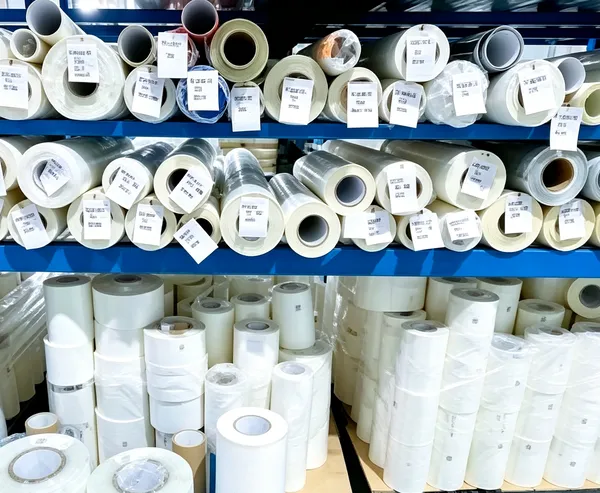
Bonding performance depends on more than the fiber name. Fabric coatings, finishing agents, porosity, thickness, surface treatment, the second substrate, and the production process can all change the result.
How to Choose Hot Melt Adhesive Film for Textile Fabric
The fastest way to narrow the adhesive choice is to evaluate the complete laminate rather than starting from only one fabric name.
1. Identify Both Materials
Start with the textile and the second substrate. Common constructions include fabric-to-fabric, fabric-to-foam, fabric-to-felt, fabric-to-nonwoven, fabric-to-leather, and fabric-to-plastic laminates.
An adhesive that works for one construction should not automatically be assumed to work when the second substrate changes.
2. Check the Fabric Surface and Finish
Water-repellent treatments, coatings, printing, finishing agents, oils, or other surface treatments can change how the molten adhesive wets the textile.
This is especially important for coated and treated fabrics. The actual bonding surface should be evaluated instead of selecting the film only from the fiber name.
3. Check Flexibility and Stretch Requirements
For soft or elastic textiles, the adhesive layer should be evaluated together with the required hand feel, flexibility, and movement of the finished laminate.
A bond can have adequate initial adhesion but still be unsuitable if the adhesive makes the textile too stiff or cannot follow repeated movement.
4. Check the Processing Temperature
The processing window must match both the adhesive grade and the heat sensitivity of the complete construction.
Temperature, pressure, dwell time, adhesive thickness, material thickness, and heat transfer through the laminate can all affect bonding. Increasing temperature alone is not a reliable solution to poor adhesion.
5. Define the Finished-Product Requirements
Wash resistance, humidity, repeated flexing, heat exposure, softness, breathability, appearance, and aging requirements should be defined before the final adhesive film is selected.
If airflow or softness must be preserved, compare continuous adhesive film with an open adhesive-web structure in our breathability guide.
Real Textile Lamination Case: Velvet Fabric Bonded to Felt
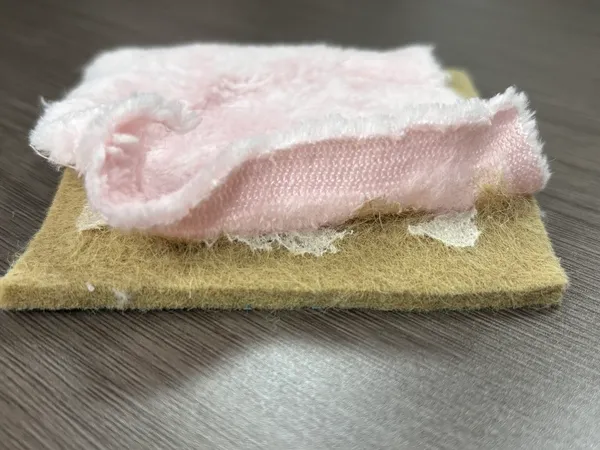
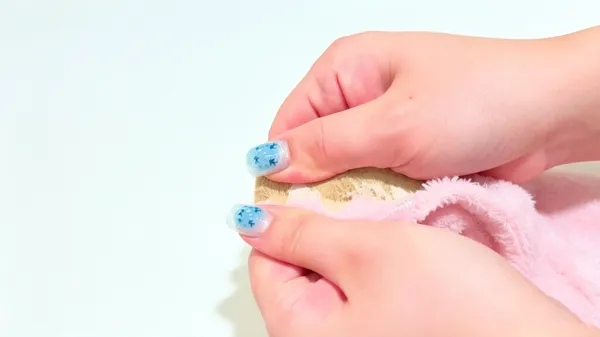
One textile application we evaluated involved bonding a soft velvet surface layer to a high-density felt base for a composite anti-slip mat.
Material A: High-density felt board providing structure and cushioning.
Material B: Soft velvet / short-pile textile fabric providing the finished surface.
The objective was to evaluate a dry-film bonding process that could provide controlled adhesive coverage while maintaining the appearance and flexibility required for the finished textile composite.
Why the Textile Structure Matters
Velvet and felt are both fibrous materials, but their surface structures are different. Felt can be porous and uneven, while velvet has a pile surface that can be sensitive to adhesive penetration, excessive pressure, or excessive heat.
The adhesive therefore has to be evaluated not only for bond strength, but also for surface appearance, adhesive coverage, flexibility, and edge stability.
Why Evaluate Dry Adhesive Film?
The factory had previously used liquid spray adhesive. For this construction, hot melt adhesive film was evaluated as an alternative because a preformed dry layer can provide more controlled adhesive distribution during suitable lamination processes.
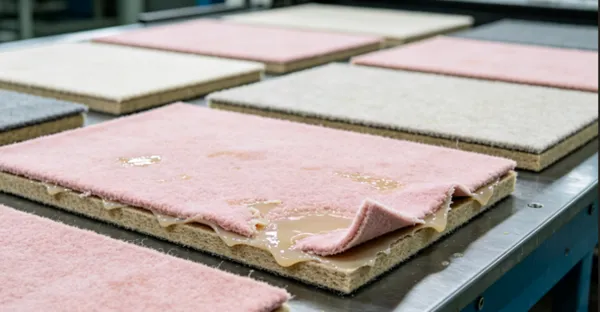
Important points to evaluate included:
- Risk of adhesive strike-through
- Bonding uniformity on the felt surface
- Velvet surface appearance
- Edge lifting or delamination
- Finished-laminate flexibility
- Production repeatability
How We Evaluate the Finished Laminate
Bond performance should be checked using the actual velvet, felt, adhesive grade, and processing conditions. Manual pull, peel, destructive evaluation, edge inspection, and finished-surface inspection can all provide useful application feedback depending on the project requirement.
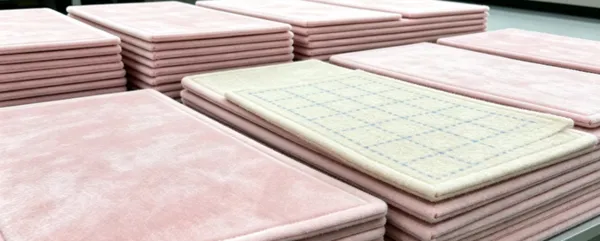
The final production specification should only be fixed after the laminate has been tested under the customer’s required processing and end-use conditions.
Common Textile Bonding Problems and What to Check
| Problem | Possible Causes | What to Check |
|---|---|---|
| Weak bonding | Insufficient activation, low pressure, short dwell time, poor substrate compatibility, or surface treatment | Check both substrates, adhesive grade, temperature, pressure, and dwell time |
| Adhesive strike-through | Excessive heat or pressure, excessive adhesive flow, or unsuitable film construction | Reduce processing intensity and evaluate adhesive grade or coverage |
| Fabric becomes too stiff | Adhesive layer is too rigid or adhesive coverage is too high | Evaluate a more flexible adhesive or an open adhesive web where appropriate |
| Delamination | Poor substrate compatibility, contamination, coating, or unsuitable processing conditions | Check the actual bonding surfaces and repeat application testing |
| Edge lifting | Uneven pressure, poor edge contact, insufficient activation, or movement during cooling | Check pressure distribution, temperature, edge contact, and cooling conditions |
Hot Melt Adhesive Film vs Hot Melt Adhesive Web for Textiles
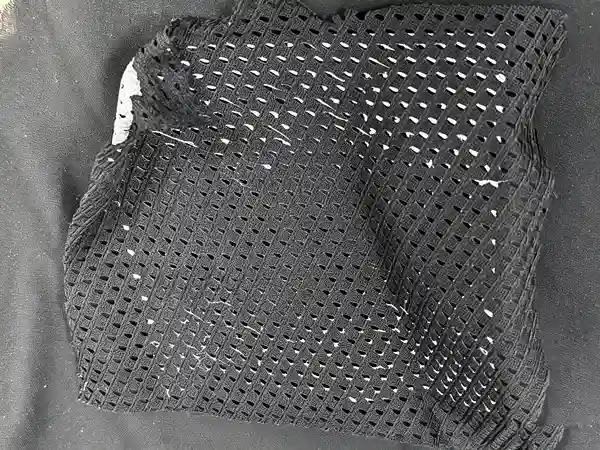
Film and web are different adhesive forms. Hot melt adhesive film creates a continuous adhesive layer, while hot melt adhesive web has an open fibrous structure.
| Adhesive Form | Structure | When to Evaluate |
|---|---|---|
| Hot Melt Adhesive Film | Continuous adhesive layer | When continuous coverage, controlled thickness, or a defined bond line is required |
| Hot Melt Adhesive Web | Open fibrous adhesive structure | When the laminate benefits from reduced adhesive coverage, softness, or a more open structure |
The correct form depends on the textile structure and finished-product requirement. Neither film nor web should be treated as universally better.
Why Textile Manufacturers Use Heat-Activated Adhesive Film
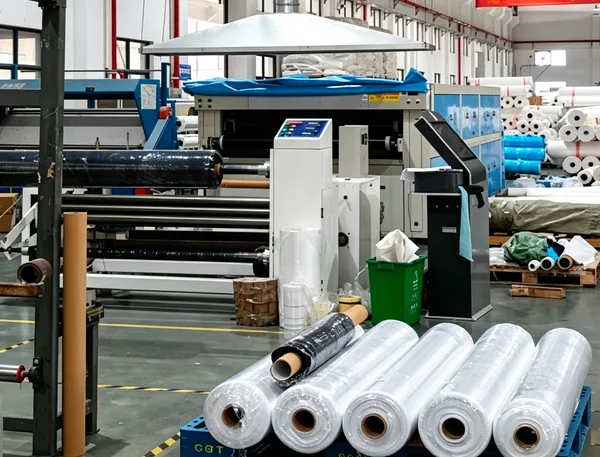
- Dry, preformed adhesive layer
- Controlled adhesive placement
- No separate liquid adhesive application step
- Compatible with suitable heat-lamination equipment
- Different polymer families available for different textile constructions
- Possible reduction of liquid adhesive handling in suitable processes
These characteristics can make hot melt adhesive film a practical textile-bonding option, but production suitability should always be validated with the real fabrics and equipment.
What Information Should You Send for Textile Adhesive Film Selection?
For a more useful recommendation, send us the complete textile-lamination structure rather than only the name of one fabric.
- First fabric or substrate
- Second substrate
- Fabric coating or surface treatment
- Final application
- Current adhesive, if any
- Maximum acceptable processing temperature
- Machine type
- Available pressure and dwell time or line speed
- Required wash, flexibility, temperature, or aging performance
- Required roll width
- Estimated monthly usage
We can then discuss suitable hot melt adhesive film options and a starting test plan before bulk production.
Frequently Asked Questions
What adhesive film is suitable for textile fabric?
The suitable adhesive film depends on both substrates, fabric finish, flexibility, processing temperature, and finished-product requirements. TPU, PES, PA, and other thermoplastic adhesive families can suit different textile constructions, so the final choice should be confirmed by testing the actual laminate.
Can hot melt adhesive film bond fabric to fabric?
Yes, hot melt adhesive film can be evaluated for fabric-to-fabric lamination. The correct film depends on the fiber types, surface finishes, flexibility requirements, and processing conditions of both fabrics.
Can hot melt adhesive film bond fabric to foam?
Yes, but the foam formulation and heat sensitivity are important. The adhesive must bond both the fabric and foam without damaging the foam during lamination.
Will hot melt adhesive film make fabric stiff?
It can change the hand feel depending on adhesive chemistry, film thickness, adhesive coverage, and textile construction. Where softness is important, a more flexible film or an open adhesive web may be worth evaluating.
Is hot melt adhesive film washable?
Washability depends on the adhesive grade, substrate combination, wash temperature, detergent, and required number of cycles. The finished laminate should be tested under the intended washing conditions.
What is the difference between adhesive film and adhesive web for textiles?
Adhesive film forms a continuous layer, while adhesive web has an open fibrous structure. Film may be selected for continuous coverage, while web may be evaluated where reduced adhesive coverage or an open structure is preferred.
Do I need special equipment for heat-activated adhesive film?
The adhesive requires controlled heat and pressure. Depending on the application and production scale, manufacturers may use a heat press, roller laminator, or other compatible lamination equipment. Temperature, pressure, and dwell time should be confirmed for the selected adhesive and materials.
Conclusion
Hot melt adhesive film can provide a controlled bonding method for textile lamination, but the correct film depends on both substrates, fabric treatment, flexibility, process limits, and end-use requirements. Use the material combination to narrow the adhesive family, then confirm the final choice through application testing.
Need Help Choosing Hot Melt Adhesive Film for Your Textile?
VOMELT can help you:
- Evaluate your fabric and second substrate
- Compare suitable hot melt adhesive film families
- Conduct bonding trials using customer-supplied materials
- Help establish starting lamination conditions
- Provide samples for customer testing
- Discuss roll width and bulk production requirements
Send us your fabric type, second substrate, coating or finish, available processing temperature, machine conditions, required roll width, and estimated monthly usage.