
How to Choose Hot Melt Adhesive Film for Polyester Fabric
Choosing a hot melt adhesive film for polyester fabric is not as simple as matching “polyester” with a polyester-based adhesive.
Polyester textiles vary in stretch, thickness, surface treatment, construction, and heat sensitivity. More importantly, the material bonded to the polyester may completely change the adhesive requirements.
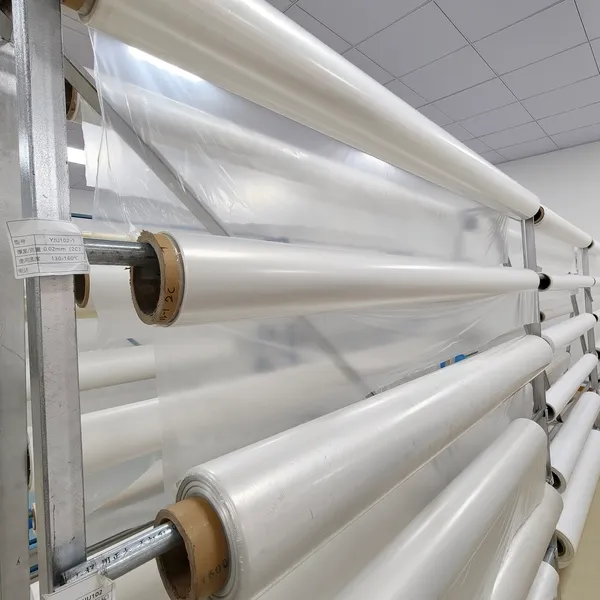
There is no single best hot melt adhesive film for every polyester fabric. TPU is often worth considering when softness, flexibility, or stretch is important, while PES may be suitable when higher thermal stability or a firmer laminate is required. The final choice should consider both substrates, surface treatments, processing limits, and end-use requirements.
So instead of asking:
Which adhesive works with polyester?
A better question is:
Which adhesive should we test for this polyester fabric, the second substrate, and the finished-product requirements?
What Is the Best Hot Melt Adhesive Film for Polyester Fabric?
TPU, PES, PA, and EVA hot melt adhesive films can all be considered for different polyester bonding applications.
The following table provides a practical starting point:
| Adhesive Type | When to Consider It | What to Validate |
| TPU | Stretch, soft or flexible polyester textiles | Elasticity, recovery, hand feel, wash requirements |
| PES | Polyester laminates requiring dimensional or thermal stability | Processing temperature, flexibility, durability |
| PA | Certain textile and multi-material combinations | Substrate compatibility, heat and moisture requirements |
| EVA | Some relatively simple or cost-sensitive laminations | Heat resistance, durability and end-use environment |
This is a screening guide, not a universal selection rule.
When May TPU Be a Better Choice?
TPU hot melt adhesive film is often worth testing when the finished laminate must remain flexible or elastic.
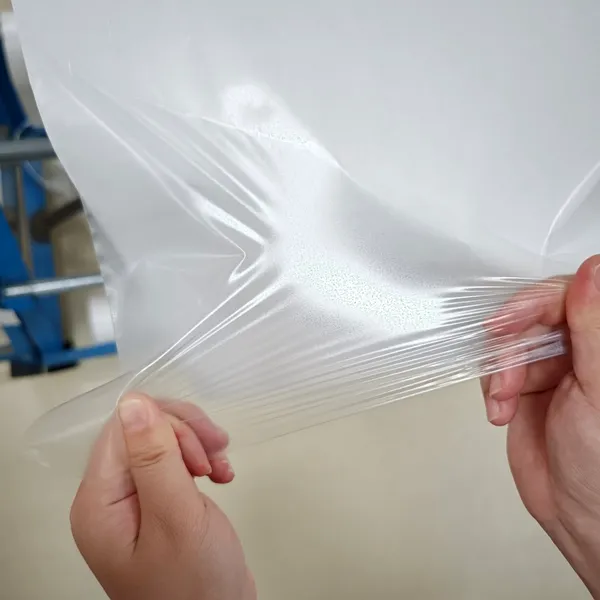
Typical examples include:
- Stretch polyester fabrics
- Polyester/spandex blends
- Soft apparel components
- Flexible textile laminates
For these applications, initial adhesion is only part of the requirement.
The adhesive layer also needs to work with the movement of the textile. A fabric that stretches while the adhesive layer remains relatively rigid can develop stiffness or stress around the bonded area.
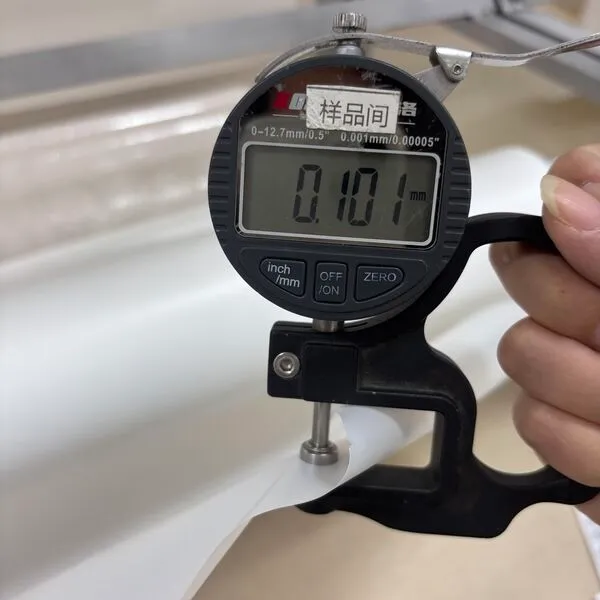
Film thickness also matters. An unnecessarily thick adhesive layer may change the hand feel and stretch behavior of lightweight fabrics.
For more detailed TPU selection considerations, see our TPU hot melt adhesive film guide for different fabrics.
When May PES Be a Better Choice?
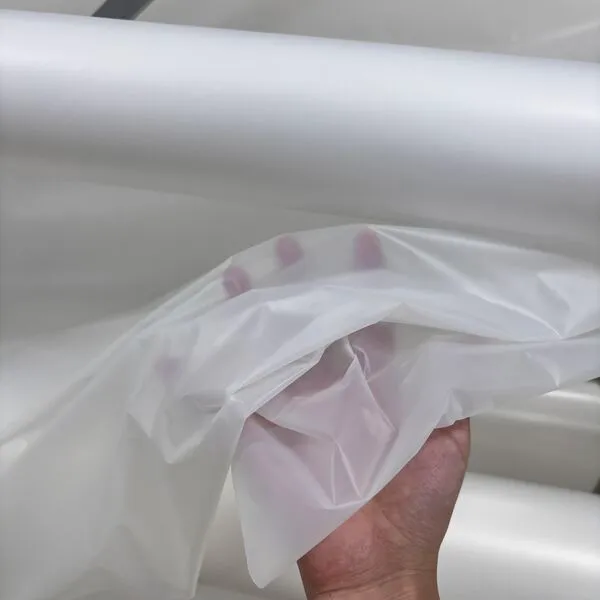
PES hot melt adhesive film can be a strong candidate for certain polyester laminations where thermal stability, dimensional stability, or a firmer construction is import
However:
Polyester fabric does not automatically mean PES adhesive film.
A polyester textile may be elastic, coated, very thin, heat-sensitive, or laminated to a completely different polymer.
The complete laminate must be considered before choosing PES.
What About PA and EVA?
PA and EVA may also be appropriate for particular material combinations and performance requirements.
The important point is not to rank TPU, PES, PA, and EVA from “best” to “worst.”
Each adhesive chemistry has a different performance profile.
The goal is to narrow the candidates before testing.
Why Is “Polyester Fabric” Alone Not Enough to Select an Adhesive?
Two fabrics labeled “100% polyester” can behave very differently during lamination.
Before choosing a hot melt adhesive film, we look at several additional factors.
Fabric Construction and Thickness
A lightweight apparel fabric and a heavy technical textile do not require the same adhesive amount or processing conditions.
Fabric density and surface texture influence how molten adhesive interacts with the textile.
Too little adhesive may produce insufficient bonding.
Too much penetration may cause:
- Adhesive strike-through
- Increased stiffness
- Visible surface changes
- Unnecessary adhesive consumption
This is why adhesive type and film thickness should be evaluated together.
Stretch and Recovery
Polyester/spandex and other stretch constructions require an adhesive that can accommodate repeated movement.
Important questions include:
- How much does the fabric stretch?
- Is the stretch one-way or multi-directional?
- Does the laminate need to recover repeatedly?
- How soft must the bonded area remain?
These requirements often make an elastic TPU grade worth evaluating.
Coatings and Water-Repellent Treatments
Fiber composition does not tell us everything about the bonding surface.
Polyester fabrics may contain water-repellent treatments, coatings, printing, or other surface finishes.
The adhesive bonds to the actual surface, not simply to the fiber name listed on the specification sheet.
This is why two polyester fabrics can show very different bonding results with the same adhesive.
Heat Sensitivity
The adhesive needs enough heat to activate, but the complete laminate must survive the process.
A coating, membrane, foam, printing layer, or second substrate may have a lower temperature tolerance than the polyester fabric itself.
The best adhesive is therefore not necessarily the one with the highest processing temperature.
The Second Substrate
This may be the most important question:
What are you bonding the polyester fabric to?
Polyester-to-polyester and polyester-to-foam are different bonding systems even though both contain the same polyester fabric.
TPU vs. PES Hot Melt Adhesive Film for Polyester Fabric
TPU and PES are frequently considered for textile bonding, but neither is universally better.
| Selection Factor | TPU | PES |
| Flexible laminate | Often a strong candidate | Grade dependent |
| Stretch application | Often worth evaluating | Requires careful validation |
| Soft hand feel | Can be advantageous | Depends on construction |
| Higher thermal requirements | Grade dependent | Often worth evaluating |
| Polyester textile bonding | Suitable for many constructions | Often a strong candidate |
| Coated fabric | Testing required | Testing required |
| Wash durability | Grade/application dependent | Grade/application dependent |
| Processing conditions | Grade dependent | Grade dependent |
The useful question is therefore not:
Is TPU or PES better?
It is:
Which one better matches the mechanical, thermal, surface, and durability requirements of this laminate?
How Does the Second Substrate Affect Adhesive Selection?
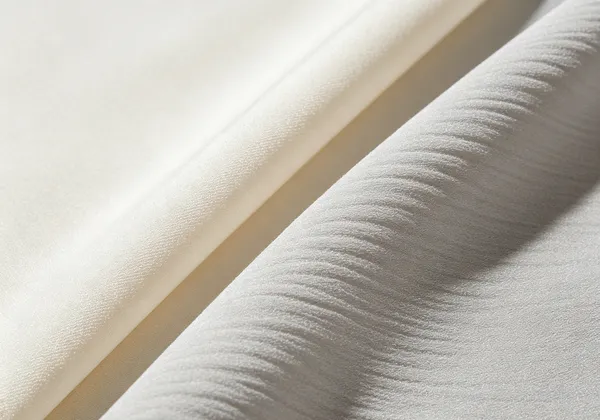
Polyester to Polyester
PES may be an obvious candidate for evaluation, particularly where a relatively stable or firm laminate is acceptable.
TPU may also be appropriate when flexibility or softness is important.
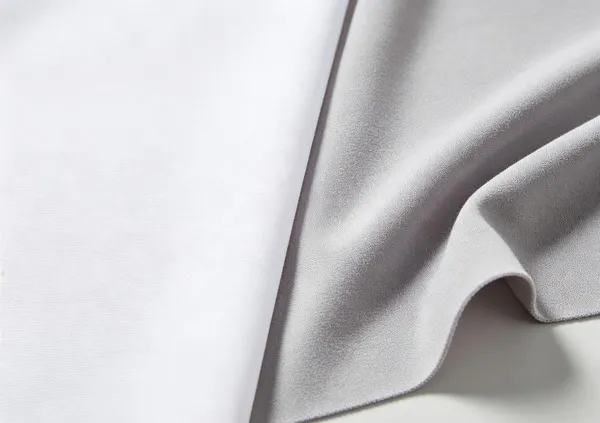
Polyester to Spandex or Elastic Fabric
Stretch and recovery become much more important.
TPU hot melt adhesive film is often worth evaluating because the adhesive layer may need to deform together with the textile.
The final laminate should be tested under realistic stretching conditions rather than judged only while lying flat.
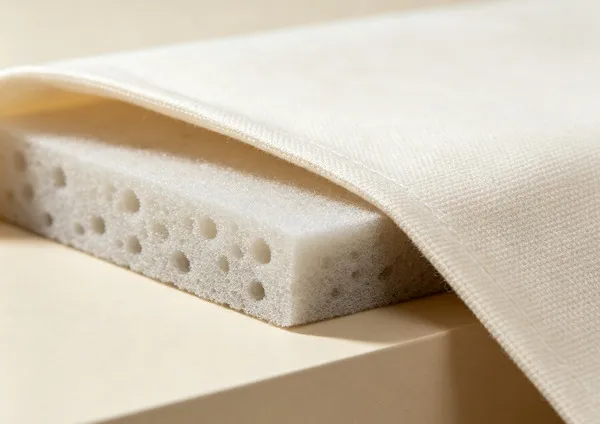
Polyester to Foam
Foam introduces additional considerations such as cellular structure, compression, and heat sensitivity.
The adhesive must bond both surfaces without requiring processing conditions that damage the foam.
More pressure is not automatically better.
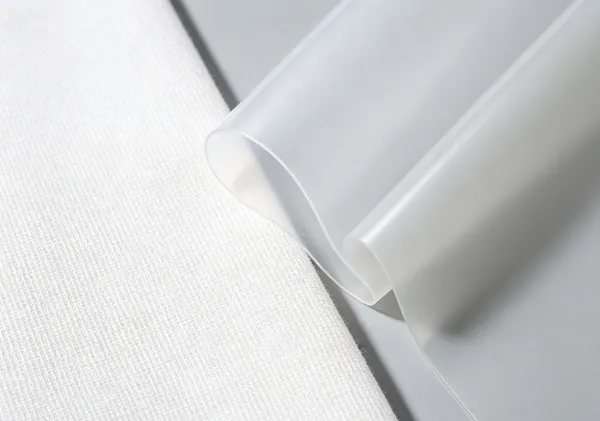
Polyester to TPU or PVC
Polymer films introduce their own surface characteristics.
A TPU adhesive may be a candidate for some TPU-containing laminates, while PVC and other polymer surfaces may require different evaluation.
Surface treatments, plasticizers, and formulations can influence bonding.
Polyester to Other Textiles
For polyester bonded to nylon, nonwoven fabric, leather, or other textiles, evaluate both bonding surfaces.
Selecting an adhesive based on only one material can lead to the wrong conclusion.
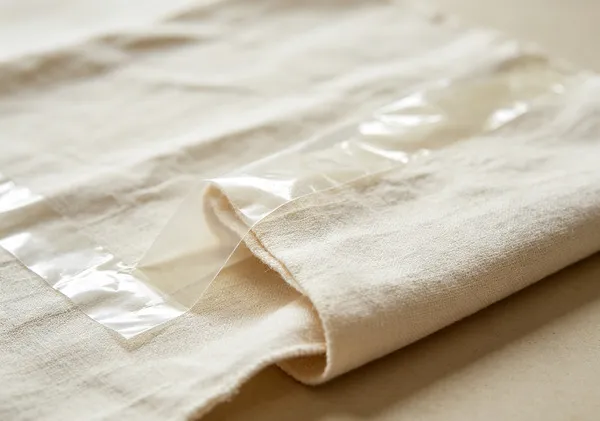
How Should You Select Hot Melt Adhesive Film Thickness?
A thicker adhesive film does not automatically produce a stronger bond.
Film thickness influences:
- Adhesive amount
- Textile penetration
- Hand feel
- Flexibility
- Appearance
- Processing behavior
- Cost
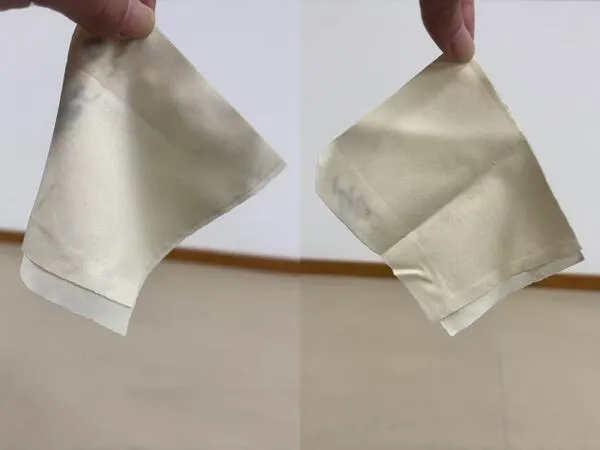
Lightweight textiles may require a different film thickness from thick or highly textured fabrics.
The objective is to use enough adhesive to create an effective interface without unnecessarily changing the textile.
What Temperature Is Required to Bond Polyester Fabric?
There is no universal lamination temperature for polyester fabric.
One distinction is especially important:
Adhesive melting range ≠ actual lamination temperature.
The production setting depends on:
- Adhesive grade
- Film thickness
- Fabric thickness
- Second substrate
- Heating method
- Pressure
- Dwell time
- Equipment
- Heat transfer through the laminate
A supplier’s recommended processing range should therefore be used as a starting point.
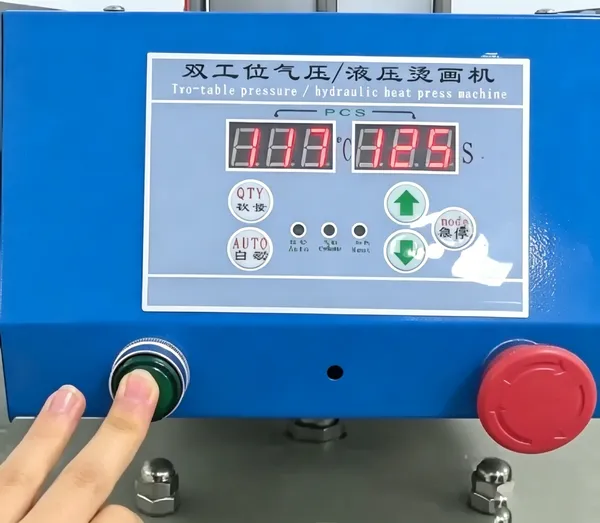
Final temperature, time, and pressure should be confirmed with the actual materials and production equipment.
Why Does Hot Melt Adhesive Film Fail on Polyester Fabric?
When bonding fails, switching immediately to a “stronger adhesive” may not solve the problem.
The first step is identifying the failure mode.
Poor Adhesive Wetting
Insufficient heat, contact time, or surface compatibility may prevent the molten adhesive from interacting adequately with the substrate.
Surface Treatments
Water-repellent and other functional finishes can reduce adhesion even when the base polyester fiber is normally compatible with the adhesive.
Insufficient Heat or Dwell Time
If the adhesive is not adequately activated, the resulting bond may be weak.
However, simply increasing temperature is not always the solution.
Excessive Heat
Too much heat may damage coatings, foams, films, printing, or other components in the laminate.
The processing window must work for all materials, not just the adhesive.
Incorrect Film Thickness
Too little adhesive may reduce interface coverage.
Too much may affect softness, appearance, penetration, and cost.
Mechanical Mismatch
This is particularly important for stretch textiles.
A bond may show acceptable initial adhesion but still perform poorly if the adhesive cannot accommodate repeated deformation of the fabric.
How Should Polyester Fabric Be Tested Before Production?
A practical selection process is:
- Identify both bonding materials.
- Check coatings and surface treatments.
- Define stretch and flexibility requirements.
- Determine the temperature limits of the laminate.
- Select candidate adhesive chemistries and grades.
- Select a starting film thickness.
- Establish preliminary temperature, pressure, and dwell time.
- Produce sample laminates.
- Evaluate bonding and finished-product behavior.
- Perform application-specific durability testing before mass production.
Depending on the finished product, testing may include peel/tensile evaluation, stretch and recovery, washing, or other durability checks.
VOMELT has equipment for adhesive and laminate evaluation, including peel/tensile testing and washing tests.
We do not recommend claiming a specific peel strength or number of wash cycles without defined test conditions and verified results.
What Information Should You Send to an Adhesive Supplier?
To narrow the candidate adhesive films efficiently, provide:
- Polyester fabric composition and construction
- Second bonding material
- Fabric thickness
- Stretch requirements
- Coatings or surface treatments
- Heat sensitivity
- Required hand feel
- Washing requirements
- Finished-product application
- Existing lamination equipment
- Current bonding problem, if applicable
For coated or unusual materials, sending actual samples can be more useful than relying on a material description alone.
How Can VOMELT Help Select Adhesive Film for Polyester Fabric?
VOMELT manufactures multiple hot melt adhesive film chemistries and specifications.
Instead of selecting an adhesive only from the term “polyester fabric,” we can narrow candidate films according to the complete material combination, processing limitations, and finished-product requirements.
Depending on the adhesive grade, film thickness, width, roll format, backing configuration, and slitting can also be matched to converting requirements.
For related technical information, see our hot melt adhesive film for textile fabric guide, TPU hot melt adhesive film guide, and TPU hot melt adhesive film guide for different fabrics.
Frequently Asked Questions About Hot Melt Adhesive Film for Polyester Fabric
Yes. TPU can be a suitable candidate for many polyester textile applications, especially where flexibility, softness, or stretch is important.
The actual fabric surface, second substrate, processing conditions, and finished-product requirements should still be tested.
Not necessarily.
PES may be suitable when its thermal and mechanical properties match the application, while TPU may be preferable when flexibility or elasticity is more important.
Select according to the complete laminate rather than matching polymer names alone.
Yes, hot melt adhesive films can be evaluated for polyester/spandex constructions.
Because the textile stretches, adhesive elasticity and recovery become particularly important. TPU is often worth testing for these applications.
It can be used in washable applications, but wash performance depends on the adhesive grade, substrates, processing conditions, and washing protocol.
Wash durability should be validated under conditions relevant to the finished product.
There is no single temperature for every polyester laminate.
Start with the recommended processing range for the selected adhesive and optimize temperature, pressure, and dwell time using the actual materials and equipment.
Possibly.
A water-repellent finish changes the surface the adhesive must bond to. Two fabrics with the same polyester composition can therefore show different bonding behavior.
Testing the actual treated fabric is recommended.
Adhesive chemistry, film thickness, penetration, and processing conditions all influence hand feel.
For soft or stretch textiles, evaluate a flexible adhesive and use only the film thickness required to achieve the necessary bonding performance.
Final Takeaway
Do not choose hot melt adhesive film for polyester fabric based on the word “polyester” alone.
Start with both substrates, stretch, surface treatment, heat limits, durability requirements, and final use. Then narrow TPU, PES, PA, or EVA candidates and confirm the final selection through actual lamination tests.
If you are unsure which film to test, send VOMELT your two bonding materials and finished-product requirements so we can help narrow the candidates before production trials.