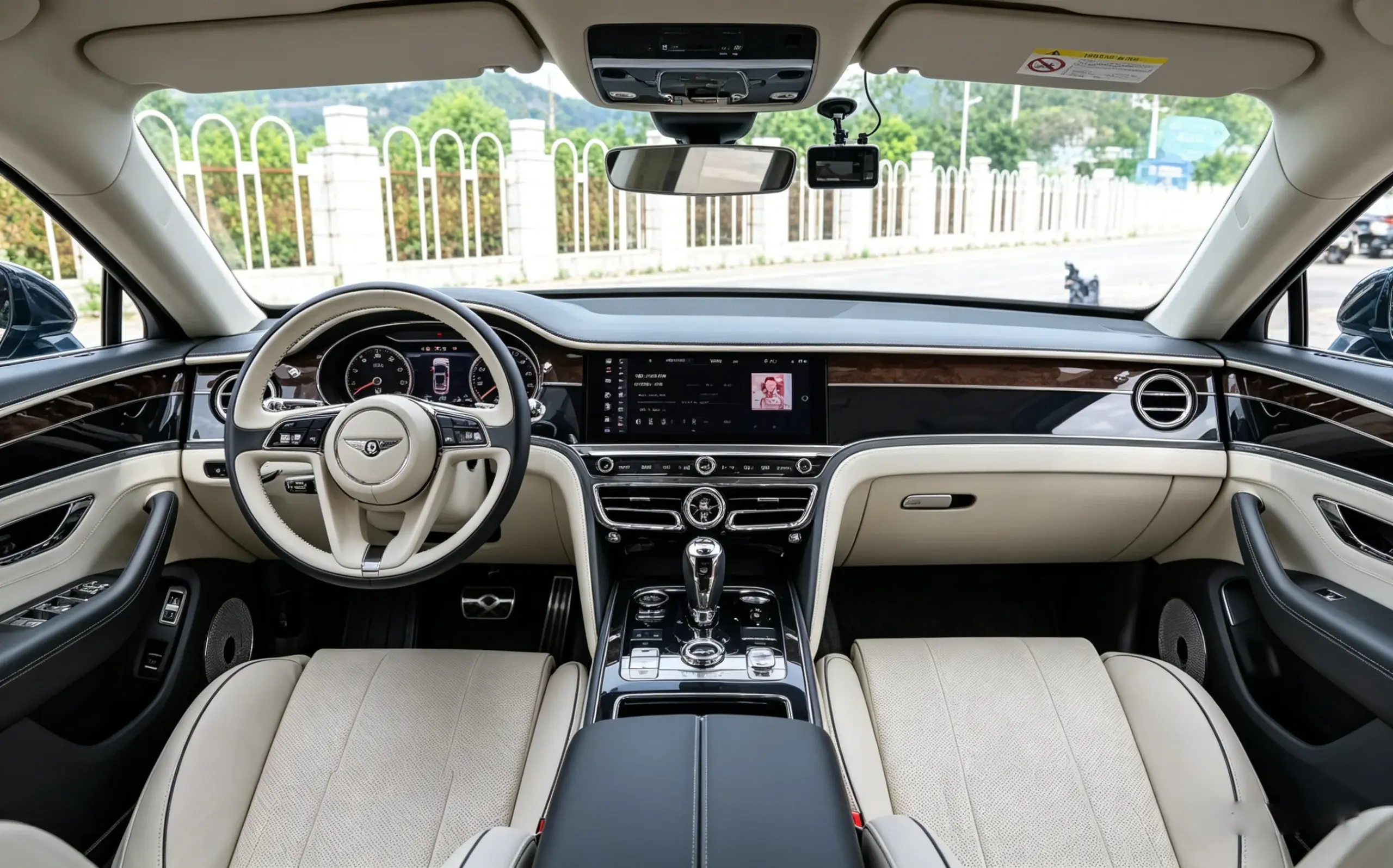
Advanced Adhesive Solutions for Automotive Interiors
Vomelt hot melt adhesive films and webs offer excellent heat resistance, low VOC, low fogging, aging resistance, and long-term durability, fully meeting the stringent technical requirements of automotive OEMs and tier 1 suppliers.
Comprehensive Application Guide
Precise adhesive film selection solutions for various automotive interior components, ensuring reliable bonding and long-lasting quality.
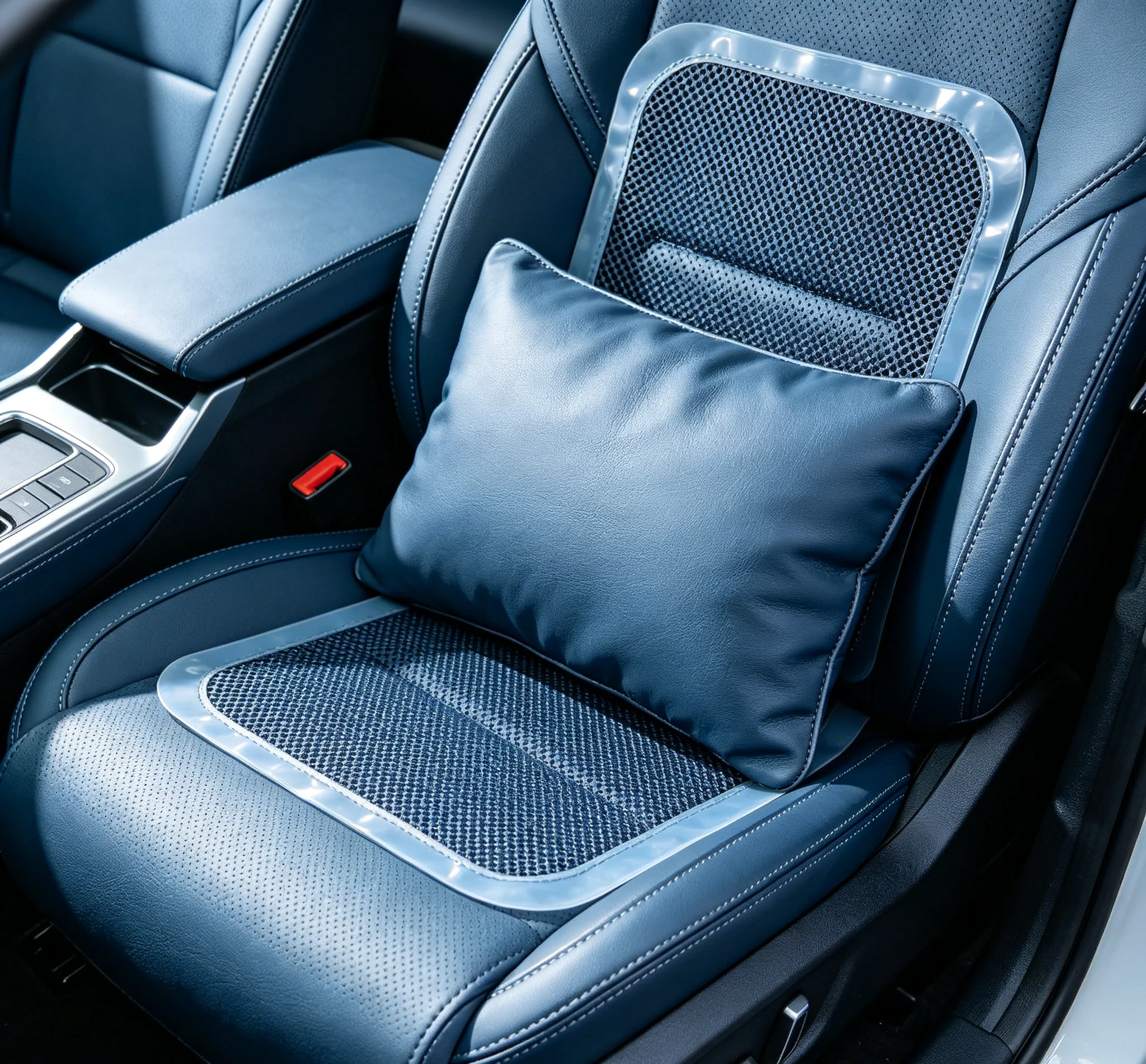
Seating & Upholstery
| Application | Product | Temp Range |
|---|---|---|
| Seat cover lamination | High-elastic PES/TPU | -40~90°C |
| Heated pad integration | Low-temp TPU film | -40~105°C |
| Perforated leather backing | Breathable TPU web | -40~90°C |
| Airbag seam reinforcement | High-tenacity PES film | -40~105°C |
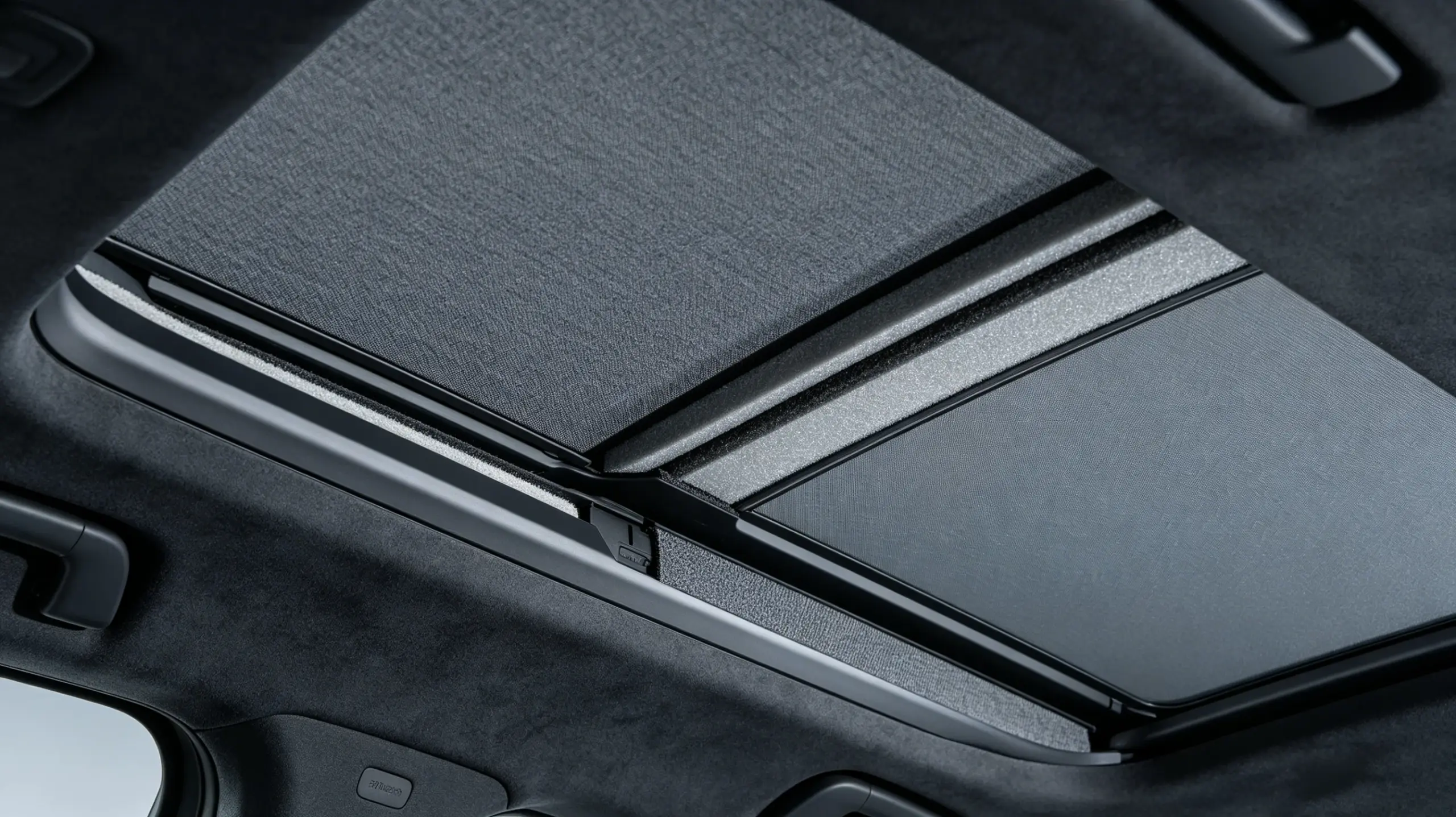
Headliners & Pillar Trim
| Application | Product | Temp Range |
|---|---|---|
| Fabric to PU foam | Low-VOC PES web/film | -40~95°C |
| Sunroof sunshade panel | High-elastic TPU film | -40~90°C |
| Pillar trim cover | Heat-resistant PES film | -40~105°C |
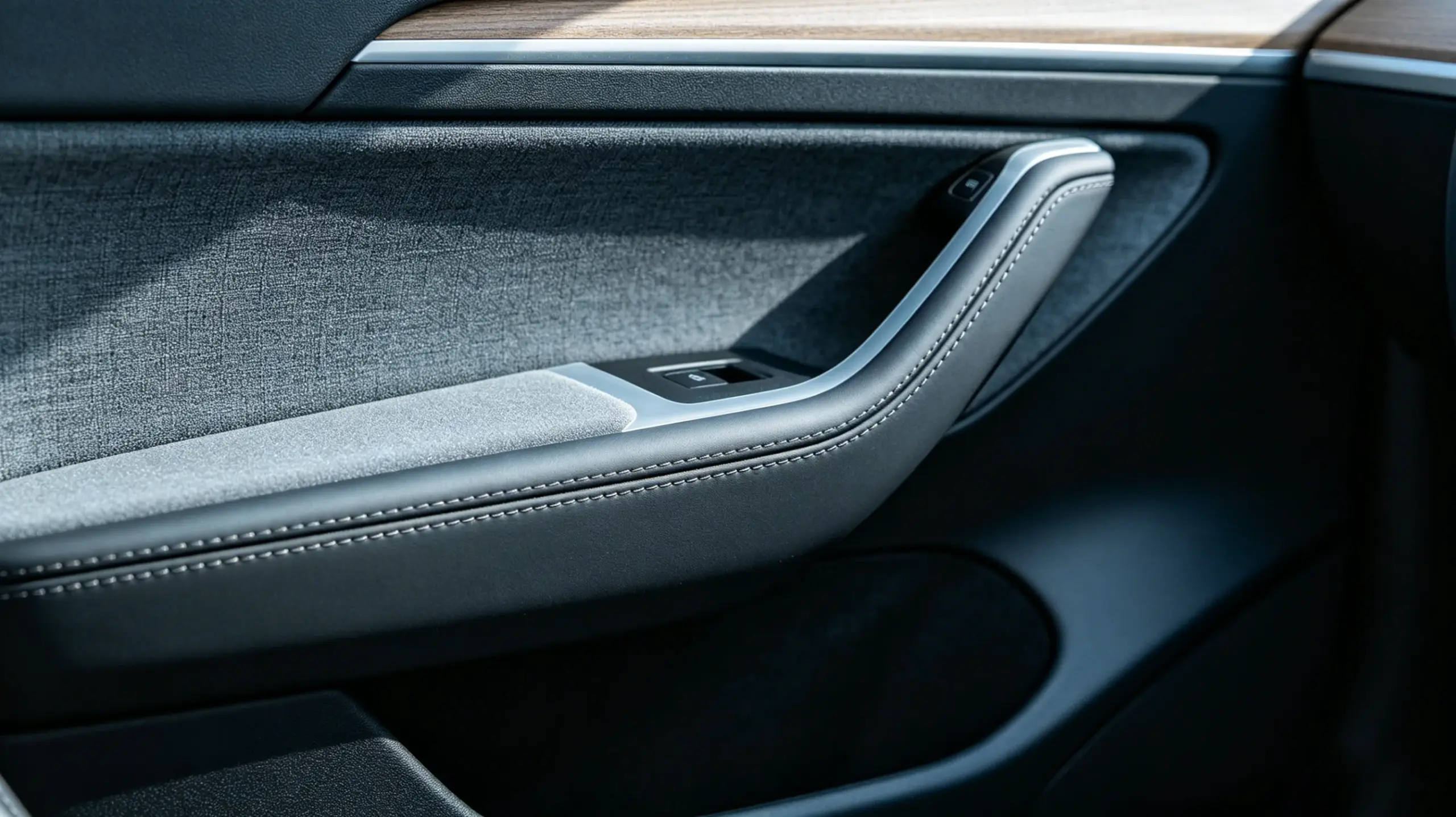
Door Panels & Armrests
| Application | Product | Temp Range |
|---|---|---|
| Fabric/wood grain wrap | High-initial-tack PES/TPU | -40~90°C |
| Armrest leather to foam | Soft TPU film | -40~90°C |
| Map pocket bonding | Fast-bonding PO/EAA | -40~85°C |
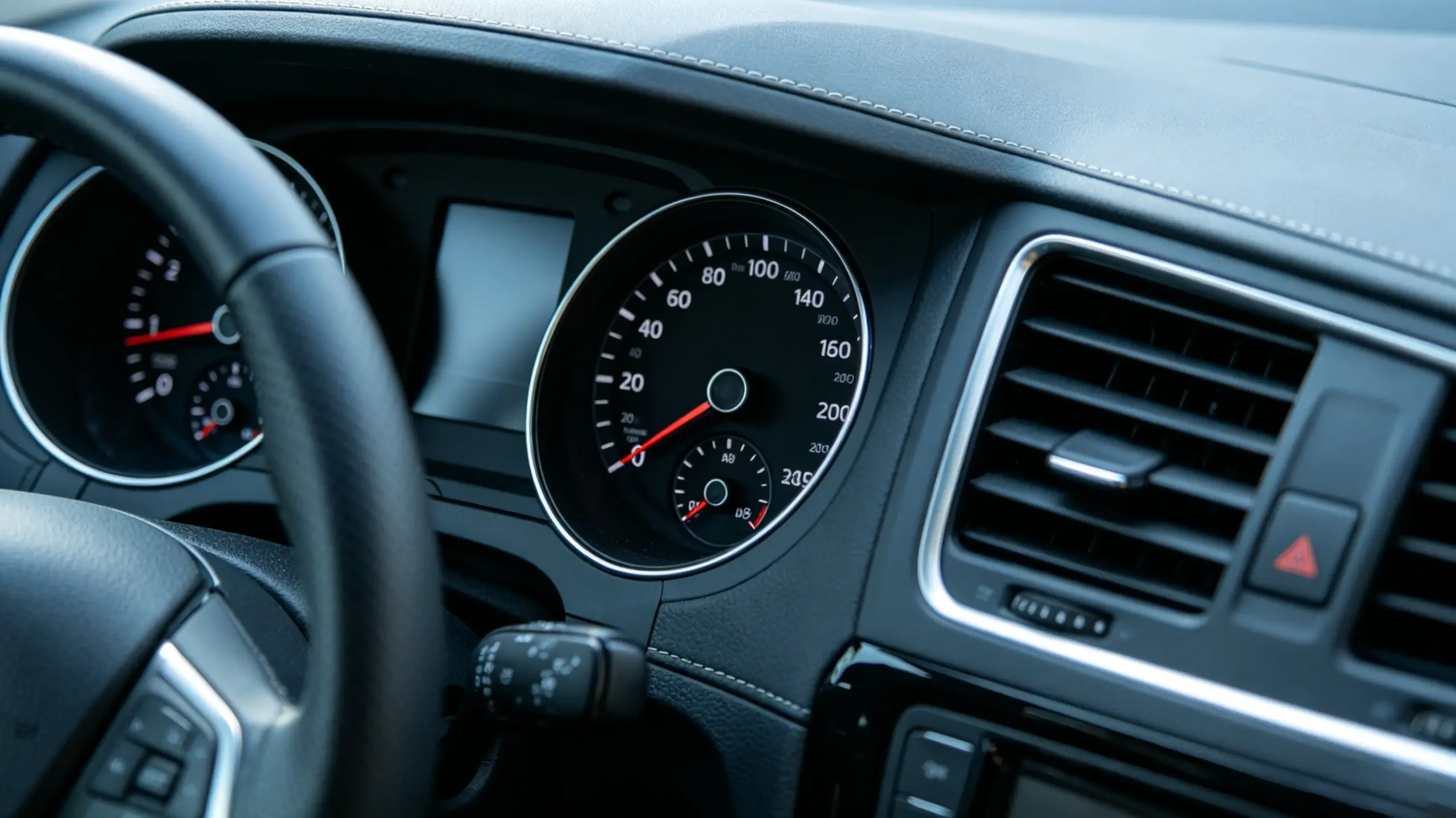
Dashboard & Instrument Panel
| Application | Product | Temp Range |
|---|---|---|
| IP skin (PVC/TPO) to foam | Ultra-heat-resistant PES | -40~105°C |
| Decorative trim wrap | Ultra-clear TPU film | -40~90°C |
| HVAC duct sealing | Low-odor PO/EAA film | -40~85°C |
Performance Comparison Table for Four Major Materials
PES, TPU, TPE, and PO/EAA (Exclusively for Automotive Interiors)
| Performance Dimension | PES | TPU (Polyether Type) | TPE | PO/EAA |
|---|---|---|---|---|
| Maximum Temperature Resistance (Long-term) | 120°C | 105°C | 85°C | 90°C |
| Minimum Temperature Resistance (Embrittlement Point) | -20°C | -45°C | -50°C | -35°C |
| Hydrolysis Resistance (85°C/85% RH, 500 h) | ≥95% Retention | ≥90% Retention | ≥90% Retention | ≥85% Retention |
| Heat Aging Resistance (120°C × 168 h) | ≥90% Retention | ≥80% Retention | — | — |
| Low fogging (VDA 278) | ★★★★★ | ★★★★ | ★★★★ | ★★★ |
| Low odor (PV 3900, 80°C) | ★★★★★ | ★★★★ | ★★★★★ | ★★★ |
| Softness (Shore A) | 95–98 | 70–90 | 50–70 | 85–95 |
| Adhesion to PP/PE (no primer required) | Poor | Poor | Poor | Excellent |
| Flame Retardancy (Base) | V-2 | V-2 | V-2 | HB |
| Recommended Automotive Interior Applications | Instrument panels, high-temperature areas of headliners, airbag doors | Seats, armrests, steering wheels, sun visors | Headrests, soft upholstery, infant seats | Lower door panels, carpet backing, PP components |
Selection Decision Tree
- • Requires highest heat resistance (>110°C) + low haze → PES
- • Requires low-temperature toughness (below -30°C) + soft feel → TPU (polyether-based) or TPE
- • Bonding to PP/PE plastics → Only option: PO/EAA
- • Requires extreme softness (e.g., headrests) → TPE
- • Requires high peel strength + hydrolytic resistance → Polyether-based TPU
Why Choose Womet Automotive Interior Film?
Engineered for peak performance, meeting the most rigorous automotive industry standards.
| Customer Needs | Womet Solutions |
|---|---|
| Low VOC / Low Fogging | The entire product line complies with VDA 278, ISO 12219, and SAE J1756; fogging levels can be controlled to below 0.5 mg |
| Heat and Aging Resistance | PES films can withstand temperatures above 120°C for extended periods; heat-resistant TPU reaches 105°C |
| Low-Temperature Toughness | TPU/TPE films remain flexible at -40°C without becoming brittle or cracking |
| Flame Retardancy | Customizable to meet FMVSS 302, UL94 V-0, or OEM standards |
| Hydrolysis Resistance | Polyether-based TPU and PES materials maintain stable performance in high-humidity and high-temperature environments |
| Adhesion to Low-Surface-Energy Materials | PO/EAA films are specifically designed for PP/PE and require no primer |
| Odor Rating | All products have an odor rating ≤3.5 (PV 3900, 80°C) |
Summary of Key Performance Test Data
Comprehensive environmental and mechanical testing results to guide your material selection for demanding industrial applications.
Field Test of Thermal Aging Properties of PES Film
Testing standard based on ISO 188
| Aging Conditions | Retained Peel Strength (N/25 mm, initial ≥50 N) | Appearance Change | Retained Flexibility |
|---|---|---|---|
| 120°C × 168 h | 92% | Slight yellowing (ΔE ≤ 1.5) | No significant hardening |
| 120°C × 500 h | 85% | Mild yellowing (ΔE ≤ 3.0) | Slight hardening |
| 120°C × 1000 h | 78% | Noticeable yellowing (ΔE ≤ 5.0) | Still bendable |
| 140°C × 168 h | 82% | ΔE ≤ 2.5 | Acceptable |
Conclusion
PES film remains stable for long-term use at 120°C and can withstand short-term exposure to 140°C. It is suitable for dashboard components and parts near the engine compartment.
Comparison of Hydrolysis Resistance
Polyether TPU vs Polyester TPU (85°C / 85% RH)
| Test Duration | Polyether TPUStrength Retention | Polyester TPUStrength Retention | Observations |
|---|---|---|---|
| 0h | 100% | 100% | — |
| 200h | 97% | 82% | Polyester type shows slight whitening on surface |
| 500h | 92% | 61% | Polyester type shows significant whitening and stickiness |
| 1000h | 86% | 42% | Polyester type: chalking, delamination |
Selection Conclusion
For automotive components such as floor mats, seat side panels, and door panels that may come into contact with water stains or high-humidity environments, polyether-based TPU or PES must be selected; the use of polyester-based TPU is strictly prohibited.
Low-Temperature Toughness Comparison
-30°C × 24h, 180° bend on 10mm diameter
| Material | Condition after bending | Recommended lower limit |
|---|---|---|
| TPE | No cracks, no whitening | -50°C |
| Polyether TPU | No cracks | -45°C |
| Polyester TPU | Slight whitening | -30°C |
| PES | Slight cracking | -20°C |
| PA | Noticeable cracking | -15°C |
| EVA | Brittle fracture | -10°C |
Application Recommendations
For vehicles sold in extremely cold regions (such as Northeast China, Northern Europe, and Canada), TPE or polyether-based TPU should be the first choice for components such as seats, armrests, and door panels.
Need tailored technical advice?
Our R&D team can help you select the optimal adhesive film based on your specific environmental requirements and substrate materials.
Recommendations for Optimizing Processing Parameters of Automotive Interior Adhesive Films
Comprehensive guidelines for hot-press laminating, troubleshooting, and surface pretreatments to ensure optimal bonding performance and interior longevity.
Key Parameter Windows for Hot-Press Laminating
| Film Type | Recommended Temp (°C) | Recommended Pressure (MPa) | Holding Time (s) | Cooling Method |
|---|---|---|---|---|
| PES Film/Mesh Film | 140–160 | 0.3–0.5 | 20–30 | Air cooling + natural cooling |
| Heat-Resistant TPU | 120–140 | 0.2–0.4 | 15–25 | Air cooling |
| General-Purpose TPU | 110–130 | 0.2–0.4 | 15–20 | Air cooling |
| TPE | 100–120 | 0.15–0.3 | 10–15 | Natural cooling |
| PO/EAA | 120–140 | 0.3–0.5 | 15–20 | Air cooling |
Common Defects and Solutions (For Automotive Interiors)
Bubbling after lamination
Possible Causes:
① Poor degassing
② Moisture absorption by the film
③ Decomposition due to excessive temp
Solutions:
① Use roller degassing
② Pre-dry the film (60°C × 4h)
③ Reduce temp by 10–15°C
Edge Curling
Possible Causes:
① Insufficient pressure
② Insufficient film width
③ Too rapid cooling
Solutions:
① Increase edge pressure
② Ensure film is 5–10 mm wider
③ Allow natural cooling to <40°C
Adhesive bleed-through
Possible Causes:
① Adhesive film too thick
② Temperature too high
③ Pressure too high
Solutions:
① Reduce thickness
② Lower temperature by 10°C
③ Reduce pressure by 0.1–0.2 MPa
Insufficient peel strength
Possible Causes:
① Insufficient temp/time
② Contamination on substrate
③ Incorrect adhesive film type
Solutions:
① Increase temp or holding time
② Clean the substrate
③ Select a different adhesive film
Excessive odor
Possible Causes:
① Processing temp too high
② Adhesive film degraded (moisture/storage)
Solutions:
① Reduce temp to recommended range
② Replace with a new batch of film
Surface Pretreatment Requirements for Different Substrate Types
| Substrate Type | Surface Energy (dyne/cm) | Recommended Pretreatment | Shelf Life After Pretreatment |
|---|---|---|---|
| Polyurethane Foam | 38–42 | Clean and dust | — |
| Fabric/Non-woven Fabric | 40–50 | No treatment required | — |
| PVC Leather | 35–40 | Surface Cleaning | — |
| TPO (Thermoplastic Polyolefin) | 28–32 | Plasma or Primer | 24 hours after plasma treatment |
| PP | 28–30 | Corona/Plasma/Primer | 2–4 weeks after corona treatment |
| ABS/PC | 42–48 | No pretreatment required | — |
| Genuine leather | 34–38 | Clean and degrease | — |
Advanced Adhesive Solutions
Factory-direct, R&D-driven functional films and mesh webs. Explore our comprehensive catalog of over 10,000 specifications engineered for 15+ global industries.
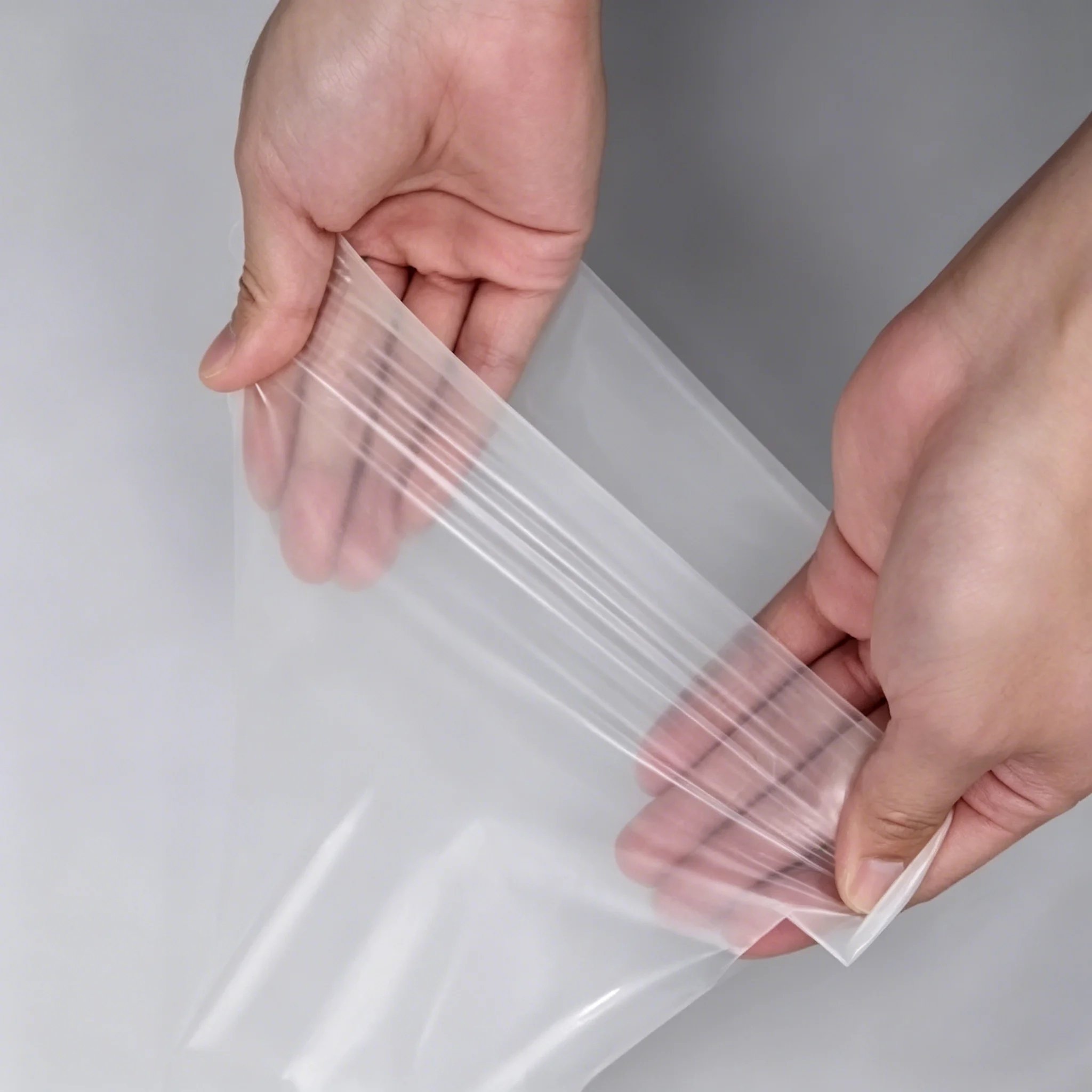
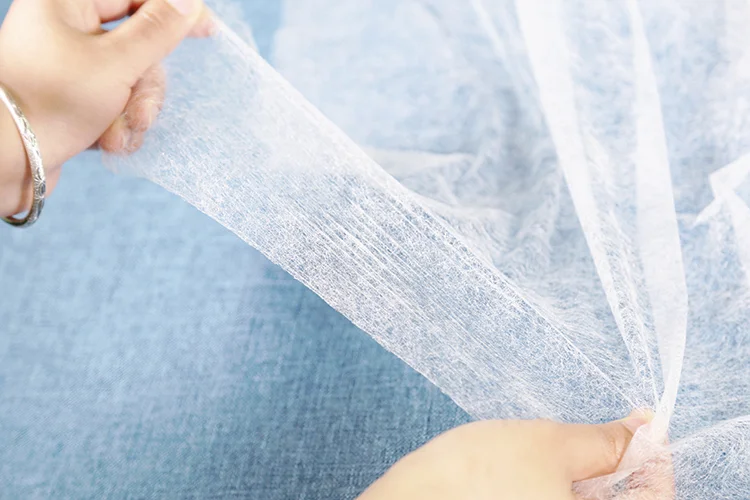
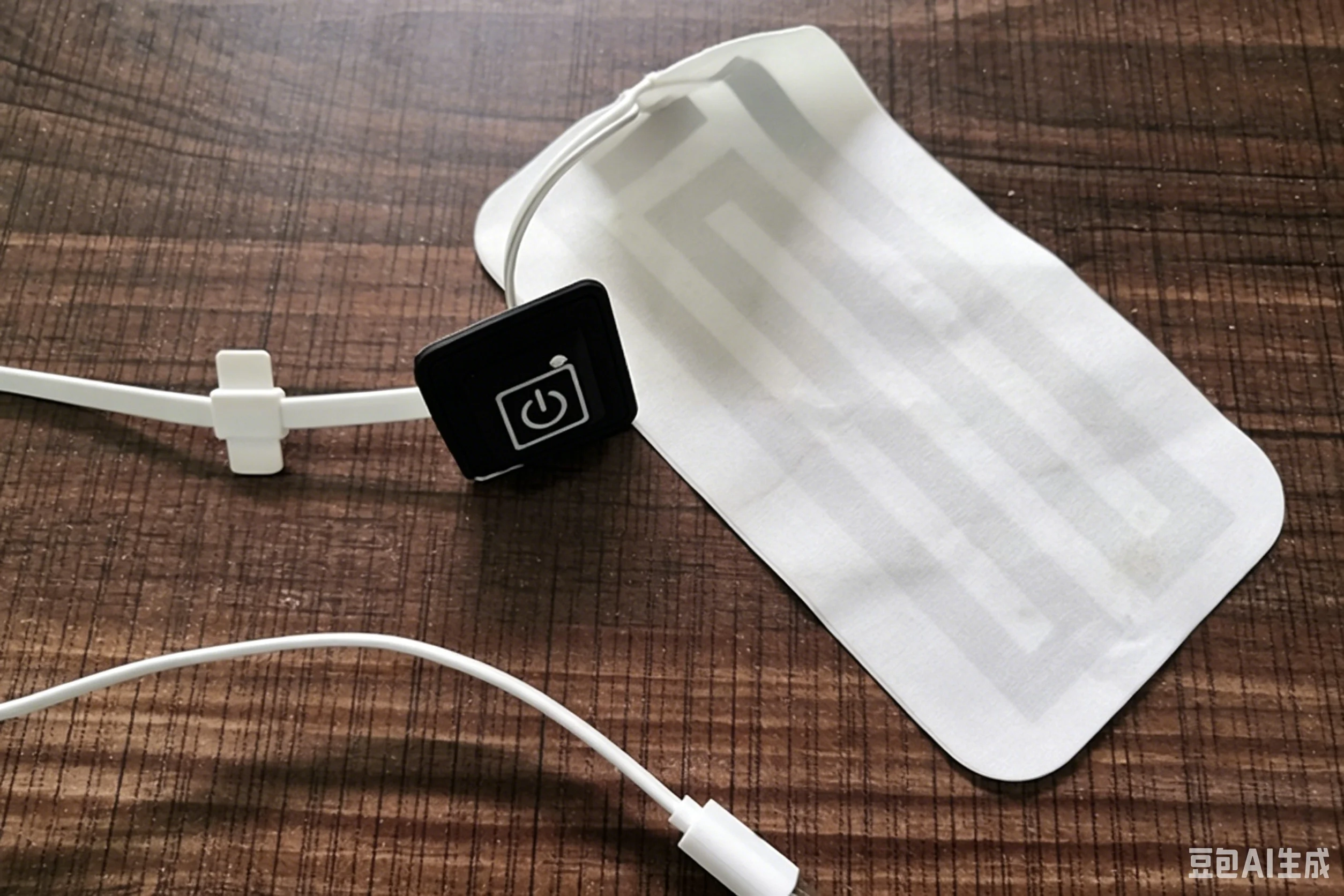
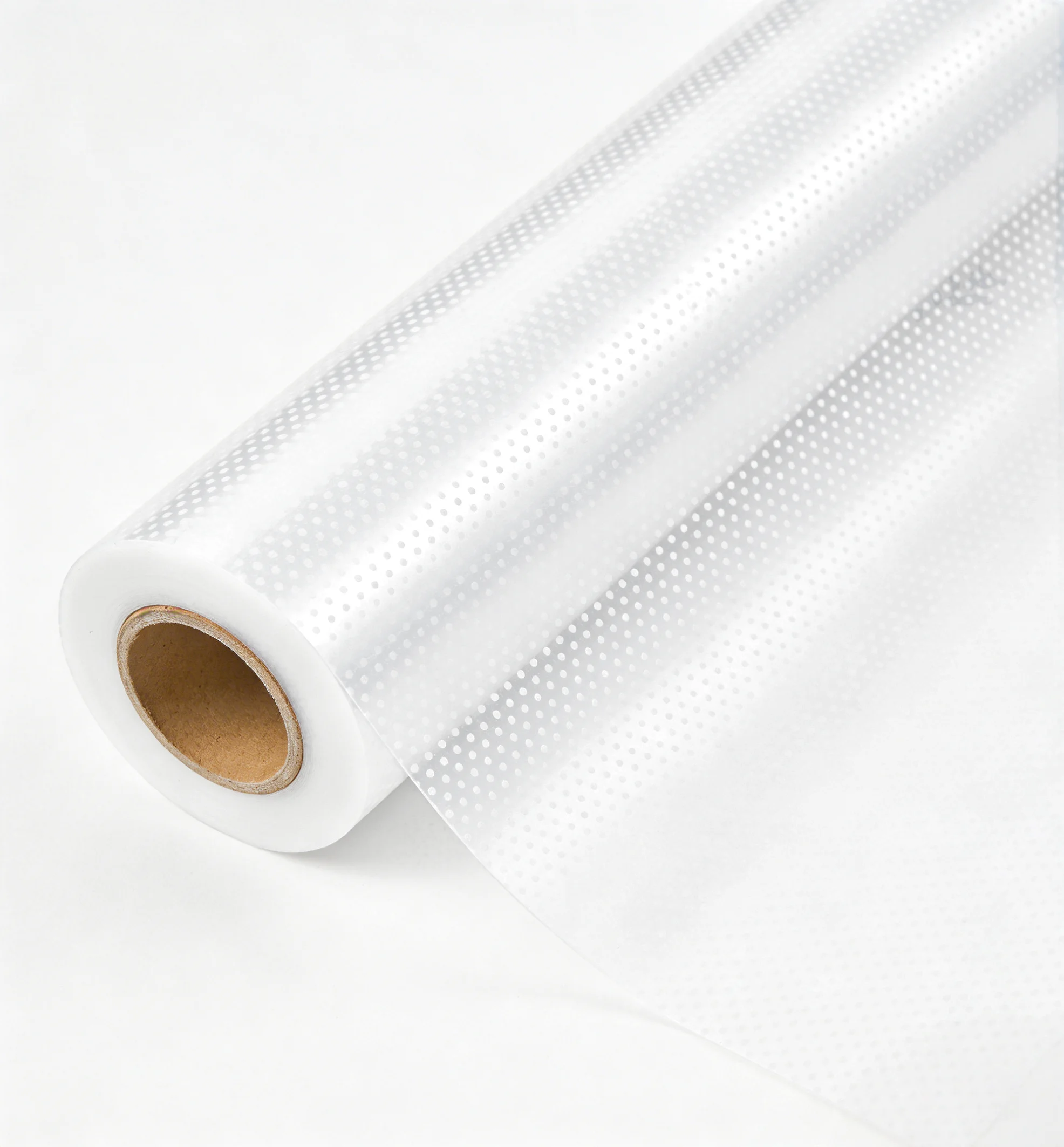
TPU/PU Waterproof Dispensing Films
High-performance waterproof dispensing films engineered for advanced sealing, durability, and multi-substrate bonding.
Technical Specifications & Selection Guide
Quick Selection Matrix
| Base Material Combinations | Recommended Laminate | Key Features |
|---|---|---|
| Fabric + PU Foam | PES Mesh Film/Adhesive Film | Low fogging, high heat resistance |
| Genuine Leather + PU Foam | TPU Adhesive Film | Soft feel, high resilience |
| PVC/TPO Cover + Foam | PES Adhesive Film | High temperature resistance, airbag compatible |
| Fabric + Plastic (PP/PE) | PO/EAA Adhesive Film | Low surface energy, strong adhesion |
| Carpet + EVA Laminate | PES Adhesive Film | High peel strength, durable |
| Heating Elements + Fabric | Low-Temperature TPU Adhesive Film | Low activation temperature |
General Temperature Reference Table
| Adhesive Film Type | Recommended Processing Temperature | Long-Term Operating Temperature Range |
|---|---|---|
| PES Adhesive Film/Mesh Film | 120 – 160°C | -40°C ~ +120°C |
| Heat-Resistant TPU | 110 – 140°C | -40°C ~ +105°C |
| General-Purpose TPU | 100 – 130°C | -40°C ~ +90°C |
| TPE Film | 90 – 120°C | -40°C ~ +85°C |
| PO/EAA Film | 110 – 140°C | -40°C ~ +90°C |
Note: The above values are typical laboratory results; actual process parameters must be verified based on the customer’s substrate and equipment.
Frequently Asked Questions
How can automotive interior adhesive films pass OEM odor tests?
Can you provide FMVSS 302 flame retardancy test reports?
For headliner lamination, how to choose between PES web and PES film?
How to solve the "orange peel" phenomenon on leather after lamination?

Request Free Samples & Technical Support
Contact hrs for free samples, technical data sheets (TDS), safety data sheets (MSDS), and on-site process optimization support.